


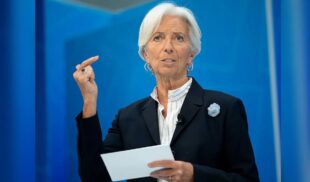
Christine Lagarde. Photo: SCANPIX/REUTERS
Lagarde has headed the ECB since 2019. During this time, the regulator has had to respond to the COVID-19 pandemic, the conflict between Russia and Ukraine, and a sharp rise in energy prices. In 2022, inflation in the eurozone exceeded 11 per cent.
The terms of office of the ECB’s Chief Economist, Philip Lane, and Executive Board member Isabel Schnabel, who is responsible for market operations, are also due to end in 2027.
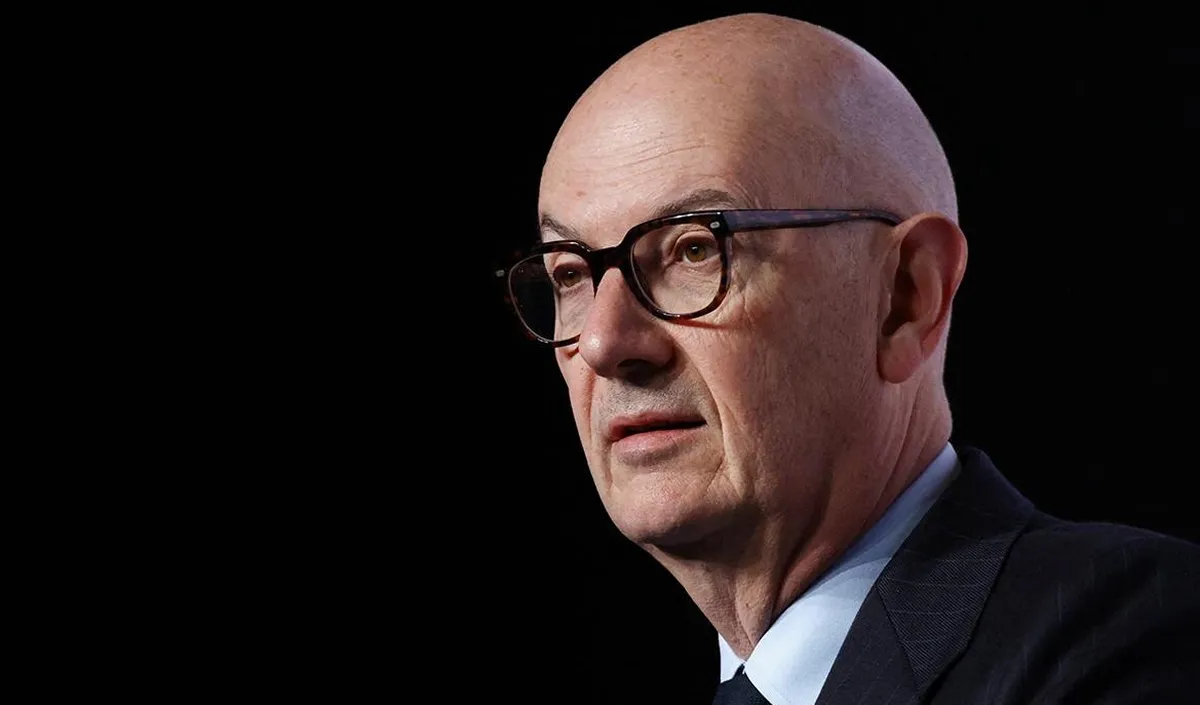
According to CNBC, the leading contenders for the post of ECB President are Klaas Knot, the former governor of the Dutch central bank, who held that position from 2011 to 2025, and Pablo Hernández de Cos, the former governor of the Bank of Spain, who is currently General Manager of the Bank for International Settlements.
ECB leaders are appointed by the governments of the eurozone countries. Negotiations over key positions within the regulator are accompanied by political agreements, including those concerning the representation of individual countries and the distribution of influence.
The selection of the new ECB president is taking place against a backdrop of problems with French government debt. Yields on French government bonds are rising, and the spread between them and German bond yields has reached its highest level since the eurozone debt crisis of the early 2010s. The 2027 presidential election in France is creating further uncertainty.
Holger Schmieding, chief economist at Berenberg, believes that Knot may have the edge. He previously chaired the G20 Financial Stability Board. According to Schmieding, the ECB has neither the mandate nor the desire to finance the consequences of France’s budgetary missteps.
Knot is regarded as a more hawkish advocate of monetary policy than de Costa. Some analysts believe that Knot’s appointment could support the euro, whilst at the same time increasing pressure on French government bonds. Choosing de Costa would signify continuity of policy and a greater focus on financial stability.
According to Reuters, Lagarde decided to step down early in order to have greater freedom to make public political statements and to support a candidate in the French presidential election. CNBC has not confirmed this information. In recent interviews, Lagarde herself has denied any intention of standing for the French presidency.
This story was translated with the assistance of artificial intelligence.
Follow our updates
Have information for the newsroom? Share it with Logos-Press

















Comments
0No comments yet. You can start the conversation.
Comments are open to readers with a Logos Press account.
Sign in to comment