

At the start of the war, Western countries—primarily the United States and its European NATO allies—formed a united front in support of Ukraine. However, since Donald Trump’s reelection as U.S. president, the political situation has deteriorated sharply: the U.S. has ceased to act as a global leader or a responsible power.
Although the Trump administration has not officially announced its withdrawal from NATO or from the coalition supporting Ukraine, it has significantly reduced its involvement and announced a sharp reduction in its military presence on the European continent.
Fortunately, European NATO members have stepped in to fill the resulting gap, reaffirming their “solidarity with Ukraine.”
Moreover, Ukraine’s growing battlefield capabilities—driven primarily by advances in its domestic drone and missile technologies, along with the continued provision of satellite data from the U.S.—have enabled it to turn the tide of the war.
However, the Kremlin has recognized the importance of supplies from Western Europe to Ukraine and is seeking to disrupt them through hybrid warfare—whether through attempts to influence election results in Europe or by carrying out covert attacks on key nodes in the supply chain.
Therefore, Europe must proceed on the assumption that the fewer successes Russia achieves on the battlefield, the more serious Russian President Vladimir Putin’s domestic political problems will become, and the more Russia will seek to extend the war into Europe.
In just the last few weeks, we have witnessed an explosion and fire — almost certainly an act of sabotage — at an Italian arms factory owned by the Franco-German company KNDS, which was soon followed by an attempted drone strike on a parked Antonov transport aircraft at Leipzig Airport. (Fortunately, this second attack failed due to a technical malfunction—pure luck.)
U.S. Weakness and the Reality for Europe
It is noteworthy that these events occurred just as America’s weakness as a superpower became evident to everyone.
Trump has effectively lost his self-inflicted war against Iran and is now desperately trying to refute reports that the U.S. is rapidly depleting its stockpiles of ammunition and missiles. Is this a mere coincidence, or does it point to a deepening interconnection between the wars in Ukraine and Iran—and thus to a hidden struggle for global leadership?
In any case, Europe will have to prepare to confront not only increasingly frequent hybrid attacks from Russia, but also to potential threats from Iran, which has already made it clear that it could strike targets in Europe should full-scale hostilities with the U.S. resume.
This means that an old, war-weary Europe will have to adapt at breakneck speed to new realities and dangers emanating both from the continent itself and from its periphery.
But it will also have to come to terms with the decline of U.S. global power under Trump. This shift, more than any other, fundamentally alters Europe’s global strategic position, with far-reaching consequences for its security, energy and raw material supplies, and trade interests.
Europeans should harbor no illusions. During this period of transition from one world order to another, geopolitics takes center stage, but Europe’s aspirations to become a world power remain more of a desire than a reality. We are an unfinished union of sovereign, separate states, consisting of only a few “middle powers,” most of which are in a dire economic and political state.
Europe Needs Consolidation
The situation is exacerbated by the fact that, despite all the threats it faces, Europe lacks the collective political will and decision-making mechanisms necessary to strengthen its geopolitical position.
As long as Germany and France—two middle powers whose leadership remains indispensable— — continue to quarrel and distrust one another, instead of jointly taking the steps necessary to complete the European project, the technological and strategic autonomy from the U.S. that Europe so desperately desires will remain out of reach.
Clinging to the old model of the European nation-state or to nostalgic notions of past greatness is the lot of museum docents. If Europe remains merely a collection of small states and middle powers, the current period of profound geopolitical and historical change will also mark the end of its role on the world stage.
“European sovereignty” is a nice-sounding phrase, but given the divisions among Europeans, it risks becoming just another fantasy. There is no place for “sovereignty” in wishful thinking.
Putin knows this all too well, and it is precisely him that we Europeans must deal with now.
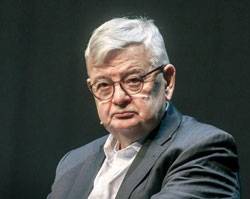
Joschka Fischer,
served as Germany’s foreign minister and vice chancellor from 1998 to 2005 and was the leader of Germany’s Green Party for nearly 20 years.
© Project Syndicate, 2026.
www.project-syndicate.org


