

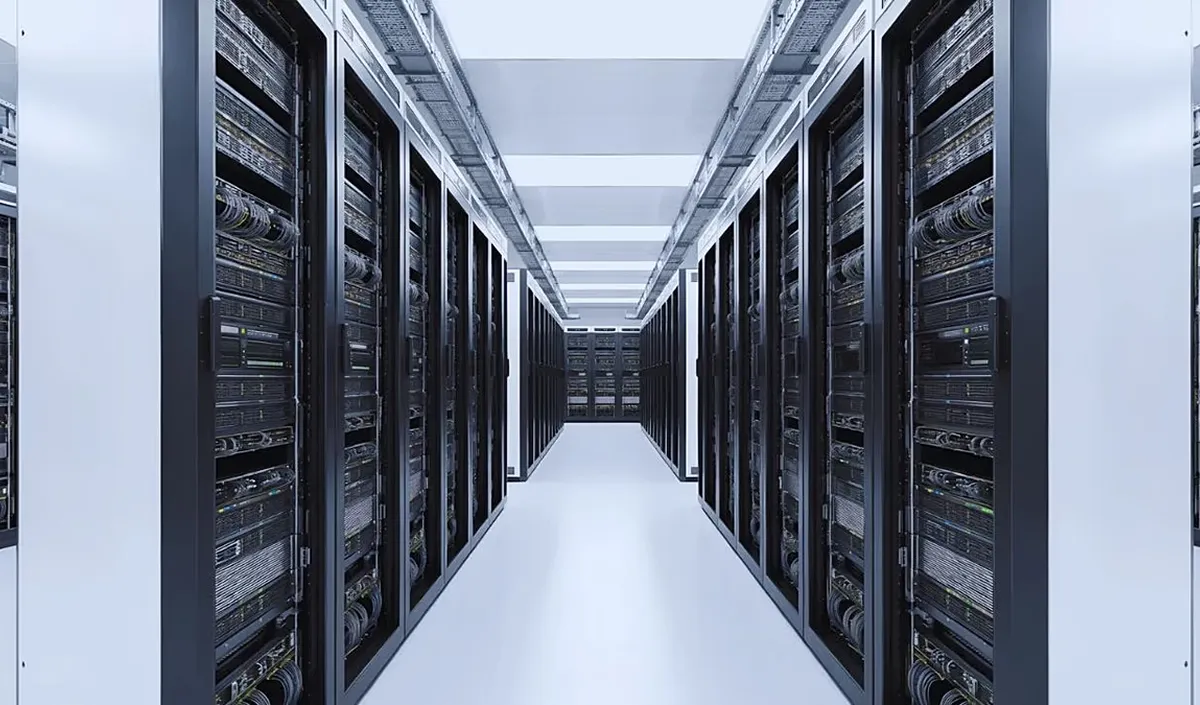
Military targeting of data centres should prompt Europe to reconsider exactly where to build its artificial intelligence infrastructure, according to Mehdi Paravyi, a UN adviser and founder of the think tank International Data Centre Authority (IDCA).
“If a sufficient number of key facilities are hit, the entire economy could be brought to a standstill,” he told Euronews.
As society becomes increasingly digitalised, the disruption of a data centre could mean “the paralysis of the armed forces, the healthcare system and the financial sector”.
Data centres are facilities where companies house servers and store data. They are also critically important for AI, as they provide the enormous amount of energy it requires.
Their importance is particularly heightened in times of war, as Ukraine uses AI to guide strike drones and carry out other military tasks.
New attacks on data centres should prompt countries to be more careful when choosing where to build them, says Paravyi. However, in his view, long-standing industry recommendations to carefully select sites and keep their locations secret are no longer sufficient.
“Perhaps we need missile defence systems like the ‘Iron Dome’, or building them underground or in bunkers,” he noted, declining to give details for reasons of national security.
But the days when data centres were built in random locations are over. He also acknowledged that no country yet has a clear answer on how to ensure security without slowing down the race to ramp up AI capabilities.
European hub
When asked about Europe’s plans for the siting of data centres, the European Commission spokesperson stated that a call for tenders had been launched to establish up to seven AI gigafactories across Europe.
“The tender is still open. Once it has closed, the proposals will be assessed, and decisions on allocation will then be made,” he added. However, no specific answer was given to the question of whether the targeted destruction of data centres during wars would lead to a review of such plans.
The economic damage caused by damage to data centres could be astronomical and, for many countries – including European states – virtually irreparable, according to Parjavi.
Building a single data centre can cost up to $25 billion and take up to three years. “Europe cannot afford to invest hundreds of billions of dollars in such assets only for someone to simply destroy them,” said Parjavi. “I imagine that the whole process of building data centres will have to slow down.”
He called on European nations to present a united front, noting that no single country can cope on its own, particularly as global energy shortages and a shortage of skilled workers compound the security risks.
Instead of scattered facilities, he believes it would be better to create large clusters of data centres, which would allow them to be protected by a single missile defence system.
This story was translated with the assistance of artificial intelligence.The translation was also reviewed by the Logos Press editorial team.
Follow our updates
Have information for the newsroom? Share it with Logos-Press





















Comments
0No comments yet. You can start the conversation.
Comments are open to readers with a Logos Press account.
Sign in to comment