

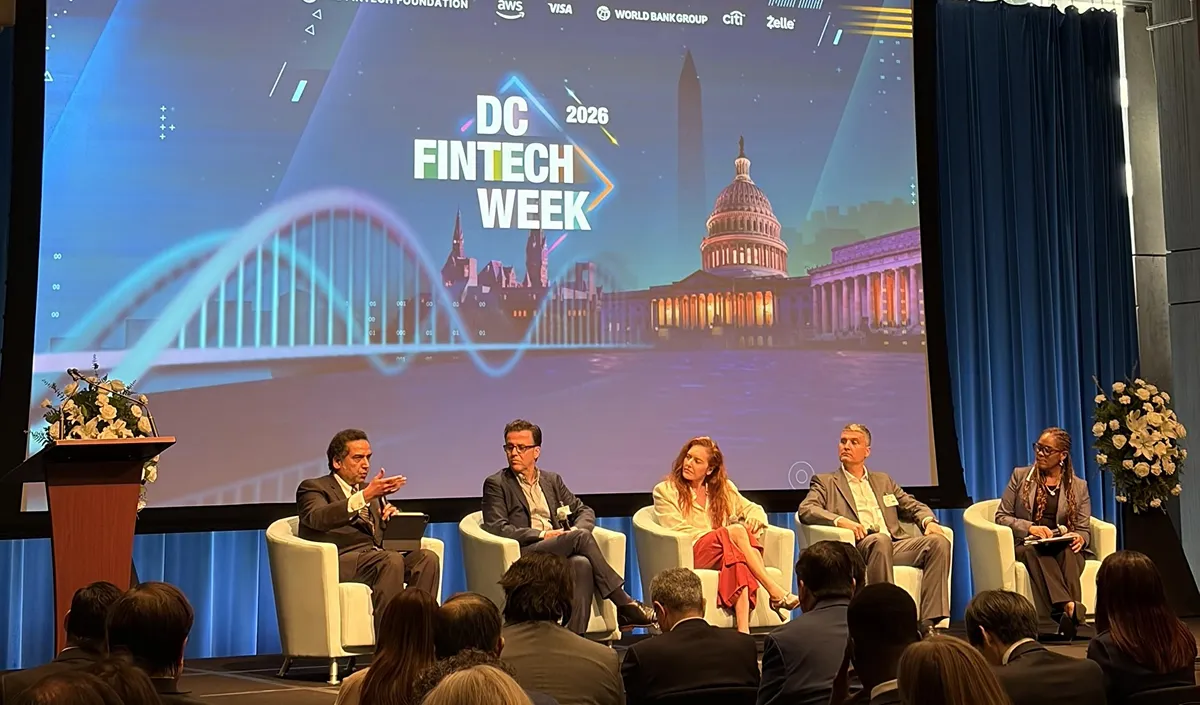
Constantinescu Mihnea, Deputy Governor of the National Bank of Moldova, spoke about it during the panel discussion ‘Built from Scratch: Digital Public Infrastructure and a Leap Forward’. The session addressed the question of whether the launch of a new payment system could be replicated in other countries, or whether it depends on local conditions.
In his speech, the Deputy Governor of the NBM outlined Moldova’s experience in implementing MIA in comparison with the Pix (Brazil) and UPI (India) payment systems. He emphasised the role of the National Bank, which covered the infrastructure costs and ensured the connection of all payment service providers from the moment the system was launched on 12 March 2024.
Starting with person-to-person transfers initiated simply by using a phone number, the MIA system has evolved to include payments via QR codes, links and payment requests, payments accepted by merchants (P2B), payments to government bodies (P2G) and instant payments between businesses (B2B).
Over a million unique users
Currently, over one million unique users are registered with the system, who can receive transfers or payment requests via their mobile number.
“MIA’s experience shows that such a leap is possible even for a small economy. The question now is what system architecture solutions can pave the way for new services, including those based on data and artificial intelligence agents, in the interests of consumers,” emphasised the Deputy Governor of the NBM during the dialogue.
DC Fintech Week – an event organised by the Fintech Foundation – took place from 13 to 16 October 2026 in Washington. Since 2017, it has provided an annual platform where government officials, regulators, investors and entrepreneurs discuss the future of finance.
This story was translated with the assistance of artificial intelligence.The translation was also reviewed by the Logos Press editorial team.
Follow our updates
Have information for the newsroom? Share it with Logos-Press

















Comments
0No comments yet. You can start the conversation.
Comments are open to readers with a Logos Press account.
Sign in to comment