

This was stated by Turkey’s Minister of Energy and Natural Resources, Alparslan Bayraktar, on 23 October at the Verona Eurasian Economic Forum in Istanbul. As reported by the Anadolu Agency, he emphasised that countries have different energy systems and development needs, arguing against a one-size-fits-all approach to the energy transition.
The head of the Ministry of Energy outlined plans to expand the use of renewable energy sources, nuclear power and electricity infrastructure, as Ankara seeks to strengthen its role as a regional energy hub.
Alparslan Bayraktar stated that a world facing geopolitical tensions, supply disruptions and growing energy demand requires greater diversification, investment and international cooperation.
He said that Turkey imports nearly 70 per cent of its energy needs, so reducing external dependence is a strategic economic priority and a national security priority.
Turkey’s objectives and global commitment
The Minister for Energy reported that renewable sources account for over 62 per cent of Turkey’s installed electricity generation capacity, whilst the combined capacity of wind and solar power has exceeded 43 gigawatts.
However, this is not enough, and Turkey will require significant investment in its electricity grids in the coming years as the country seeks to integrate more renewable energy sources, improve grid resilience and expand cross-border electricity trade.
Turkey is also preparing to hold its first tenders for the construction of offshore wind farms in the first half of 2027, whilst its renewable energy development programme aims to add 2 GW of new capacity annually.
As for nuclear power, Bayraktar reported that the country is continuing to work with Russia’s Rosatom to commission the first reactor at the Akkuyu Nuclear Power Station in the coming months. Once all four reactors are operational, the 4.8 GW plant is expected to meet around 10 per cent of Turkey’s electricity demand.
The country aims to reach 20 GW of nuclear capacity by 2050, including conventional reactors and small modular reactors.
Bayraktar also highlighted Turkey’s position between energy-producing and energy-consuming regions, stating that Ankara wishes to strengthen its role as a reliable partner linking regional energy markets.
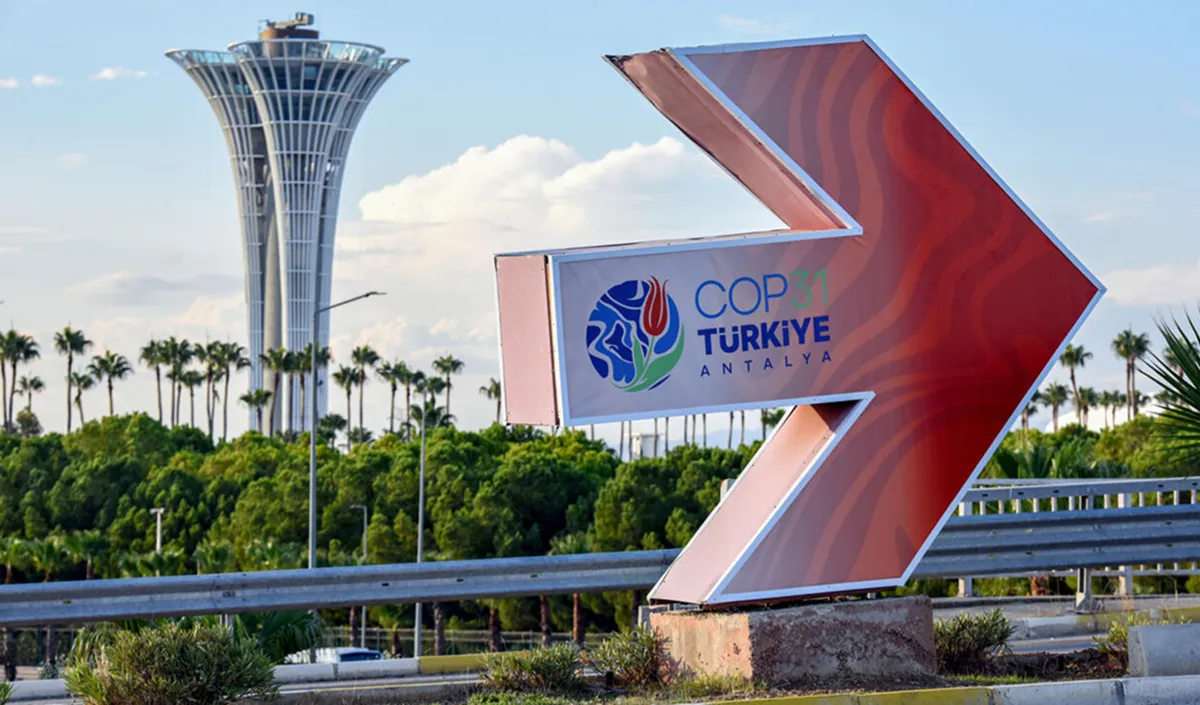
Ahead of next month’s UN Climate Change Conference (COP31) in Antalya, Bayraktar emphasised that countries have different energy systems and development needs, arguing against a one-size-fits-all approach to the energy transition.
In this regard, Bayraktar stated that Turkey would promote the voluntary global ‘35 by 35’ electrification commitment to increase the share of electricity in global final energy consumption to 35 per cent by 2035.
Mobilising private capital, international financial institutions and technological partnerships will be crucial to attracting the investment needed for the transition, he added.
This story was translated with the assistance of artificial intelligence.The translation was also reviewed by the Logos Press editorial team.
Follow our updates
Have information for the newsroom? Share it with Logos-Press



















Comments
0No comments yet. You can start the conversation.
Comments are open to readers with a Logos Press account.
Sign in to comment