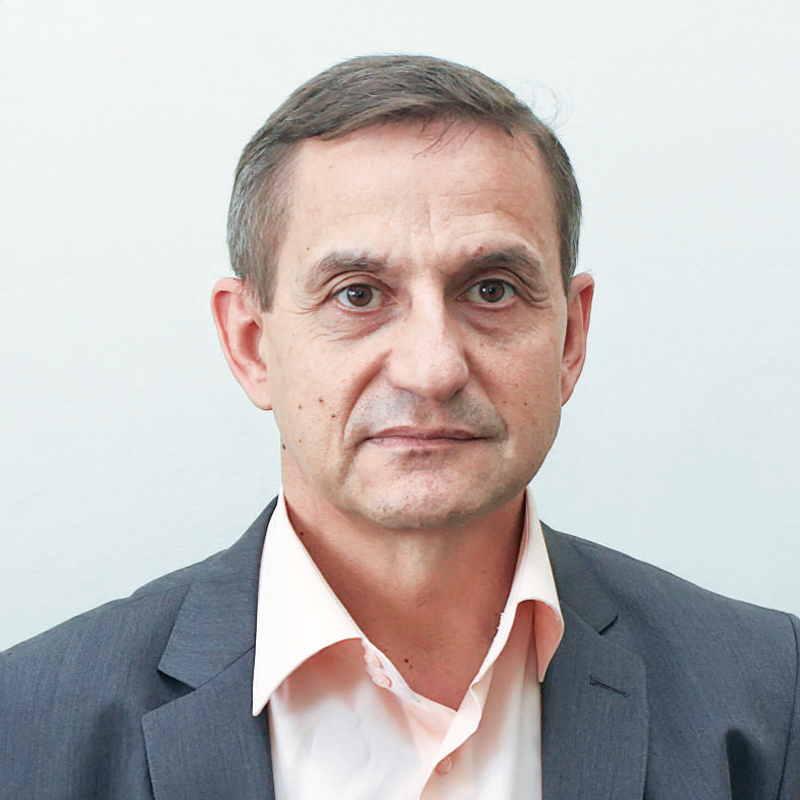

Ion Sturza
On social media, he expressed his bewilderment at this initiative, emphasizing that a libertarian approach and drastic cuts to the public sector are not in line with the European model of development.
“Convince me that Claudiu Nesui is a good choice for the Republic of Moldova. Because I and almost all of my friends in Romania—including those from the USR (the “Union for the Salvation of Romania” party, which Năsui represented in the Romanian Parliament— LP)—aren’t convinced,” Sturza remarked.
As proof, the former Moldovan prime minister cites Nesui’s criticism of the economic policies of Romanian Prime Minister Ilie Bolojan, “who has been and remains, body and soul, by our side, by the side of the Bessarabians.” And that the gas and electricity Moldova receives from Romania are provided thanks to Bolojan, not Năsu. “Why don’t we just grant Ilie (Bolojan— LP) citizenship within an hour?” Ion Sturza asks ironically.
“That’s how they do it in Argentina and Africa, but not in the EU.”
According to the politician, the intentions announced by the new Minister of Economic Development and Digitalization to radically downsize the government apparatus will hit key social sectors—education, healthcare, and public safety—and not just the bureaucratic apparatus:
“When you talk about cutting a third of civil servants, don’t be disingenuous! Civil servants themselves make up only a small fraction of the total workforce and account for about 2–3% of budget expenditures. The rest are teachers, doctors, police officers, and social workers. People who provide the services the state has committed to providing,” writes Ion Sturza. “Can we no longer—or do we no longer want to—provide them? That’s fine! We’ll be honest with people, and they’ll understand. They’ll send their kids to private schools, pay for medical care at clinics, hire nannies instead of sending them to daycare, and ask their neighbors to watch over their homes. Why not?”
However, he notes that such a policy is acceptable for Argentina under Milei (Moldova’s Prime Minister Vasile Tofan stated before his appointment that “Moldova needs its own Milei”— LP). And in many African countries. “But not in the European Union, which is built on the principle of a social market economy and the welfare state,” states Ion Sturza.
“Politics is not a recurring call for a ‘savior’”
The former head of the Moldovan government also criticizes the idea of applying business methods of ultra-liberal restructuring to the management of the state:
“The Republic of Moldova is not a company in the process of bankruptcy. And its citizens are not assets for sale or personnel expenses that can simply be crossed off an Excel spreadsheet,” Ion Sturza continues.
He emphasizes the need to support small and medium-sized businesses through grants and development programs, rather than shutting down such programs.
Like many other politicians in Moldova, the former prime minister also offered a rather sharp assessment of the decision to invite a foreign specialist to fill one of the key positions in the Moldovan government.
“And here’s another ‘minor’ detail. Inviting a foreign citizen to a political position is a flagrant disregard for the fundamental principles of politics. It means admitting that you no longer trust your own people. Are they all corrupt? Are they all frauds? Are they all greedy and only after high salaries?
That’s wrong! Stop engaging in politics if you’re incapable of building teams, training and promoting people, and trusting your citizens. Politics isn’t about periodically inviting a “savior”; it’s about building institutions and leaders right here at home.
“You’ve knocked on the wrong door—sorry,” states Ion Sturza.
Follow our updates