

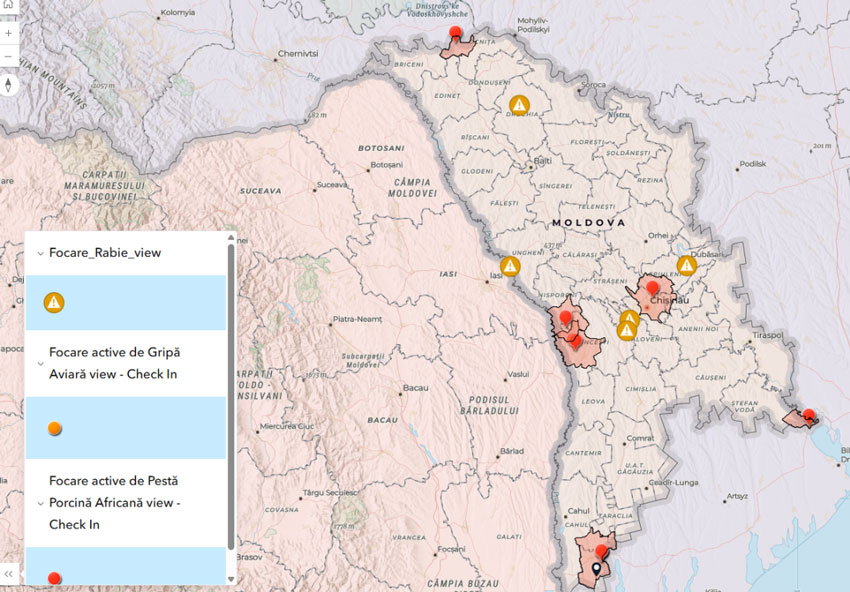
Last week, laboratory tests confirmed the presence of the virus in biological samples taken by ANSA inspectors from pigs in households in the villages of Teleaști (Hîncești), Călimănești (Nisporeni), and Clocușna (Ocnița).
In response, meetings of the territorial crisis management commissions in the aforementioned districts were held, during which plans for measures to counter and control the epizootic situation in the protection zones were approved.
The list of approved crisis response measures includes:
- restrictions on the movement of pigs from commercial farms;
- restrictions on the trade in live pigs and pork from small (so-called “non-professional”) farms, including at agri-food markets, until the risks of disease spread are fully eliminated;
- clinical examination of pigs from all types of farms;
- mandatory weekly testing of pig herds on commercial farms nationwide;
- selective testing of pigs from non-commercial farms;
- surveys of wild boar populations.
Currently, the ANSA agency is carrying out procedures to register domestic pigs, monitor areas of potential infection among wild animals, control the movement of pigs and pork products within the Republic of Moldova, and screen domestic pigs for outbreaks of the disease.
The agency reminds the public that the identification and registration of animals on farms is free of charge and provides a number of benefits for micro- and small-scale farmers (in particular, it opens the possibility of receiving compensation from the government in the event of disease outbreaks or various adverse weather conditions). It also involves the legalization of animal sales or the sale of surplus products.
Follow our updates