


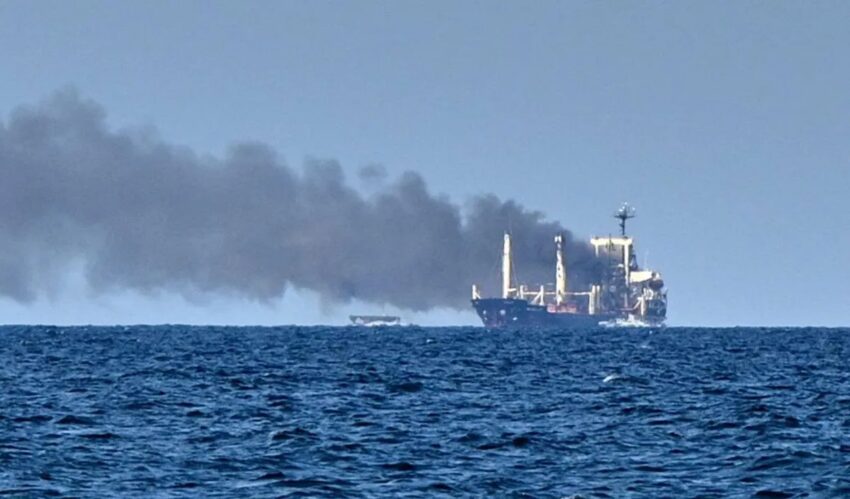
Photo: Euronews
This was stated today by the President of Ukraine, Volodymyr Zelenskyy, during his address at the 9th Summit of the European Political Community, reports Ukrainska Pravda.
For his part, Ukraine’s Minister of Agrarian Policy and Food, Taras Vysotskyi, stated during the forum ‘Agrosector 2026–2027: Survival Strategy” that the ministry “is working on a scenario under which full access to the ports of Greater Odessa may not be restored before the start of the new marketing year — 1 July 2027”.
According to him, the ministry is also modelling a longer period of port restrictions, though it hopes this scenario will not need to be implemented. Nevertheless, “farmers should plan their operations taking into account the possibility of prolonged restrictions on exports via the Black Sea”.
In most cases, the sale of Ukrainian agricultural produce is currently unprofitable. Even after the ports resume operations, it will be difficult to quickly export the accumulated grain. Under normal security conditions, the port infrastructure facilitated the export of 6–7 million tonnes of produce per month; however, it will be impossible to significantly increase these volumes once the ports resume operations, writes Latifundist.
According to the Association of International Freight Forwarders of Ukraine, in October 2026 the number of cargo ships operating in the Black Sea fell by 37 per cent compared with the same period last year — to 1,370 vessels.
This downward trend has been observed throughout most of 2026. As early as March, 2,091 cargo ships were operating in the Black Sea, but their numbers subsequently fell month on month. Consequently, from March to October, shipping activity decreased by approximately 34.5 per cent, or 721 vessels. A particularly marked acceleration in the decline was recorded from August, when the monthly reduction exceeded 10 per cent. Shipping activity in the region continues to decline against a backdrop of escalating military risks, attacks on port infrastructure and threats to the merchant fleet, according to Ukragroconsult.
Follow our updates
Have information for the newsroom? Share it with Logos-Press
























Comments
0No comments yet. You can start the conversation.
Comments are open to readers with a Logos Press account.
Sign in to comment