



Serghei Ungureanu
“However, the move away from direct purchases does not yet mean that Russian gas has completely disappeared from the supply chain. Some of the gas that Moldova purchases through European intermediaries may still be of Russian origin. Chisinau therefore faces a more complex challenge than simply finding new suppliers: it must secure reliable sources of gas, stable transport routes and sufficient storage capacity,” says energy expert Serghei Ungureanu.
Azerbaijan could play an important role in addressing this challenge. However, in order to turn the prospect of supplies from Azerbaijan into a sustainable long-term partnership, Moldova will have to overcome a number of infrastructural and commercial difficulties, as well as security issues, according to Ungureanu.
The Azerbaijani option
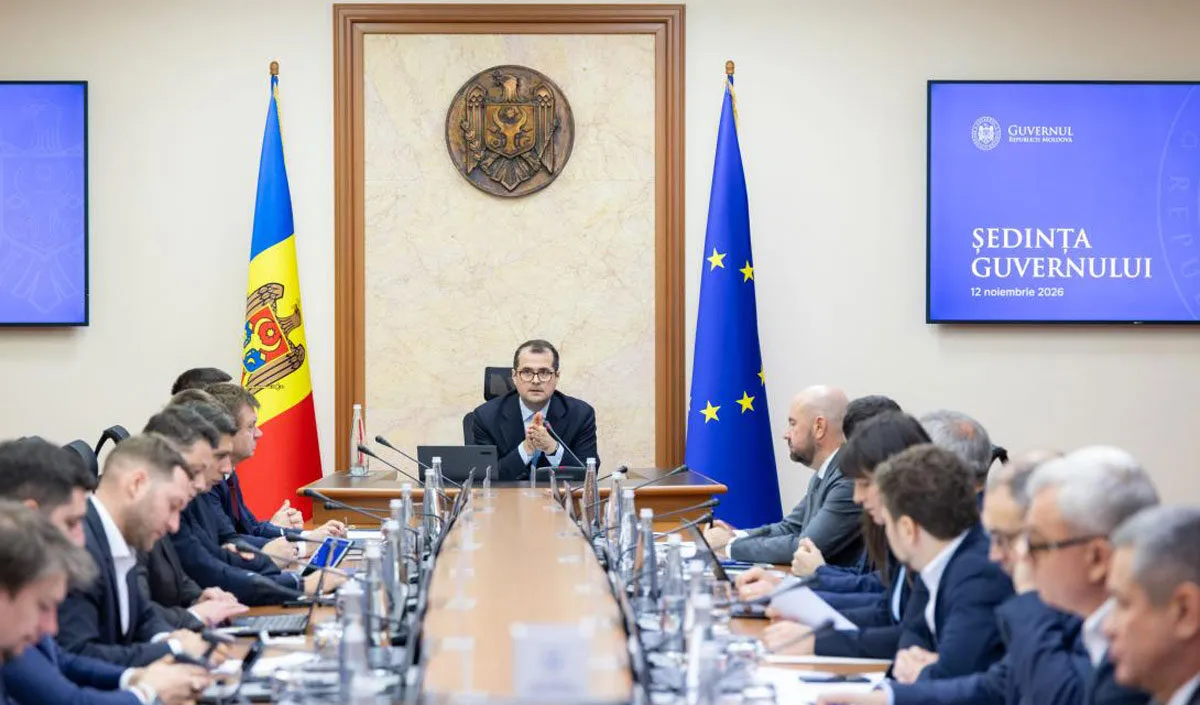
In March 2026, representatives of Energocom and the Azerbaijani state-owned energy company SOCAR discussed the possibility of gas supplies to Moldova via the ‘Southern Gas Corridor’ and the ‘Vertical Gas Corridor’.
The talks highlighted certain prospects. Azerbaijan is playing an increasingly important role as a supplier to European markets, and close cooperation with SOCAR could provide Moldova with an additional option as part of its efforts to diversify its energy supply sources.
However, no significant progress has yet been made towards reaching a long-term supply agreement. One of the challenges is transportation: the proposed route involves using the Trans-Balkan Gas Corridor, which has limited capacity.
Commercial factors are no less significant. European countries are competing for Azerbaijani gas, so Moldova needs long-term agreements that clearly define volumes, prices and supply terms. Furthermore, the competitiveness of such supplies will depend on the cost of transport and transit.
Infrastructure remains the main challenge
For Moldova, access to alternative suppliers is just one component of energy security. The country must also be able to store gas and transport it to consumers, particularly during the winter months.
Moldova lacks its own natural gas storage capacity, so the country is forced to rely on storage facilities in neighbouring Ukraine and Romania. According to Ungureanu’s estimates, around 75–80 per cent of Moldova’s gas reserves are held in Ukrainian storage facilities, whilst approximately 20 per cent are in Romania.
Dependence on foreign storage facilities creates vulnerabilities. This is particularly evident in the case of Ukraine, where the infrastructure for gas storage and transmission could be damaged during the ongoing war. The idea of building Moldova’s own gas storage facilities has been discussed, but so far it remains only at the planning stage.
Another cause for concern is pipeline capacity. During periods of peak winter consumption, the capacity of the Iași–Ungheni–Chișinău gas pipeline may be insufficient to meet the entire demand. Planning must also take into account the needs of Transnistria, where gas consumption is very high.
This means that even if there is sufficient gas available on the European market, ensuring its delivery in the required volume and at the right time may prove difficult. Alternative routes, including the Trans-Balkan Corridor, could help; however, these are also used by other countries and, moreover, have their own capacity constraints.
Moldova’s aim should be to create a system in which the country has a choice: several suppliers, more than one reliable supply route and sufficient flexibility to withstand potential disruptions. It is precisely this that will make the country’s energy security more resilient, argues Serghei Ungureanu.
There isn’t enough of the ‘Azerbaijani gas pie’ to go round
Following the cessation of gas supplies from Russia, Azerbaijan became the first country in which Moldova took an interest as a long-term gas supplier. Romania and Ukraine came into the picture later.
However, to date, no concrete agreements or even memoranda of understanding have been signed between our countries, despite numerous visits by Moldovan officials to Baku.
The fact is that Azerbaijan does not export very much gas.
In the first nine months of 2026, Azerbaijan exported around 18.4 billion m³ of natural gas.
The main export destinations for January–September 2026 were: Europe: 8.6 billion m³; Turkey: 7 billion m³ (including 4.2 billion m³ via the Trans-Anatolian Gas Pipeline — TANAP); Georgia: 1.6 billion m³; and Syria: 1.2 billion m³.
And securing the 1.5–2 billion m³ that Moldova needs from the 8.6 billion m³ supplied to the whole of Europe is a very difficult task.
This story was translated with the assistance of artificial intelligence.The translation was also reviewed by the Logos Press editorial team.
Follow our updates
Have information for the newsroom? Share it with Logos-Press











Comments
0No comments yet. You can start the conversation.
Comments are open to readers with a Logos Press account.
Sign in to comment