


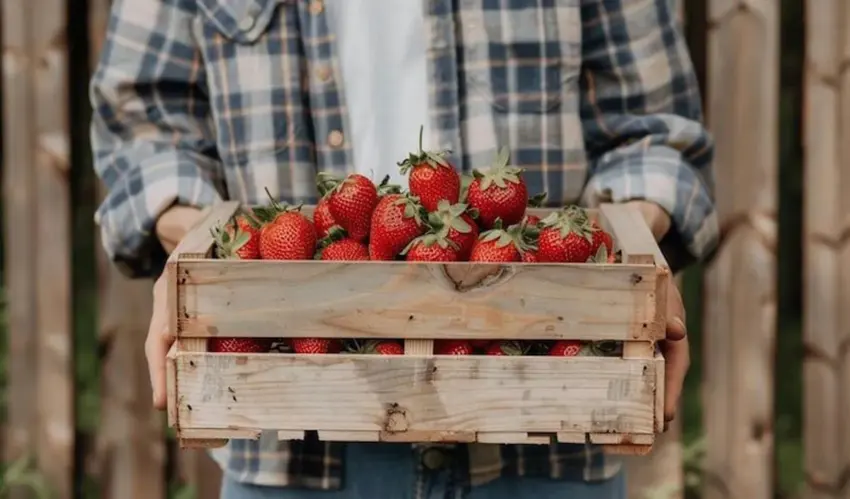
These recommendations were issued by experts from the Food and Agriculture Organisation of the United Nations (FAO) following a monitoring and advisory mission carried out in late October this year in Moldova’s agri-food sector. FAO international expert Henry Matthews (Henry Matthews), together with the team from the project ‘Enhancing the Competitiveness and Resilience of Smallholder Farmers to Climate Risks in the Republic of Moldova’, implemented with Swiss support, conducted interviews with farmers, producer associations and traders from five regions of the country.
An analysis of the identified challenges and opportunities showed that small-scale production is not always a critical drawback. Even farms that are relatively small in terms of land area can successfully collaborate with retail chains and export traders, provided they are able to ensure a steady supply of high-quality produce, however modest the volume may be. Examples include a vegetable farm covering just 2.7 hectares in the Orhei district, which supplies a supermarket chain, and a group of 13 small vineyards in the Ștefan Voda district, which exports table grapes to 40 countries.
Note from Logos Press. In Moldova, if one looks for them, there are many examples of small-scale fruit businesses working with supermarket chains – either independently or through cooperatives. The problem, which has become particularly acute this year, is that supermarket chains require suppliers not only to provide a steady supply and consistent product quality, but also to deliver to every branch in the chain. On a regular basis, in small batches, using their own specialised transport. Given current petrol and diesel prices, this is often not worth the effort. Therefore, as one berry producer put it in an interview with an LP correspondent: ‘It’s more profitable for me to send one or two weeks’ worth of produce a day by lorry to a middleman at a low price than to deliver a hundred kilograms to dozens of shops every week for a slightly higher fee over several months.’
This story was translated with the assistance of artificial intelligence.The translation was also reviewed by the Logos Press editorial team.
Follow our updates
Have information for the newsroom? Share it with Logos-Press















Comments
0No comments yet. You can start the conversation.
Comments are open to readers with a Logos Press account.
Sign in to comment