


Unaccounted-for land and ‘grey’ areas in the documentation
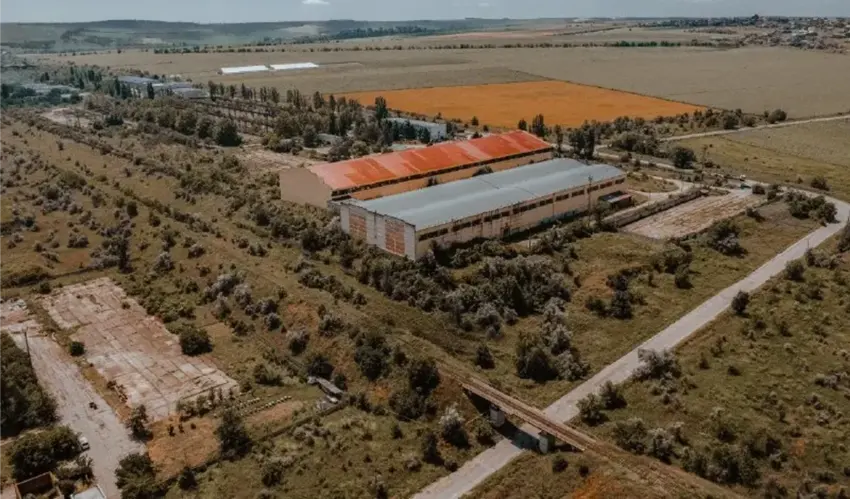
As the audit revealed, the transfer of state assets to the administrations of the special economic zones (SEZs) was in many cases not legally finalised: there are no handover certificates, and land contracts have not been fulfilled. Furthermore, the Public Property Agency (PPA) failed to record five state-owned plots totalling 186.3 hectares in its accounts.
The omission of nearly two hundred hectares from the official balance sheet effectively removes these assets from full state control. At a time when land remains the key resource for attracting industrial investors, the lack of basic accounting records creates conditions for the inefficient use of land and lost revenue for the budget.
Property for non-residents: the risk of eroding state assets
The auditors paid particular attention to practices involving companies without resident status. In the “Belts” Free Economic Zone, seven non-residents were granted leases for plots totalling 73,880 m² with building rights. In two cases, buildings erected on state-owned land were registered as private property.
Such precedents run counter to the very logic of free zones, whose infrastructure is created to facilitate the preferential development of registered residents. The transfer of land to non-residents, followed by the privatisation of the buildings, erodes the integrity of the public heritage and limits the state’s ability to accommodate new industrial facilities.
Fictitious residents and low debt recovery rates
The audit also identified administrative inertia at local level. A number of FEZ administrations maintained preferential status for companies that had not commenced operations within the stipulated timeframes, without documenting this or applying legal sanctions. In effect, such entities are blocking access to infrastructure for genuine investors.
The audit also revealed problems with the collection of rent. Due to errors in calculations and a passive approach to debtors, outstanding receivables had reached 5.5 million lei. By the time the audit was completed, only 0.7 million lei (less than 13 per cent of the total amount) had been recovered, which points to poor financial discipline on the part of the administrations.
Following the audit, the auditors drew up a set of recommendations. The main objective is to clearly delineate responsibilities between the APS and the zone administrations, bring order to the registers and re-establish strict control over the use of public resources.
Background information
There are officially seven free economic zones (FEZs) operating in Moldova, as well as facilities with similar status:
- Ungheni-Business (Ungheni)
- Bălţi (the country’s largest FEZ, attracting more than half of all investment)
- Expo-Business-Chişinău (Chişinău)
- Taraclia (Taraclia)
- Tvardiţa (Tvardiţa)
- Valkaneş (Vulkaneşti)
- Otaci-Business (Otaci)
The following also have special free zone status:
- Giurgiulești International Free Port
- Mărculești International Free Airport
Follow our updates
Have information for the newsroom? Share it with Logos-Press

















Comments
0No comments yet. You can start the conversation.
Comments are open to readers with a Logos Press account.
Sign in to comment