


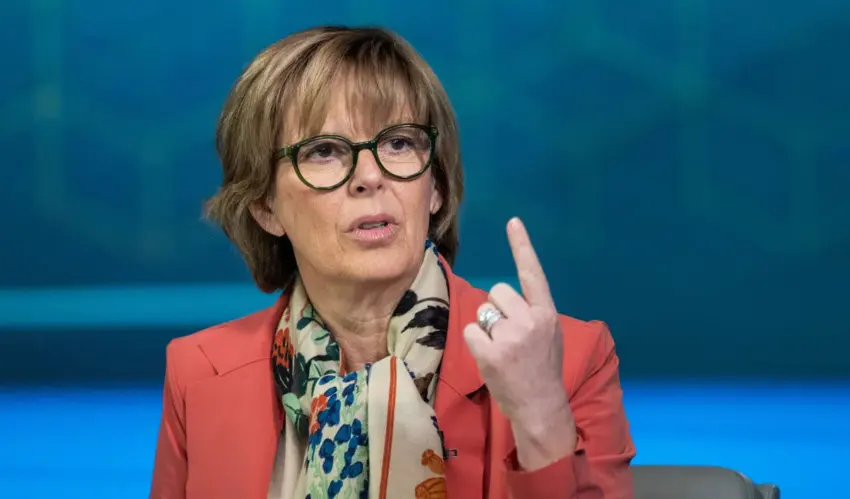
Valérie Urban
“You cannot simply transfer the assets and forget about the liabilities! That would create a huge imbalance and lead to Euroclear’s bankruptcy,” said Urban in an interview with the newspaper Le Soir, as cited by the BELTA news portal.
She cited the legal proceedings initiated by the Bank of Russia against Euroclear as another significant risk factor, describing them as a “sword of Damocles”.
Reputational damage to Euroclear
According to her, attempts to forcibly transfer or confiscate the Russian Federation’s frozen assets would also result in serious reputational damage for Euroclear and could trigger an outflow of some deposits outside Europe.
The European Union and the G7 countries have frozen Russian assets totalling around €300 billion. Approximately €180 billion of this is held by Euroclear. At the EU summit late last year, participants failed to agree on the expropriation of these funds under the guise of a ‘reparations loan’ to Ukraine. Instead, it was decided to allocate €90 billion to Kyiv for the years 2026–2027 in the form of a loan.
The depository opposed the expropriation of Russian funds, warning that, in response, Russia might seek through the courts the seizure of European or Belgian assets in other parts of the world.
On 9 October, the newspaper El País, citing an official in Brussels, reported that the European Commission was considering the possibility of creating a separate entity to hold frozen Russian assets and subsequently use them to support Ukraine. It is proposed that the assets held by the Euroclear depository be separated and placed in the new entity in order to spread the legal risks amongst EU countries.
Follow our updates
Have information for the newsroom? Share it with Logos-Press

















Comments
0No comments yet. You can start the conversation.
Comments are open to readers with a Logos Press account.
Sign in to comment