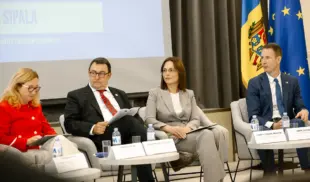
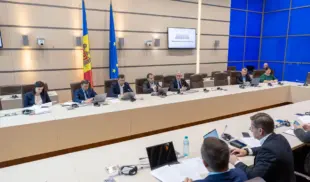
This was announced by Natasha Azzopardi-Muscat, head of one of the departments at the World Health Organisation’s Regional Office for Europe, during a public dialogue on the safety of children and adolescents online and the impact of social media on them. The event took place this week in Chișinău.
“One in seven children and one in five adolescents today live with some form of mental illness,” noted Natasha Azzopardi-Muscat. “We now view mental health as a public health issue. It was already a priority during the pandemic, but in the current situation the problem is only growing. The healthcare system and medical services must be capable of providing appropriate care in the context of this rapidly evolving situation – both at the primary healthcare level, where there remains a significant gap in many countries, and within specialist services.”
Participants in the dialogue noted that digital technologies offer additional opportunities for education, creativity, communication and access to information, but at the same time affect adolescents’ sleep, emotional development, attention, social relationships and identity formation. For them, it is not merely a place for entertainment, but also an environment in which they develop, seek validation of their worth and interact with those around them.
According to Alexandru Gasnash, Moldova’s Minister of Health, ‘the digital environment is having an ever-greater influence on how children think, learn, communicate and develop. Their online safety must therefore become a public health priority’.
The reality is far more complex
‘It is not enough simply to count the hours spent in front of screens,’ he noted. ‘What matters is what children do online, who they interact with and, above all, how the platforms and algorithms that capture their attention are designed. We cannot say that social media is the sole cause of mental health problems. The reality is far more complex. We need shared responsibility – from families, schools, the health service, the authorities and technology platforms.”
During the session ‘From Findings to Policy’, experts from France, Belgium, Poland, Finland and the Czech Republic shared their countries’ experiences and approaches in the fields of mental health, digital wellbeing, public policy and responding to the challenges of the online environment.
In this context, the draft of the Republic of Moldova’s National Policy Framework, ‘A Safe and Healthy Digital Environment for Children and Adolescents’, was presented during the event. The document has been put forward for analysis and consultation.
Follow our updates
Have information for the newsroom? Share it with Logos-Press