


This is provided for in the EU’s common position on Chapter 2, ‘Free movement of workers’, within Cluster 2, ‘Internal Market’, of the negotiations on the Republic of Moldova’s accession to the European Union.
At the same time, the rights of Moldovan citizens who, at the time of the country’s accession to the EU, are already legally resident and legally employed in another Member State are protected by the relevant EU rules.
The EU notes a low level of alignment of the Republic of Moldova with the EU acquis (the body of EU law) in the area of general principles governing access to the labour market, in particular with regard to the free movement of workers, including the right of entry, residence, work and access to employment.
The European Union urges the Republic of Moldova to ensure that, by the time of accession, citizens of EU Member States will be able to access the labour market in the Republic of Moldova without restrictions and will enjoy equal treatment with the country’s own citizens. This includes working conditions, social and tax benefits.
Furthermore, the Republic of Moldova will need to designate a national body responsible for supporting mobile workers from the EU, guarantee the corresponding rights of their family members, regardless of nationality, and bring restrictions on access to jobs in the public sector into line with the case law of the Court of Justice of the European Union.
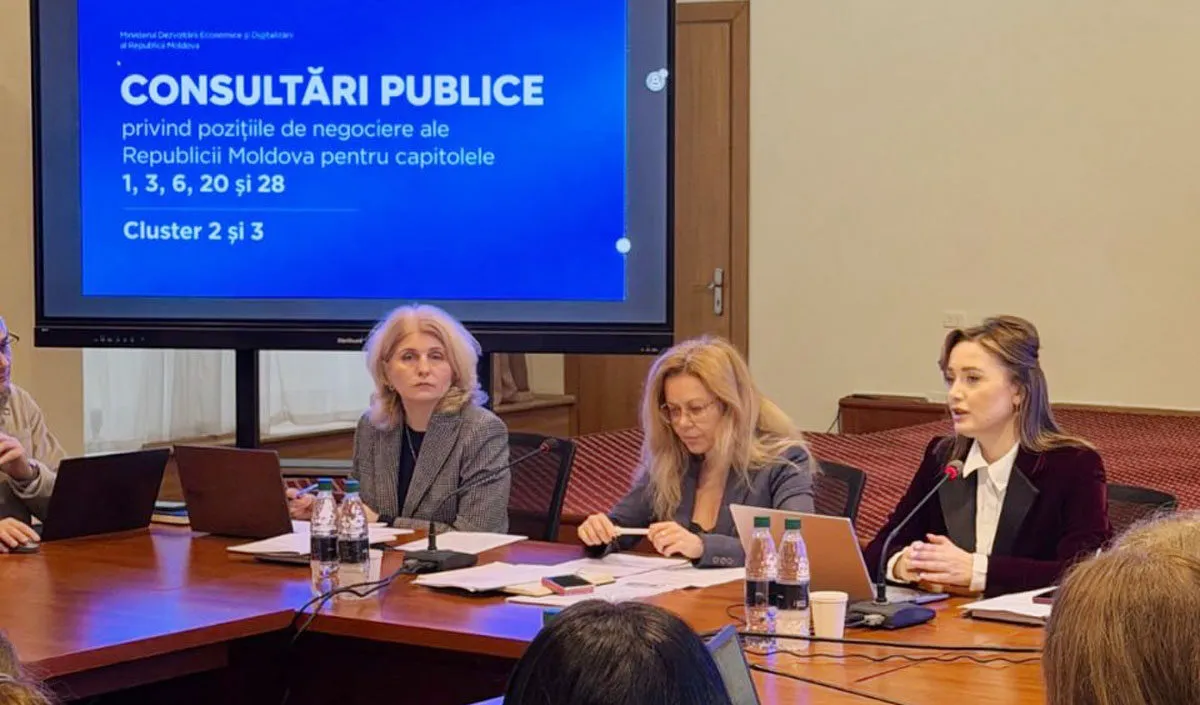
These issues were discussed by representatives of public institutions, the business community, civil society and development partners during public consultations organised by the Ministry of Labour and Social Protection, in conjunction with the Office for European Integration.
This story was translated with the assistance of artificial intelligence.The translation was also reviewed by the Logos Press editorial team.
Follow our updates
Have information for the newsroom? Share it with Logos-Press

















Comments
0No comments yet. You can start the conversation.
Comments are open to readers with a Logos Press account.
Sign in to comment