


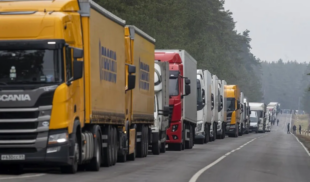
Over the past 24 hours, 3,098 lorries have passed through all of the Republic of Moldova’s border customs posts in both directions. Due to the increase in the flow of heavy goods vehicles, caused by the seasonal surge in grain exports, the re-routing of trade routes and the increase in the transit of Ukrainian goods through the Republic of Moldova, the Customs Service continues to take measures to optimise traffic flow. At the same time, it recommends that hauliers use alternative routes and available digital solutions to plan their journeys and prepare customs formalities in advance.
Choose a customs post based on your route and the nature of your shipment, as a balanced distribution of lorries across border customs posts helps to ensure the efficient use of available capacity and reduces congestion on access roads.
Carriers intending to cross the border via Leușen–Albica or Sculeț–Sculeț with empty lorries may choose, depending on their route, Căhul–Oancha or Costești–Stynka.
When transporting goods, the choice of route must take into account the border crossing conditions and the necessary checks. In the case of goods subject to phytosanitary or veterinary controls, a border crossing point where the relevant services are available must be selected. Furthermore, the Cahul–Oancha border crossing point permits the exit of lorries carrying goods belonging to economic operators with Authorised Economic Operator (AEO) status.
To exit Moldova via the Costesti–Stynka customs post, hauliers may use the BQS electronic planning system.
Advance registration allows you to plan the departure from the warehouse and the border control process in accordance with a schedule, which helps to organise the journey more efficiently and avoids congestion on access roads.
Don’t forget about NCTS and ENS
The Customs Service recommends that economic operators use the single transit procedure via NCTS and submit the transit declaration in the Republic of Moldova electronically before the lorry arrives at the border. The data is transmitted via the system and becomes available to the relevant customs authorities, which facilitates the preparation of formalities.
At the same time, the summary declaration for entry into the European Union (ENS) can be submitted electronically in advance, including from within Moldova, provided that the operator has the necessary registration and access to the relevant EU IT systems.
Using both options — the advance submission of a transit declaration via the NCTS and the EU Entry Summary Declaration — allows formalities to be prepared before arrival at the border and may help to reduce processing times. Submitting a transit declaration via the NCTS does not replace the requirements for the ENS.
Where delivery times permit, customs recommends planning consignments in stages and checking traffic conditions before departure. Spreading journeys across different days and time slots, as well as using available alternative routes, can help prevent large numbers of lorries from congregating at the same customs points.
Preparing and checking in advance the documents required for transport also facilitates the completion of border formalities.
The Customs Service maintains constant contact with the Romanian authorities to coordinate operations and adapt measures to changes in traffic flow. Teams are working round the clock, deploying additional staff to key posts, and are jointly exploring solutions to make effective use of the available infrastructure and speed up the processing of lorries on both sides of the border.
This story was translated with the assistance of artificial intelligence.The translation was also reviewed by the Logos Press editorial team.
Follow our updates
Have information for the newsroom? Share it with Logos-Press

























Comments
0No comments yet. You can start the conversation.
Comments are open to readers with a Logos Press account.
Sign in to comment