

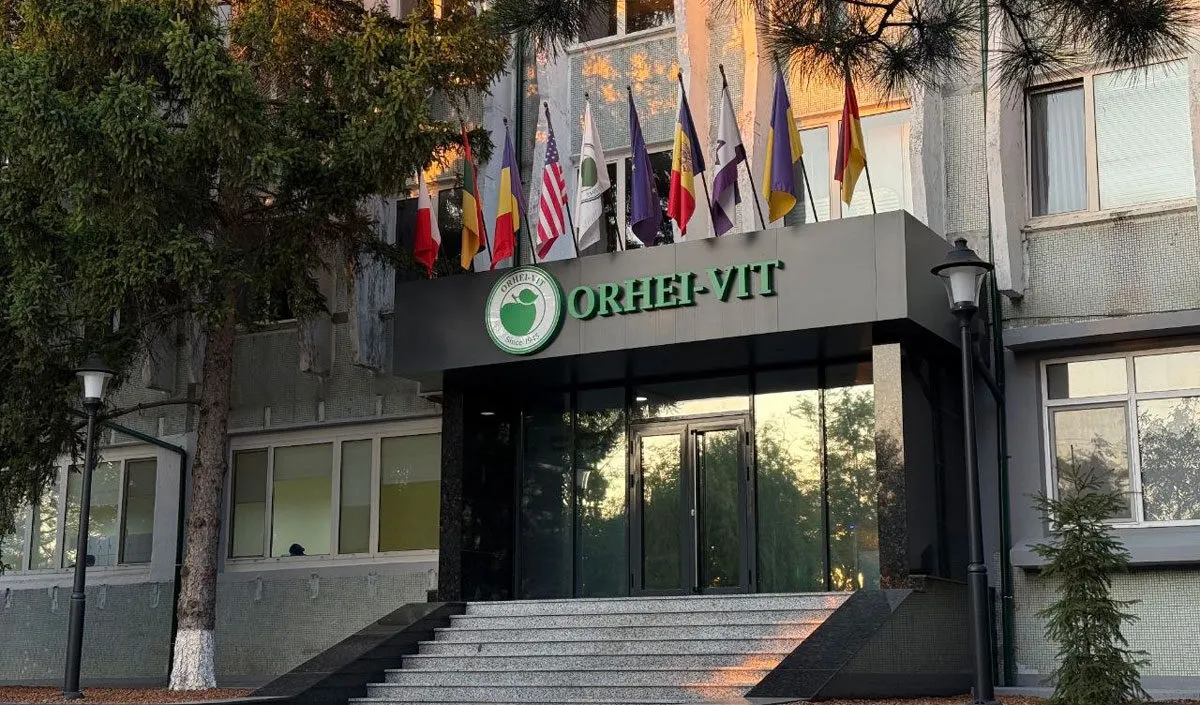
According to a decision by the Competition Council published on the authority’s website, Orhei-Vit has undertaken to comply with the conditions it has accepted for a period of three years. It will submit a report to the authority every six months on the fulfilment of these obligations.
It is worth noting that in its analysis of the competitive environment in the fruit sector, which preceded the decision, the competition authority highlighted an important factor. ‘Orhei-Vit’ submitted to the Competition Council written statements from six fruit-growing farmers’ associations confirming that they had established sound business relations with the aforementioned canning company and that they were keen to see the production facility, formerly owned by ‘Natur Bravo’, continue its operations.
The Competition Council also notes that the explanation of the motives behind the merger, as well as ‘Orhei-Vit’s’ assurances regarding the continuation of the canning factory’s core activities in northern Moldova and the maintenance of a mutually beneficial partnership with farmers in the enterprise’s raw material supply area, have also fully satisfied the largest association of Moldovan fruit growers.
Logos Press had previously reported that, in a comment to the publication, Boris Efimov, CEO of ‘Orhei-Vit’, emphasised that the company had long planned to establish a fully-fledged production base in the country’s ‘apple-growing north’. In this context, the opportunity to acquire the Natur Bravo industrial base can be seen as consistent with the company’s strategic objectives.
According to him, farmers in northern Moldova have long been awaiting the establishment of an Orhei-Vit production site in their region, as the company – unlike most of its competitors – is not only ‘focused on apples’ but is also a major processor of plums, tomatoes and other fruit crops. This creates the conditions for farmers to expand the range and volume of fruit and vegetable crops, reduce the commercial risks associated with marketing their produce, and make more efficient use of their land.
“Over the last few years, logistics – in particular, the length of ‘transport routes’ – has played an increasingly important role in the agribusiness sector,” notes Boris Efimov. “From this perspective, the shorter the distance from the orchard to the factory gates, the better, as delivery costs are reduced. Consequently, resources become available to increase the purchase price of raw materials. It is also worth emphasising that our company’s strategy involves prompt payments and zero outstanding debts to farmers by the end of the season.”
According to estimates by the Speranța Con Association of Fruit and Vegetable Processors, prior to the current season, the industry’s top three were TB Fruit (Edinet), with a market share of around 40 per cent in the procurement of industrial apples, Alfa-Nistru (Soroca) – 25 per cent and Orhei-Vit (Orhei) – 19 per cent. The Natur Bravo factory ranked fourth among industry operators, with a share of up to 10 per cent of the total volume of industrial apples purchased in Moldova.

Follow our updates
Have information for the newsroom? Share it with Logos-Press

















Comments
0No comments yet. You can start the conversation.
Comments are open to readers with a Logos Press account.
Sign in to comment