


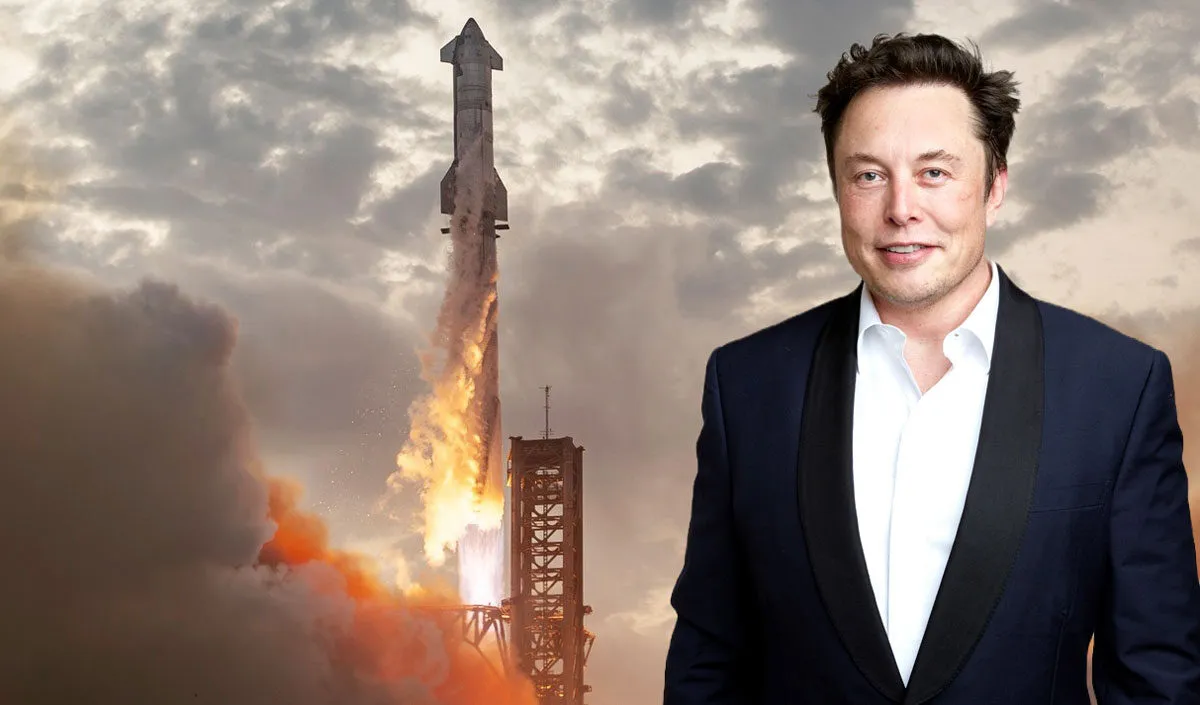
Musk made these comments in response to a post by physicist Luis Batalla, who linked the first orbital flight of Starship on 28 September 2026 to a potential change in approaches to the design of space observatories.
From ‘folding’ telescopes to simpler designs
As Batalia notes, modern developers of the largest space telescopes face strict constraints on mass and volume. In order to fit complex instruments into the rocket’s payload fairing, they have to be made as light and foldable as possible.
This approach leads to the development of complex deployment mechanisms. These prolong the engineering process and create additional potential points of failure.
According to Battaglia, Starship’s capabilities could change this trade-off. With significantly more available mass and internal volume, engineers will be able to design heavier yet simpler observatories, without having to optimise every component to meet the strict constraints of existing rockets.
The physicist is effectively proposing to replace the optimisation principle of ‘how to make the spacecraft as light and compact as possible’ with the approach of ‘how much additional mass can be used to improve reliability and capabilities’.
Musk expanded on this idea in his response: ‘Starship will expand the scope of physics research by placing much larger telescopes in orbit and giant ones on the Moon’.
What this could mean for space astronomy
In the comments under the posts by Batalia and Musk himself, users note that if Starship’s capabilities are realised on the scale announced, launch-related constraints will potentially cease to be such a decisive factor in the design of space observatories.
This could give developers greater freedom in choosing the size of mirrors, the mass of the structure and the architecture of the spacecraft. In the long term, this goes beyond individual telescopes in orbit to include fundamentally larger observatories, including lunar systems.
For the space industry, the potential shift itself is significant: the development of heavy-lift launch vehicles is capable of influencing not only the cost of delivering spacecraft into space, but also how these spacecraft themselves will be designed.
This story was translated with the assistance of artificial intelligence.The translation was also reviewed by the Logos Press editorial team.
Follow our updates
Have information for the newsroom? Share it with Logos-Press



























Comments
0No comments yet. You can start the conversation.
Comments are open to readers with a Logos Press account.
Sign in to comment