


Claudiu Năsui
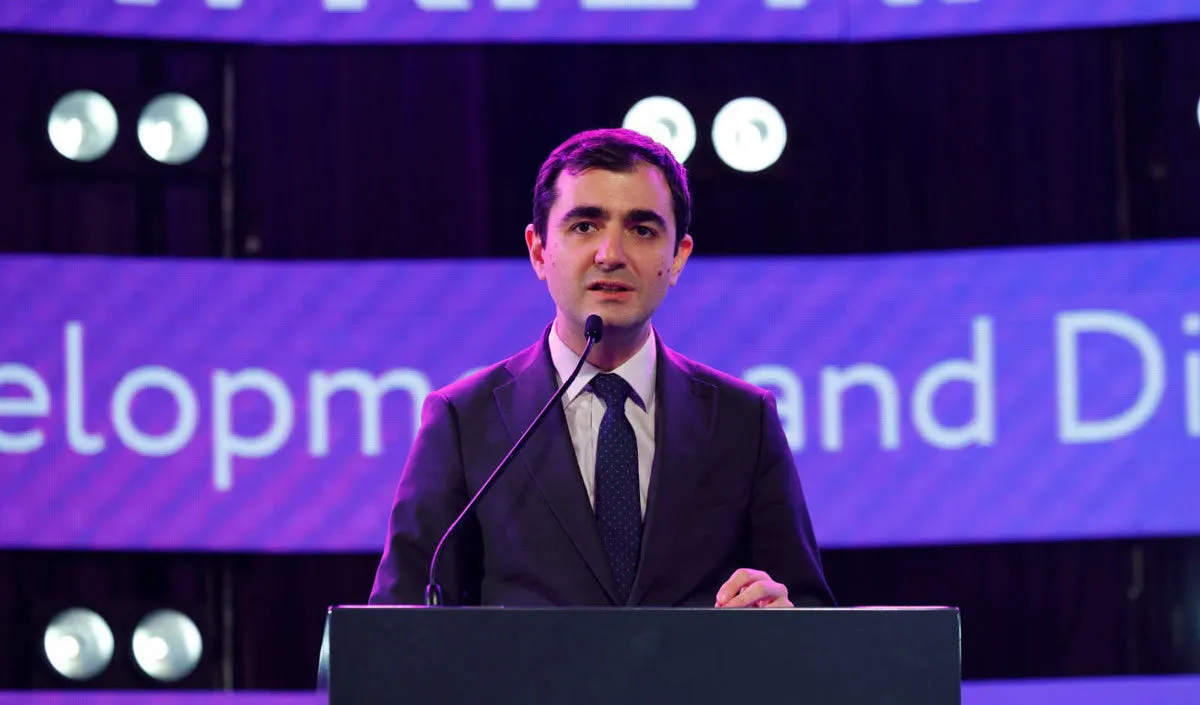
According to the Minister for Economic Development and Digitalisation, Claudiu Năsui, the reform will also target the management of corporate assets, including in the case of companies that are making a profit but whose income comes from secondary activities, such as letting.
“I look at some companies, including some profitable ones, and I look at the source of their profitability. It is not the company’s core business. It is rents. It is other things. In other words, there are many issues once we start looking into them. But our approach, you should know, will be a unified one. In other words, we won’t start taking a piecemeal approach, looking at each company individually. Because we’d never finish. It would be a never-ending story. We will take a unified approach to all of them, which I hope we will roll out as soon as possible,” the minister said on Moldova 1.
He specified that the solutions will also address the issue of political influence over state-owned companies:
“What are we going to do about political influence, and how are we going to deal with it? You’ll see that in the same reform package.”
At the same time, the minister pointed out that reducing the number of agencies does not automatically mean a reduction in budgetary expenditure.
“We have actually increased expenditure, even though the number of agencies has fallen. And this has happened in other countries too. A merger makes sense when expenditure is also reduced in some way and when there are efficiency gains, especially for citizens,” explained Claudiu Năsui.
According to him, the reorganisation must eliminate redundant administrative structures and simplify citizens’ dealings with state institutions. In this regard, the minister cited the Public Services Agency (ASP) as an example, where several services are integrated into a single institution.
“In other words, rather than having seven agencies with seven chairpersons, directors, secretaries, drivers, administrative structures, accounting, finance, procurement and all that, it is better to have just one, so that citizens aren’t sent back and forth between them – picking up a document from one place, going to get a stamp from another, and so on – and everything is handled in an integrated manner,” said the minister.
This story was translated with the assistance of artificial intelligence.The translation was also reviewed by the Logos Press editorial team.
Follow our updates
Have information for the newsroom? Share it with Logos-Press






















Comments
0No comments yet. You can start the conversation.
Comments are open to readers with a Logos Press account.
Sign in to comment