



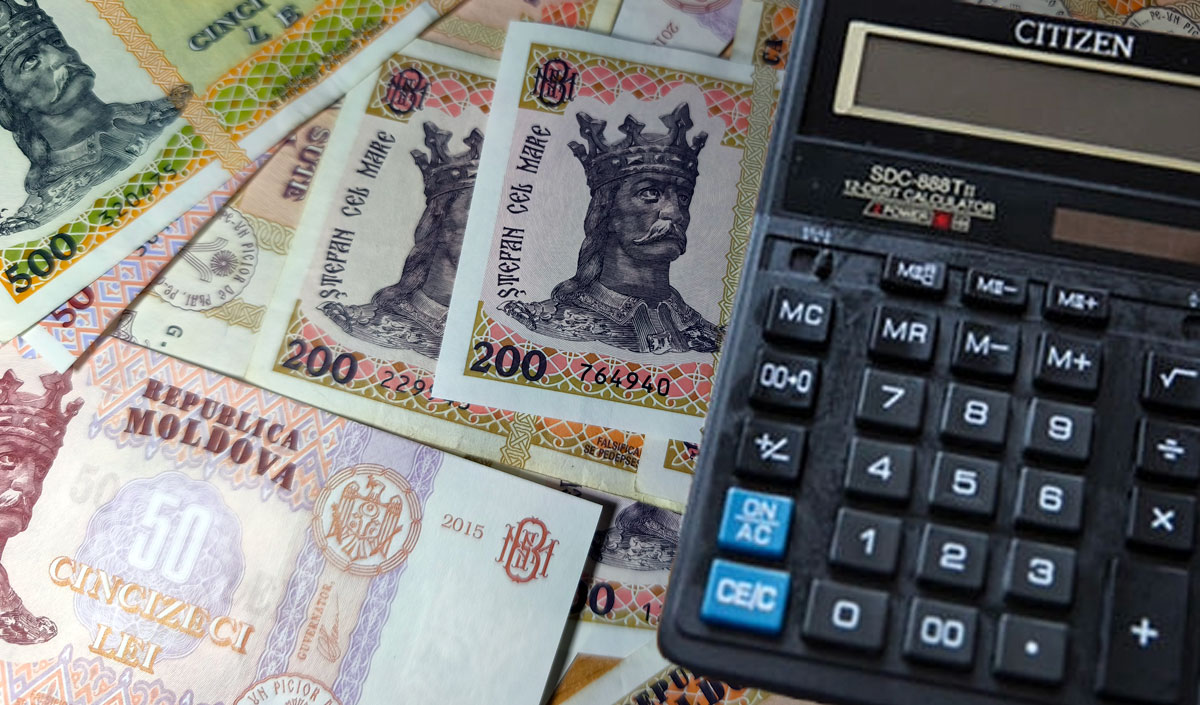
The reform is necessary given that, over the years, the pay system has accumulated numerous derogations and exceptions, which have led to significant disparities in staff earnings. Currently, basic salaries range from 2,500 lei – a sum topped up by compensatory payments to bring it up to the minimum wage – to approximately 65,000 lei. At the same time, in some cases, bonuses can amount to as much as 120 per cent of the fixed salary.
The new law will create a fairer and more transparent pay system, in which the basic salary will account for a larger proportion, and the ratio between the lowest and highest basic salaries will be 1:10.5. The new pay scale will take into account the complexity of duties, the level of responsibility, qualifications and length of service. Furthermore, derogations and exceptions will be reduced, as will the number of reference values used to calculate salaries, from the current 10 to a maximum of 6 by 2027 and 4 by 2032.
The largest additional funding allocations are earmarked for education and technical and support staff. In education, around 60,000 employees will benefit from an average pay rise of 14.4 per cent, for which additional funding of 1 billion lei is estimated. For approximately 50,000 employees in the technical sector and among manual workers, the average increase will be 19.3 per cent, with an estimated allocation of 845 million lei.
Pay rises are also planned for around 20,000 employees in public administration, with an average increase of 15.3 per cent, as well as for approximately 17,000 employees in the public order sector, with an average increase of 15 per cent. In health and social care, the estimated average increase is 14.9 per cent, and in culture and sport – 14.1 per cent. At the same time, salaries will rise, on average, by 20.6 per cent in the national defence sector and by 14.1 per cent in the justice sector.
The reform will bring about tangible pay rises for several professional categories. Here are some examples of increases in average salaries:
- general education teacher, grade II: from 13,030 to 14,828 (+13.8 per cent);
- soldier in a military unit: from 10,566 to 13,104 (+24 per cent);
- social worker with a university degree: from 9,798 to 11,844 (+20.9 per cent);
- university lecturer (state-funded institutions): from 19,816 to 23,919 lei (+20.7 per cent);
- teaching assistant: from 6,811 to 9,140 lei (+34 per cent);
- support teacher: from 11,341 to 13,742 lei (+21 per cent);
- local police officer: from 13,024 to 15,675 lei (+20 per cent);
- investigating officer: from 13,246 to 17,421 lei (+31 per cent);
- nursing assistant: from 10,300 to 12,800 lei (+24.3 per cent);
- social worker: from 6,780 to 8,178 lei (+21 per cent);
- cook: from 6,459 to 9,039 lei (+40 per cent);
- driver: from 7,395 to 9,419 lei (+27%).
The new law also provides for increases in certain allowances. For eligible staff in research and higher education, the allowance for holding the academic title of ‘doctor habilitat’ or the academic and teaching title of ‘university professor’ will rise from 1,100 to 2,500 lei, and for the title of ‘doctor’ or ‘associate professor’ – from 600 to 1,500 lei. For teaching staff in general and technical vocational education, as well as for staff in other fields holding academic titles corresponding to their job responsibilities, the allowances will amount to 50 per cent of the respective amounts.
From 2028, allowances for teaching grades will also be increased: from 4,000 to 4,600 lei for the senior grade, from 2,800 to 3,100 lei for Grade I, and from 1,500 to 1,800 lei for Grade II. At the same time, a new allowance will be introduced for qualification grades in social care, with amounts ranging from 750 to 2,000 lei.
Another component of the reform concerns the rewarding of professional performance. Performance bonuses will be awarded based on the results of individual appraisals, amounting to 10–15 per cent of the basic salary for an ‘excellent’ rating and 5–7 per cent for a ‘very good’ rating. Specific rules will apply to staff in education and research.
Furthermore, from 2028, a competitiveness index of between 1.1 and 1.3 may be temporarily applied when calculating the basic salary for hard-to-fill posts. The mechanism aims to attract and retain specialists in fields where public institutions face recruitment difficulties.
The draft also includes transitional mechanisms to protect employees’ incomes in situations where the application of the new pay scale would result in a reduction in their earnings.
The law is due to come into force on the date of its publication in the Official Gazette, and the new provisions will mainly apply from 1 January 2027, with some measures scheduled for 2028, following the bill’s adoption by Parliament.
The financial impact of the reform is estimated at 3.2 billion lei in 2027.
This story was translated with the assistance of artificial intelligence.The translation was also reviewed by the Logos Press editorial team.
Follow our updates
Have information for the newsroom? Share it with Logos-Press
















Comments
0No comments yet. You can start the conversation.
Comments are open to readers with a Logos Press account.
Sign in to comment