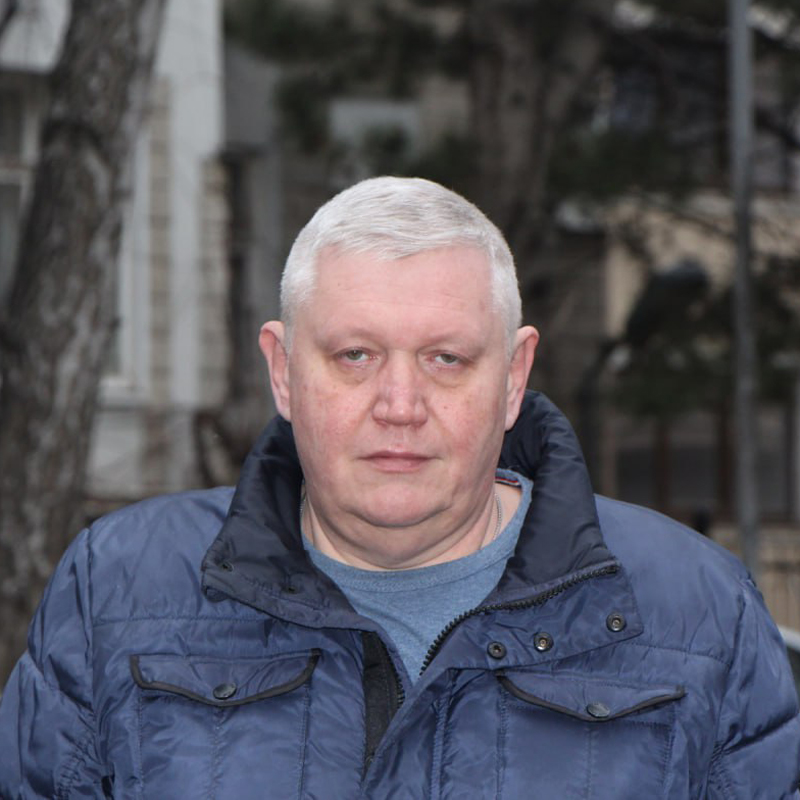

Elena Covalenco / ipn images
To be frank, for those who follow developments in Moldova’s political arena, Alexandru Munteanu’s departure came as no surprise; however, the statement he made on social media regarding this matter—which effectively drew a line under his brief, yet eventful period in office, sparked interest with its emphatically restrained style and, in a way, idealistic tone, writes the Azerbaijani publication caliber.az.
In particular, he noted that he had accepted the post of prime minister “with great responsibility” and with faith in the possibility of changing the situation in the country; however, having faced circumstances that, in his words, did not allow him to act in accordance with his own principles, he decided to step down. Such wording leaves ample room for interpretation—ranging from personal disappointment to systemic political pressure.
We believe it is worth recalling here that Alexandru Munteanu’s appointment as prime minister initially appeared to be a compromise and, to a large extent, a forced decision. After a protracted period of political turbulence, Maia Sandu was looking for someone capable of both remaining loyal to the government’s agenda and demonstrating a certain level of administrative effectiveness.
A Brief History
The decree nominating Munteanu was signed on October 24, 2025, and on November 1, he officially took the helm of the government. His arrival was met with cautious optimism: some experts noted his business experience, while others highlighted his managerial flexibility and lack of overt political toxicity. However, there were also skeptical assessments. A number of analysts predicted that Munteanu would not last more than six months in office. And, as time has shown, these predictions were largely correct: he held the position of prime minister for just over seven months.
To complete the picture, it seems worth providing some background information on the now former prime minister. Before entering national politics, he was known as an economist, professor, and businessman with 25 years of experience in international investment. Mutianu is the founder of Capital Partners, a private investment firm specializing in investment management in Ukraine, Belarus, and Moldova; he is one of the founders of the American Chamber of Commerce in Moldova; and, as its founding president, he has led the culturaleducational organization Alliance Française of Moldova, and serves as co-chair of the Business Advisory Council for Southeast Europe and Eurasia; in addition to Moldovan citizenship, he holds citizenship in two other countries—Romania and the United States.
Thus, we see an effective manager who knows how to operate in unstable markets. According to experts, it was precisely Mutianu’s business experience that led to his appointment as prime minister, since Sandu needed not so much a politician as a crisis manager. However, as it turned out, in practice, skills from the private sector do not always translate into effective public administration, especially in a country with a high degree of political polarization.
Why didn’t Munteanu last?
Now let’s turn to answering the main question: “Why was Munteanu unable to remain in office for a longer period?” To begin with, his position was vulnerable from the start, as he lacked his own stable political base and was largely dependent on the presidential administration, which made him more of a technical figure than an independent one.
Second, public dissatisfaction with the government’s performance gradually grew, as the economic situation remained difficult, social tensions remained high, and the quick successes that citizens had hoped for failed to materialize.
In addition, Munteanu’s past business activities had repeatedly become a topic of discussion, especially in the context of his ties to various influential economic groups, as well as his connections to Ukraine, which drew mixed reactions: on the one hand, they were seen as an opportunity to strengthen coordination and integration with the neighboring country amid ongoing regional instability; on the other hand, as a path toward excessive dependence on external actors.
Third, the view was increasingly expressed that Munteanu found himself “between a rock and a hard place”—that is, caught between public expectations, the demands of international partners, and internal political conflicts. Additional pressure may have come from the scandals widely discussed in the media involving President Maia Sandu’s inner circle, in particular, her cousin Anastasia Taburcanu, who served as press secretary for the state-owned enterprise MoldATSA, responsible for air traffic control and safety in the country.
In particular, her income and employment conditions sparked significant public outcry: according to data published by RISE Moldova, Taburchanu earned more than one million lei in less than a year in that position. As a result, in late June, she announced her resignation and stated that she intended to return all amounts received in the form of bonuses and supplements to her base salary for the entire period of her employment at MoldATSA. The situation seems to have been resolved, but, as they say, a bad taste remains—and a very unpleasant one at that.
Presumably, Munteanu was aware of this as well and formally stepped down from the prime minister’s office on his own initiative. However, as political practice shows, such decisions are rarely entirely voluntary; therefore, it is highly likely that this was a combination of factors, such as a loss of political support, growing pressure from various groups, and the need for the authorities to reshuffle the government. Thus, his resignation can be viewed as a controlled move designed to minimize reputational damage for the entire power structure.
If we examine the events in greater depth, Munteanu’s story illustrates one of the key problems of contemporary Moldovan politics: a shortage of independent figures. He lasted slightly longer than skeptics had predicted, but he was unable to reverse the main trend: in conditions of political turbulence, even relatively neutral figures turn out to be temporary, and his departure was indicative of the profound processes taking place in the politics of the Republic of Moldova.


