

The sustainable development of this sector is explained, in particular, by the growing demand for information technology services, which are mainly export-oriented. These processes have led to an increase in the share of this sector in GDP from 4.9% to 7.5% in the period 2020-2025.
“The information and communications sector has strengthened its role as an engine of the modern economy,” notes the Ministry of Economic Development and Digitalization in the Report on the Socio-Economic Development of the Republic of Moldova last year. The report published on Friday, April 17, 2026.
At the same time, this sector registered a decrease in salaries (-3%).
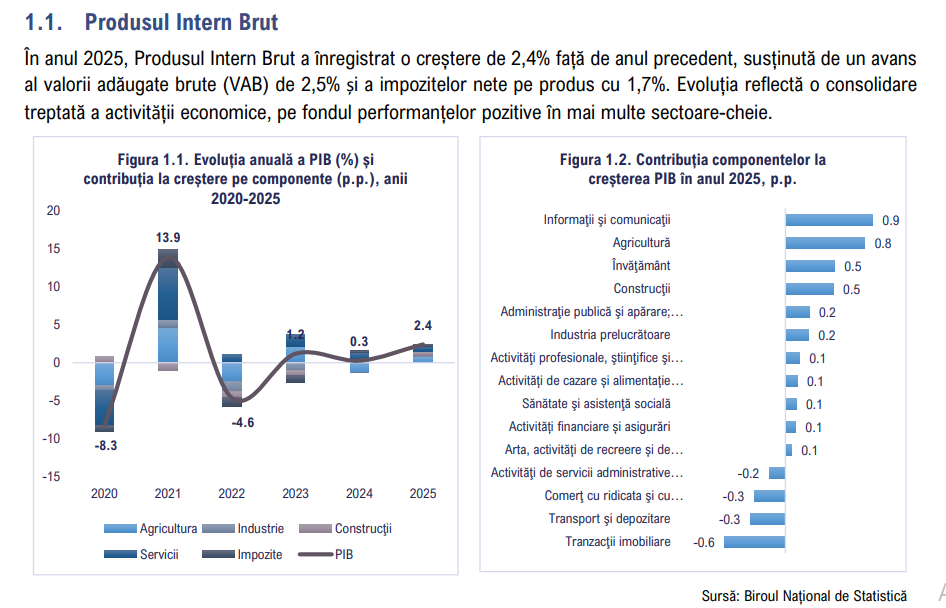
In general, according to the ministry, Moldova’s economy in 2025 showed a moderate growth, while the imbalances in foreign trade and financial system increased. The country’s GDP increased by 2.4%.
Investment activity showed good dynamics, increasing by 17.6%. The volume of investments exceeded 41 billion lei and was ensured not only by the economic agents’ own funds, but also by public investments and external financing.
Agriculture in 2025 showed an increase of 13.8% due to favorable weather conditions, with the main increase in crop production. At the same time, livestock production decreased
The industrial sector increased production by 5.4%. The positive dynamics was provided by the processing industry, in particular food industry, as well as clothing and metalworking. The energy sector also showed moderate growth.
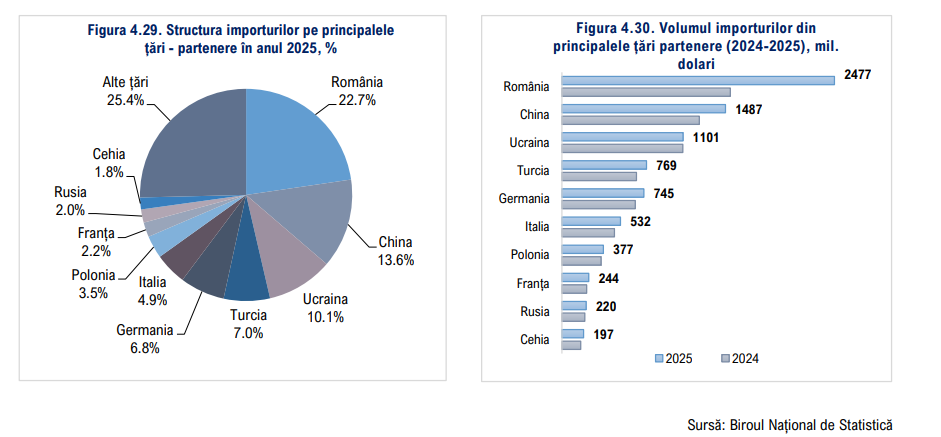
However, there was a deterioration in the trade balance in 2025. Imports increased by 20.5%, while exports grew by 6.4%. Total foreign trade in goods amounted to $14.7 billion, 16.4% more than in 2024.
Romania was the main trading partner, accounting for almost a third of total exports, although the value of exported goods decreased by 5.4%. Turkey is the second largest importer of Moldovan products.
In terms of imports to Moldova, Romania is also the leader, with China in second place.
The public debt has increased to 37.6% of GDP, but remains within sustainability limits, yet its servicing costs have continued to rise.


