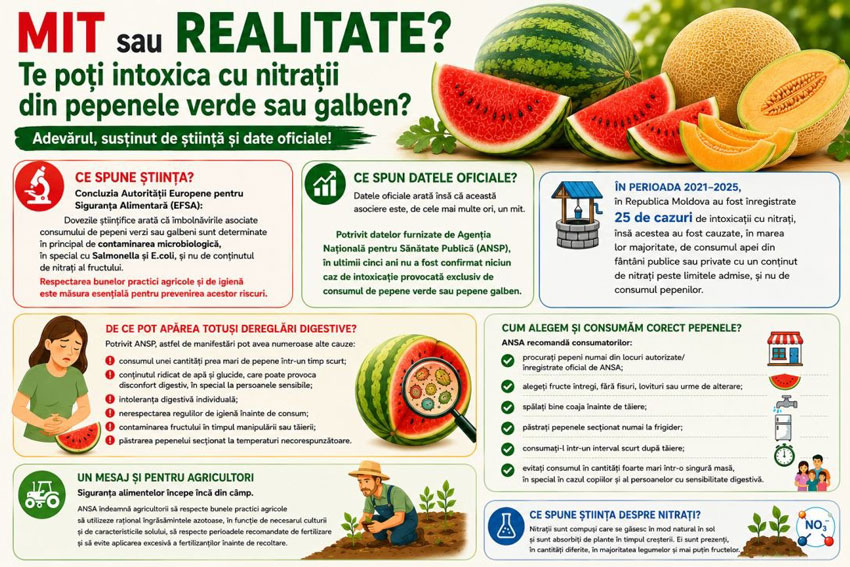

Often, any illness caused by eating watermelons is attributed to their nitrate content. However, scientific data and official information paint a different picture. According to the European Food Safety Authority (EFSA), illnesses and health problems associated with the consumption of watermelons or cantaloupes are primarily caused by microbiological contamination—particularly with Salmonella and E. coli—rather than by the nitrate content of these fruits. Adherence to good agricultural and hygiene practices is the most important measure for preventing risks, the agency’s statement says.
According to data from the National Public Health Agency of the Republic of Moldova (ANSP), not a single case of poisoning caused exclusively by the consumption of watermelons or cantaloupes has been confirmed over the past five years.
Between 2021 and 2025, 25 cases of nitrate poisoning were reported in the country, but in the vast majority of cases, they were caused by drinking water (from public or private wells) with nitrate levels above permissible limits, rather than by eating watermelons.
This information is important because every summer, numerous claims surface about alleged “nitrate poisoning” following the consumption of watermelons or cantaloupes—claims that are not supported by medical or laboratory studies, according to ANSA experts.
What might be making watermelon lovers feel sick?
If nausea, stomach discomfort, or other digestive problems occur after eating watermelon, this does not automatically mean that the fruit contains dangerous levels of nitrates. According to ANSP, such symptoms can have many other causes:
- eating too much watermelon in a short period of time;
- a high water and carbohydrate content, which can cause digestive upset, especially in sensitive individuals;
- individual food intolerance;
- failure to follow hygiene guidelines before consumption;
- contamination of fruit during the cutting process;
- storing sliced watermelon at inappropriate temperatures.
The EFSA notes that nitrates are compounds that occur naturally in the soil and are absorbed by plants as they grow. They are present in varying amounts in most fruits and vegetables.
Food safety begins in the field, the ANSA agency reminds us, and urges farmers to follow good agricultural practices, use nitrogen fertilizers judiciously based on crop needs and soil characteristics, follow recommended fertilization schedules, and avoid excessive fertilizer application before harvest.