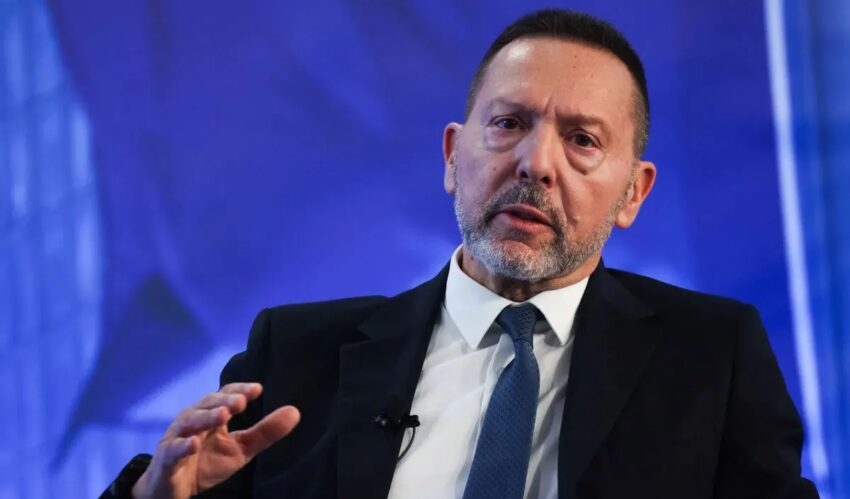
Yannis Stournaras Photo: Alex Kraus/Bloomberg
According to Bloomberg, analysts have lowered their growth forecast for the eurozone economy in 2026 to 0.5%. Just a month ago, they had expected growth of 0.7%, while the European Central Bank’s baseline forecast was 0.8%.
The main reason is the escalation of tensions in the Middle East. Concerns over disruptions to energy supplies have intensified once again, and with them, the risks to the European economy have also increased. ECB Governing Council member Yannis Stournaras stated that recent events have effectively brought the central bank “back to square one” in its assessment of the economic outlook.
Inflation this year will stand at 2.8%. This is lower than the previous estimate due to falling oil prices, but still significantly higher than the ECB’s 2% target.
Given this situation, analysts believe the European Central Bank will continue to raise interest rates. They expect the next hike as early as September, with the first cut not coming until the fall of 2027.
France—the eurozone’s second-largest economy—is a particular cause for concern. According to the forecast, unemployment there will rise to 8.2%, the highest rate since 2019.
France’s problems began even before the latest round of conflict. In the first quarter, unemployment reached a five-year high, and the country’s economy contracted on a quarterly basis for the first time since the pandemic.
Against this backdrop, the French government has already lowered its GDP growth forecast for 2026 to 0.7%. At the same time, Finance Minister Roland Lescure announced an additional €3 billion cut in government spending to keep the budget deficit at 5% of GDP.
Follow our updates
Have information for the newsroom? Share it with Logos-Press