


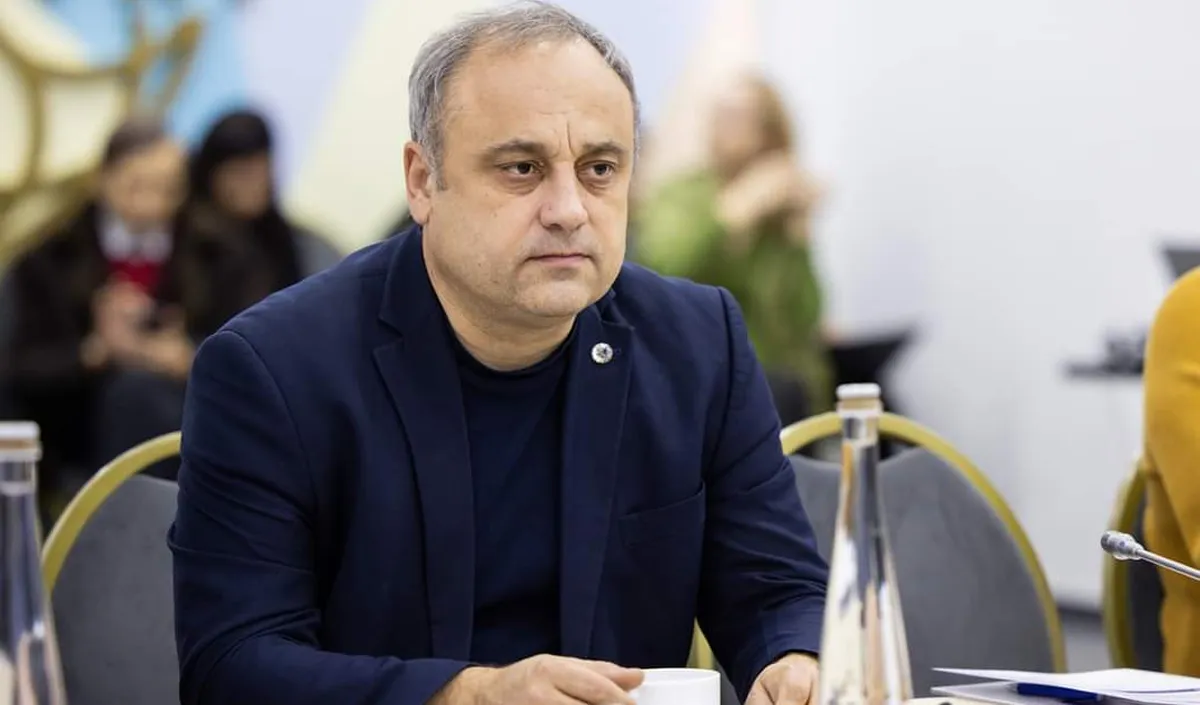
Viorel Furdui
The remaining local authorities will be merged through a statutory procedure, after which there will be 292 mayoral offices in the country by the start of next year. By the end of September, the government will present a bill regulating statutory mergers.
In response to these statements from the central authorities, a post by Viorel Furdui, executive director of CALM, appeared on social media. In his impassioned analysis, he declares: ‘The local government reform is plunging the country into chaos, incompetence and lawlessness!’
In an exclusive interview with Logos Press, Viorel Furdui explains the organisation’s position.
LP: – What is the reason behind such serious allegations and accusations from CALM, and why have they been voiced today of all days?
– In principle, the issues we are raising have been highlighted by the organisation’s members before.
But today, with the end of the voluntary union having been announced and, in essence, the process of regulatory amalgamation having begun, the number of shortcomings highlighted by our members has long since escalated into a ‘quality’ that threatens the country with chaos due to a failure to uphold the rule of law. And this is the first criterion by which the European Union assesses a candidate country upon accession. Not the third, not the second, but the first.
What is currently taking place in Moldova in the name of reform and the process of European integration runs counter to this principle. We have stated this many times, but I would like to emphasise once again: CALM does not object to the reform itself, but to the way it is being implemented.
LP: – Could you explain what your objections to the methods of implementation are based on?
– Firstly, on the fact that there is no legal basis for a ‘regulatory amalgamation’. Neither this concept nor its definition appears anywhere in Moldovan legislation. Instead, Articles 17 and 18 of Law No. 764/2001 on the administrative-territorial organisation of the Republic of Moldova state that the abolition of a settlement and the relocation of an administrative centre are carried out by Parliament following consultation with citizens.
In other words, two conditions are required for amalgamation, and both are mandatory. Neither of them is consistent with the actions of the central authorities.
To begin with, the reform concept has not been approved. Admittedly, in a rush to conceal the illegality, the authorities issued an internal regulatory act.
In reality, however, the only document approved by the government concerning the amalgamation of local authorities is the Strategy for Administrative and Territorial Reform for 2023–2030. It stipulates that the voluntary phase of amalgamation is scheduled to run until 2026, and that an assessment of the process will only be carried out at the end of 2026.
LP: – Yes, the timetable has clearly been breached. But the authorities – and, incidentally, some mayors – explain this by the need to complete the process a year before the elections, as required by law.
– I don’t think there’s any need to explain just how dangerous rushing such a process can be. In reality, the regulatory phase began as early as August, four months earlier than stipulated in the strategy.
What’s more, local authorities began receiving notifications about the amalgamation of local government bodies from the start of August, when, according to the law, it was still possible to initiate the procedure, and voluntary amalgamation was in full swing!
And whilst the voluntary amalgamation was carried out in accordance with the law, with the mandatory procedural sequence observed, in the case of the statutory amalgamation these general rules have not been followed at all.
And when it comes to such a sensitive and complex process as redrawing the country’s map, Parliament must have its say first, and only then can all the procedures be carried out.
LP: – During the voluntary amalgamation, the mayors also raised objections and dragged the process out, which is understandable, as it is a complex matter – after all, the fate of their home villages was at stake.
– Yes, but even with the law on voluntary amalgamation in place, there were breaches. I am referring to the deadline of 31 July, for example. We raised the issue that no such deadline is provided for anywhere in the legislation, and that this essentially constitutes an abuse of power, a matter on which we even lodged a complaint with the public prosecutor’s office.
Nevertheless, the voluntary amalgamation did take place in accordance with the legal procedure. The law explained what a voluntary amalgamation is, and set out its conditions and criteria. A minimum population of 3,000 per local authority was specified, and a methodology was drawn up.
In the case of statutory amalgamation, however, such a basis has so far only been promised.
LP: – We have also reported on this observation by CALM previously. What are the risks of this lack of preparation and haste?
– In the case of statutory amalgamation, everything has been turned on its head. The State Chancellery began the process prematurely, because in early August letters were sent to local councils setting out which clusters would be created on the basis of local councils that had not amalgamated.
But if we consider ourselves a state governed by the rule of law, we should have done all this in the reverse order. We should have drafted the law and the subordinate legislation, adopted them, and only then proceeded directly to the procedure.
To begin with, there isn’t even a legal definition of what a ‘regulatory amalgamation’ is, and that is where we should have started.
Incidentally, the government approved the internal order on the concept of administrative-territorial reform following our criticism. But it has not been published. And, in principle, such documents are not adopted by internal acts, but by an organic law.
LP: – During the press conference, Alexei Buza mentioned that consultations are continuing with local authorities that have not yet merged; they are being persuaded of the correctness and necessity of the merger. How are these consultations going?
– Yes, the authorities are currently continuing to hold consultations. However, it has already been decided who will be merged with whom, and where the administrative centre will be located. And this is before the map has even been presented to parliament!
What’s more, the problem is that there are cases where an additional two or three local authorities are being added to clusters that have already been agreed upon. But this fundamentally alters the configuration, right down to the distribution of financial incentives. After all, it was announced in advance that no funds would be provided to villages that refused to merge voluntarily.
In essence, everyone is being penalised: those who did not wish to merge, those who have already merged – because new cluster members are being imposed on them – and large municipalities with populations exceeding 3,000, when small municipalities are also added to them.
Furthermore, we are told that consultations are currently often organised without the participation of representatives from the local councils. In other words, officials from the State Chancellery are effectively replacing the local authority representatives elected by the residents.
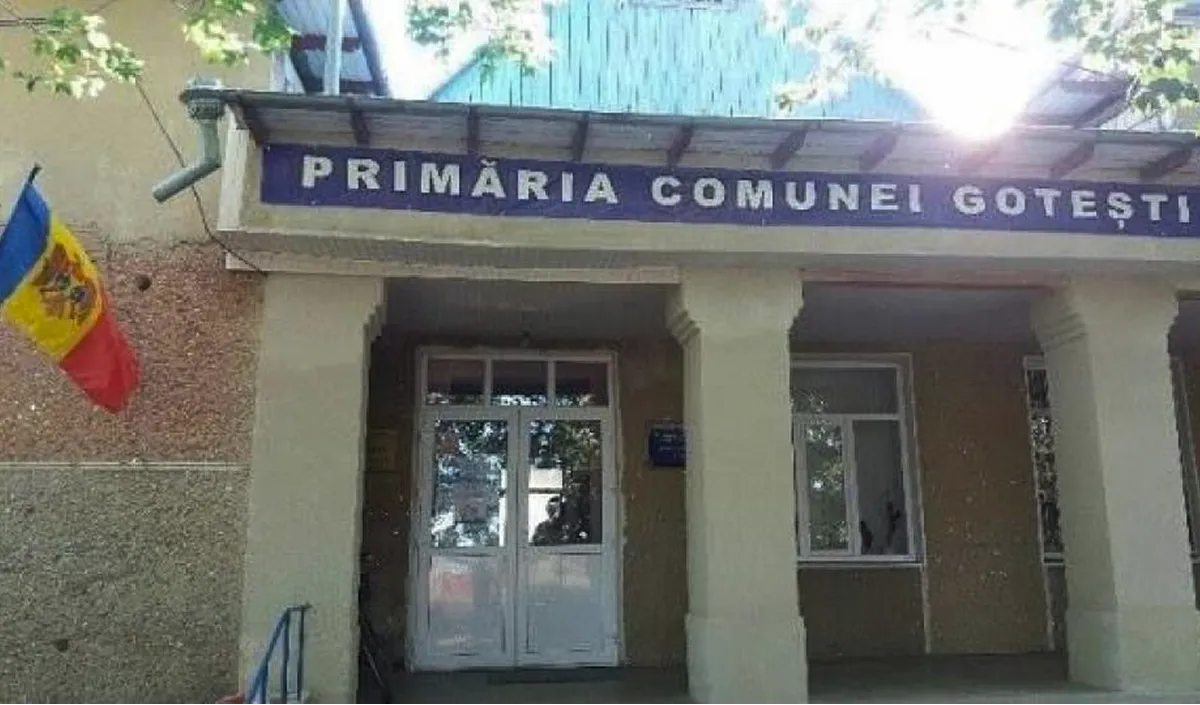
In the village of Korzhova, local council staff learnt from the internet that someone from the central government would be consulting with the village’s residents on Sunday at 12.30 pm.
Meanwhile, those villages that requested a referendum were refused. Furthermore, many specific situations are arising which, at least for the time being, are not being taken into account. In Kobuska-Veka, there is a military training ground on the outskirts of the village, whilst the village of Borogani is situated 50 km from the settlement where the administrative centre is to be located. All these situations must be considered on a case-by-case basis.
LP: – In the current situation, what does CALM propose to ensure the process is steered onto a lawful course?
– Whilst there is still time, we propose completing the voluntary amalgamation and suspending the regulatory process until Parliament has passed an organic law. In other words, first draft the law, and only then draw up a new map of the country.
We also propose allowing local referendums to be held in particularly complex and specific cases.
We have long been calling for the abolition of districts and fiscal decentralisation, but for some reason the authorities remain silent on this. We would like to draw attention to these issues as well, in order to support the still fragile local autonomy that is emerging in Moldova.
LP: – Thank you for the interview.
Follow our updates
Have information for the newsroom? Share it with Logos-Press















Comments
0No comments yet. You can start the conversation.
Comments are open to readers with a Logos Press account.
Sign in to comment