


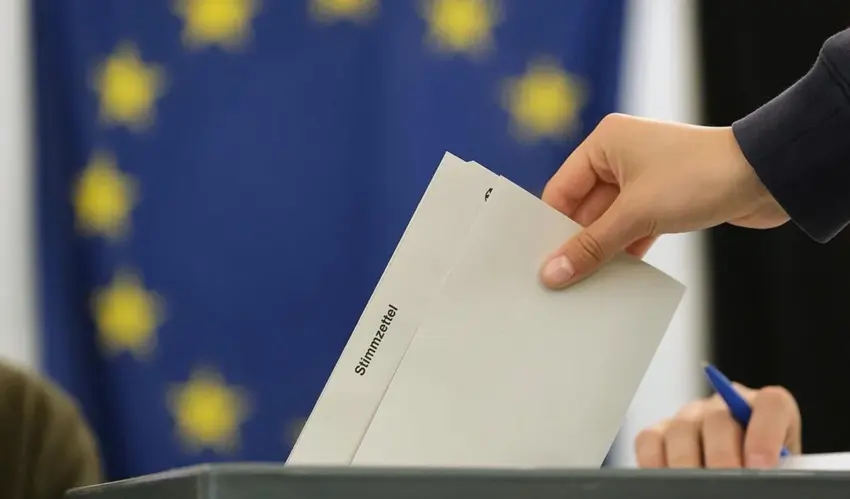
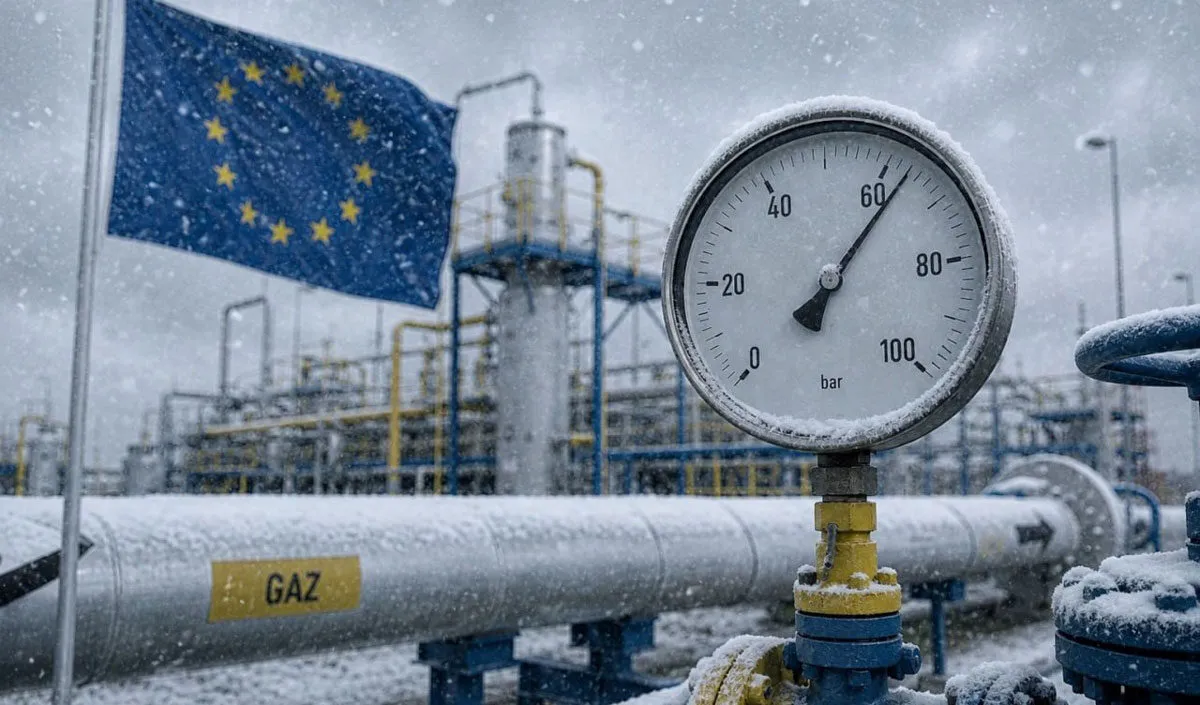
Photo: Getty Images
According to The Guardian, between late November 2026 and the end of 2027, elections will be held in four of the EU’s five largest countries in terms of population and economic size. In addition, parliamentary elections will take place in Estonia, Finland, Greece and Slovakia, whilst regional elections will be held in Germany. The newspaper describes this period as an unprecedented series of elections capable of changing the political course of Europe.
‘An unprecedented series of elections’
Spain will be the first to vote. Early parliamentary elections are scheduled for 29 November. Prime Minister Pedro Sánchez’s socialist coalition is predicted to suffer a defeat at the hands of right-wing parties — the conservative People’s Party and the far-right Vox. Together, they already govern several Spanish regions.
In the spring of 2027, presidential and parliamentary elections will take place in France. The clear favourite in the presidential race is Marine Le Pen, leader of the far-right ‘National Rally’. She is ahead of the far-left candidate Jean-Luc Mélenchon, whilst the traditional parties are unable to agree on a single candidate.
In Poland, nationalist parties, which together account for almost half of the vote, could oust Prime Minister Donald Tusk’s liberal coalition from power. In Italy, Giorgia Meloni is hoping to secure a second term in the elections due to take place before the end of 2027. However, she faces pressure from the right in the form of the new ‘National Future’ party, led by Roberto Vannacci.
Nationalist sentiment is on the rise, despite widespread support for the European Union. According to figures cited by The Guardian, a record 74 per cent of Europeans believe their countries benefit from EU membership. Following Brexit, most Eurosceptic parties no longer advocate leaving the Union. Instead, they want to transform it into a looser association of independent states, where national governments would have more power and European institutions less.
‘The face of Europe’ may change
Italian political scientist Natalie Tozzi believes that the upcoming series of elections could ‘radically change the face of Europe’. In her view, this is not merely a matter of the gradual weakening of the European project, but of its effective hollowing out and even possible collapse.
The source attributes the popularity of nationalists to several factors: slow economic growth, an ageing population, problems with public finances and the constant rise in the cost of living. All of this is undermining trust in traditional parties on both the centre-left and centre-right.
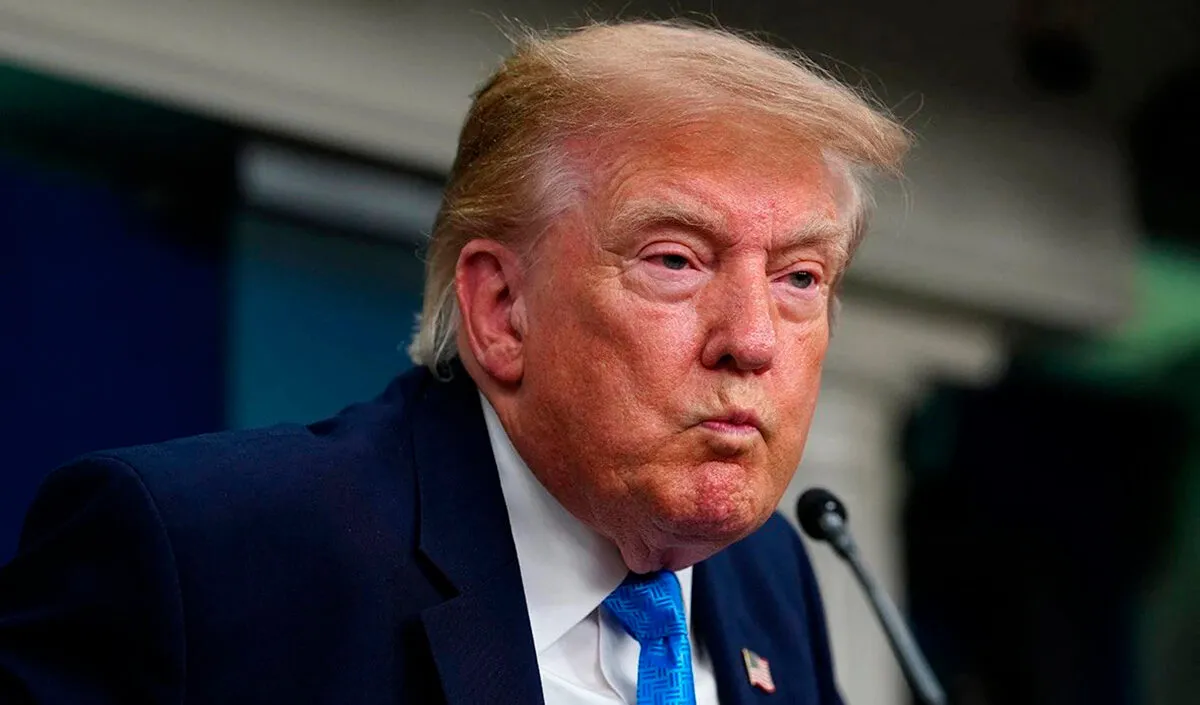
Nationalists are exploiting voters’ discontent by portraying migration, vaccination, the transition to green energy, globalisation, international elites and support for Ukraine as threats. The spread of such sentiments is also fuelled by Russian disinformation and the Donald Trump administration’s open support for nationalist parties.
As a result, European politics is becoming increasingly fragmented. Currently, almost one in four voters supports far-right parties – their share has grown almost fivefold since the mid-1990s. However, the growth in their influence has been uneven: in the Netherlands, Geert Wilders’ party has lost nearly a third of its seats over the past year; in Hungary, Viktor Orbán’s party suffered a serious defeat; and the Sweden Democrats have lost some of their support for the first time in 16 years.
However, the overall trend towards a strengthening of the right remains. The Guardian believes one of the reasons for this is that traditional conservative parties are increasingly adopting the ideas of the radical right. The European People’s Party, in particular, has begun to cooperate more actively with more radical political groups, seeking to relax the EU’s environmental requirements and tighten migration policy.
The main threat lies in the European Council
The main threat to the European Union may arise in the European Council, where the heads of state and government of all 27 member states meet. At present, only three of them represent centre-left forces. If the leaders of France, Spain and Poland were to join the Eurosceptic leaders of the Czech Republic, Italy, Romania, Slovakia and Slovenia, they could form a powerful blocking minority.
Such a group would not be able to rewrite EU legislation on its own, but it would be capable of obstructing the adoption of important decisions. Negotiations on the general budget, the accession of new countries to the Union, aid to Ukraine and common policies on defence, energy, finance and technology could reach an impasse, analysts warn.
The French elections will be particularly important
According to The Guardian, it is France that could determine the outcome of the battle for the future of the European Union. Le Pen’s manifesto includes a reduction in France’s annual contribution to the EU budget by 11 billion euros, a referendum on the primacy of French law over European law, and a review of a number of single market rules.
France wields far greater influence over the European Union than, for example, Hungary, notes Mujtaba Rahman of the consultancy firm Eurasia Group. A victory for Le Pen could therefore give the far right far greater opportunities to reshape the European system from within.
Until now, Brussels has managed to keep politicians who oppose the EU’s common line in check, as there were usually no more than two or three of them at the negotiating table. But the emergence of a united Eurosceptic bloc could prevent the Union from upholding the principles of the rule of law, developing economic and defence cooperation, and agreeing on joint decisions.
Ukraine could be the first major casualty of such a split. Analysts predict that Le Pen could lead a group of countries opposed to further aid for Kyiv.
Stefan Lene of the Carnegie Europe think tank believes that the upcoming elections will be a serious test of the European Union’s ability to withstand internal divisions. He does not expect the bloc to collapse immediately, but warns of significant risks in the medium term. The rise of the far right may not destroy the EU, but it could prevent it from becoming a union capable of responding to the challenges of the future. The gradual inability of European countries to act in unison will lead to a loss of Europe’s influence on the world stage.
Follow our updates
Have information for the newsroom? Share it with Logos-Press












Comments
0No comments yet. You can start the conversation.
Comments are open to readers with a Logos Press account.
Sign in to comment