


The contradictions of the present moment
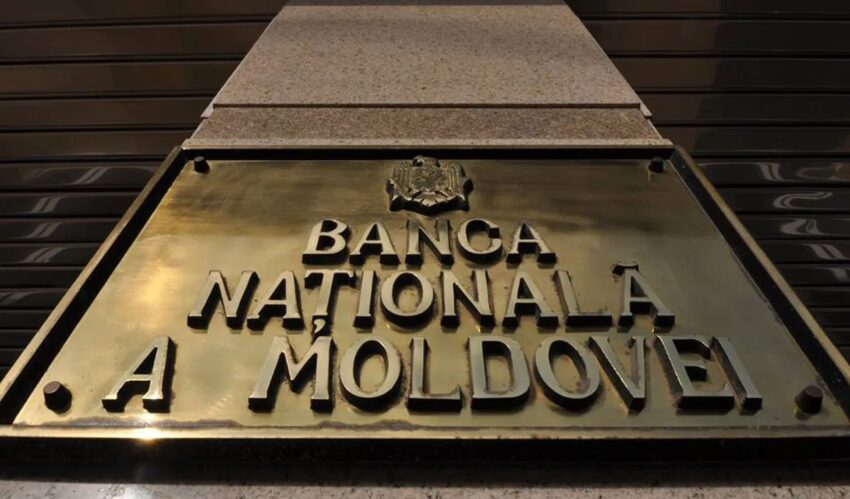
Following a sharp surge in inflation in September 2026, the National Bank of Moldova took a decision that was entirely expected, yet no less controversial for that. The regulator, for the fifth time in the current cycle, raised the base rate by 2 percentage points in one go, bringing it from 9 per cent to 11 per cent per annum.
The NBM’s official statement is the usual one: the move is aimed at ‘encouraging savings and reducing consumption’. However, the expert community is sounding the alarm.
A misdiagnosis: the false nature of inflation
Renowned economist Vladimir Golovatiuc has strongly criticised the regulator’s actions, noting that the National Bank continues to operate in its conservative style, mistakenly regarding a rate hike as the sole tool for combating rising prices and completely ignoring the warning signs from the real sector.
The main miscalculation in the National Bank’s policy lies in its incorrect assessment of the nature of the current inflation. Raising the base rate is effective when the economy is ‘overheated’ and there is a surplus of money in the system, stimulating excessive demand. But the current situation in Moldova is fundamentally different.
‘The nature of inflation in this case is not linked to an excess of money – which, incidentally, is what the NBM is combating,’ emphasises Vladimir Golovatiuc. The rise in prices is driven exclusively by external factors (supply shocks) — the rapid increase in the cost of energy and food on world markets. It is clear that no rate hike within Moldova can influence global gas or oil prices.
According to the expert, the main paradox of the NBM’s current decisions lies in the fact that the nature of the current surge in inflation (up to 8.6 per cent in September) is distinctly external and structural. An interest rate hike, however, is a tool for cooling demand (when there is too much money and too few goods). However, a rise in the value of the leu cannot in any way reduce global prices for gas, oil or imported food.
Rather than reviving the economy, the NBM’s restrictive policy is hitting the economy from several angles.
The government bond market: the budget under pressure
The markets react to the NBM’s decisions instantly and directly — with a mirror increase in interest rates. This destructive process is most clearly evident in the government securities market.
Since the first increase in the base rate in May this year, the maximum yield on 364-day government securities has soared by 39 per cent. At the auction held on 3 November, it stood at an impressive 13.3 per cent. For the Ministry of Finance and the state budget, this means only one thing: servicing the domestic debt is becoming prohibitively expensive. Instead of channelling funds into infrastructure projects or social support, the state is forced to spend billions on paying high interest rates to commercial banks holding the bonds.
The authorities’ stance: non-intervention under the guise of independence
Whilst independent experts point to the risks of stifling the real sector, the Moldovan government is adopting a stance of strict non-interference.
Commenting on the regulator’s decision, Prime Minister Vasile Tofan emphasised that the Cabinet has no intention of dictating to the National Bank what to do, as the NBM’s independence is a safeguard against hyperinflation and a fundamental condition for European integration:
According to the authorities’ logic, the banking regulator is obliged to react firmly when inflation exceeds the target range: “When the government starts phoning the National Bank and dictating monetary policy, it all ends very badly, because this leads to hyperinflation,” Vasile Tofan emphasised categorically.
By accepting the regulator’s logic, the government is thus shifting the responsibility for all the costs onto it. However, such ‘political distancing’ effectively places the entire burden of combating inflation solely on the shoulders of monetary policy.
Whilst the government safeguards the NBM’s independence, the Ministry of Finance finds itself facing the rising cost of servicing the public debt alone, whilst the real sector is left without much-needed fiscal stimulus measures.
Suppression rather than a cure
Relying solely on restrictive, dampening monetary policy instruments will not halt the rise in inflation. Moreover, these decisions directly harm the economy, the budget and people’s standard of living, whilst prices will continue to rise regardless.
Vladimir Golovatiuc is convinced that Moldova needs fundamentally different measures – economic measures aimed at restoring the economy through stimulation, rather than suppression.
The country needs a coordinated policy that supports business activity, domestic production and citizens’ purchasing power, rather than artificially freezing consumption. Otherwise, the economy risks falling into a classic stagflation trap, from which it will be extremely difficult to escape, the expert believes.
Why is the National Bank doing this anyway?
The regulator’s logic is based on strict monetarist principles and a fear of ‘secondary effects’. The NBM realises that interest rates cannot halt the rise in utility tariffs, but is attempting to counteract the psychological factor — inflationary expectations amongst the public and businesses — to prevent the economy from spiralling out of control into a cycle of ‘price rises ➔ demands for wage increases ➔ further price rises’.
However, according to Volodymyr Holovatyuk, the cost of such a move could prove prohibitively high for economic growth. Without coordinated government action to stimulate the real sector, the NBM risks driving the economy into a state of stagflation through monetary measures alone – a situation where output falls whilst prices continue to rise due to external shocks.
This story was translated with the assistance of artificial intelligence.The translation was also reviewed by the Logos Press editorial team.
Follow our updates
Have information for the newsroom? Share it with Logos-Press




















Comments
0No comments yet. You can start the conversation.
Comments are open to readers with a Logos Press account.
Sign in to comment