


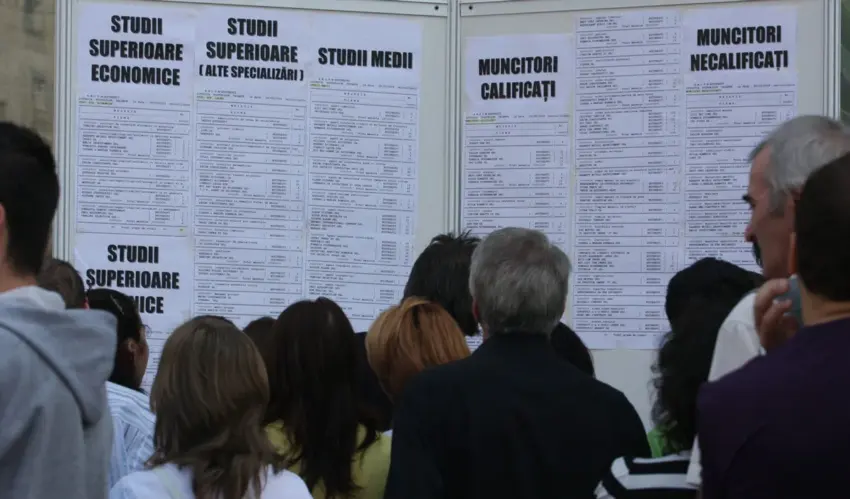
These figures are contained in the October 2026 edition of the IMF’s ‘World Economic Outlook’ report.
Sudan is forecast to have the highest unemployment rate of all the countries included in the dataset—59.5 per cent—reflecting the devastating economic consequences of the protracted conflict. It is followed by South Africa with a rate of 33.2 per cent, where persistent structural problems have left millions of people out of work.
High levels of unemployment are also observed in more affluent countries. In Europe, a number of countries are facing elevated unemployment rates, despite the advanced nature of their economies.
Labour markets in Europe exhibit some of the sharpest contrasts among developed economies. The projected unemployment rate in Finland stands at 10.2 per cent — more than three times higher than that of Poland (3.2 per cent); meanwhile, weak domestic demand and a protracted downturn in the construction sector are holding back the recruitment of new staff.
Meanwhile, in France, the forecast unemployment rate stands at 8.4 per cent – more than double that of Germany (4.0 per cent), despite the continuing weakness of the German manufacturing sector.
In Romania, the unemployment rate is in line with the European average at 6.5 per cent. In Ukraine, it is significantly higher, matching Finland’s rate at 10.2 per cent. Naturally, the main reason for this is the war.
The unemployment rate is a political indicator
Against this backdrop, it is somewhat hard to believe that only 3.8 per cent of the population in Moldova is out of work. No, there is no doubt that the overwhelming majority of the population is in work. However, there are doubts as to the legality of their employment.
According to data from the National Bureau of Statistics for previous periods (2024), the total number of people working illegally without an employment contract was estimated at approximately 40,000.
Since the start of 2026, the labour inspectorate has identified 10,140 people working without official registration (of whom 6,722 were subsequently regularised). Violations are most frequently recorded in agriculture and construction.
In other words, the National Bureau of Statistics (on whose data the IMF relies) somehow includes illegally employed workers in its unemployment calculations. The only question is: how does it count them?
Nevertheless, in the IMF report, Moldova, with an unemployment rate of 3.8 per cent, looks respectable even compared to Germany.
Another approach
According to demographic projections for 2026, the working-age population in Moldova stands at approximately 1,875,586 people, which accounts for around 63.34 per cent of the country’s total population. Based on these figures, an unemployment rate of 3.8 per cent equates to 71,272 people.
However, the study ‘Support for Labour Market Reform’, funded by the Soros-Moldova Foundation, conducted between November 2024 and October 2026 and published on 29 October, presents quite different figures.
According to this study, the Republic of Moldova aims to increase the employment rate among the population aged 20–64 from 55 per cent in 2025 to 60.9 per cent by 2030, which would mean approximately 79,000 additional people in employment. This target forms part of the draft National Employment Programme for 2027–2030.
In other words, this figure already exceeds the total number of unemployed people recorded in the statistics and used by the IMF in its calculations.
The programme aims to reach 80,000 economically inactive people and reduce the proportion of young people aged 15–29 who are neither in employment nor in education or training (NEET) to 14 per cent by 2030. ‘Reaching’ does not imply employment.
The Ministry of Labour and Social Protection proposes to support 1,000 rural micro-enterprises and create at least 2,000 new jobs, which is a separate target from the overall projected increase in employment.
According to the study, 1,751 people enrolled on voucher-funded courses in the first eight months of 2026, compared with 700 for the whole of 2025. There are no figures available on graduates or subsequent employment.
The researchers state that in 2026, funding for training the unemployed increased fivefold compared with 2025.
The programme is in the process of being finalised. Achieving the targets depends on approval, funding and implementation, not merely on the formulation of indicators.
The analysis used for the programme shows a low level of labour market participation, despite a relatively low unemployment rate. The Economic Council under the Prime Minister does indeed cite an unemployment rate of 3.8 per cent in 2025, but the employment rate amongst people aged 20–64 is only 55 per cent. In EU countries, it stands at 76.1 per cent.
What is the reason for such differing figures?
Economist Veaceslav Ionita offered his own explanation as to why Moldova has the lowest unemployment rate in Europe.
‘Let’s start with what it means to be unemployed. It is someone who has lost their job, is actively looking for work, and who, having failed to find a job, turns to the state for help. When a person loses their job, they don’t mess about; they pack their bags and go abroad. The low unemployment rate and the decline in unemployment during the crisis essentially highlight our tragedy – the fact that people are leaving,” the expert noted.
Analysts who prepared the study for the Soros Foundation take a different view. “Unemployment and employment rates are calculated using different bases. The former refers to the unemployed who are part of the labour force, whilst the latter compares the number of employed people with the population of a given age group. A person without a job is not automatically unemployed in a statistical sense: if they are not actively seeking work or are not ready to work, they may be excluded from the labour force,” the researchers assert.
The Economic Council under the Prime Minister confirms the estimate of approximately 79,000 additional jobs and rounds the target figure up to 61 per cent. The estimate describes the possible outcome of achieving the target, rather than a programme to directly fund 79,000 jobs.
In other words, based on this data, it can be assumed that the real unemployment rate in Moldova is at least twice as high as the official figure. And, once again, the question arises as to how the statistics account for undocumented workers: how many are there in total, and what proportion of the overall picture does the informal labour market account for?
Without such data, devising any programmes is of little practical value. Most likely, the labour market requires a serious approach. This is particularly true given that the data presented by the Economic Council also point to a reduction in the working-age population of more than 25 per cent between 2014 and 2024, which confirms Ionice’s theory. Furthermore, over 34 per cent of workers (or a third of the total) are employed in roles that do not match their level of education. At the same time, around 23 per cent of companies cite a shortage of skilled staff as a serious problem.
This story was translated with the assistance of artificial intelligence.The translation was also reviewed by the Logos Press editorial team.
Follow our updates
Have information for the newsroom? Share it with Logos-Press


















Comments
0No comments yet. You can start the conversation.
Comments are open to readers with a Logos Press account.
Sign in to comment