


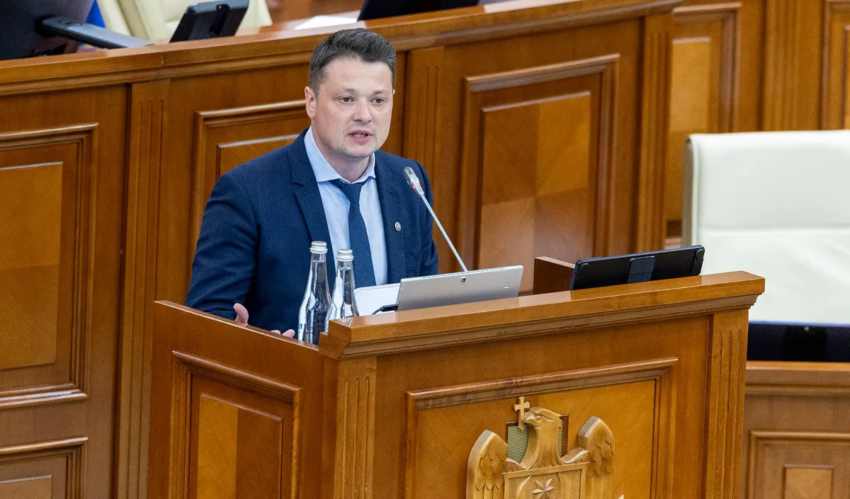
Alexandru Gasnaș
One of the main provisions aims to ensure access to medicines in every locality. In addition to community pharmacies, branch pharmacies and pharmaceutical outlets will be permitted to operate, whilst in small villages, mobile units and automated dispensers will be allowed. All will operate under the responsibility of a coordinating pharmacy and a pharmacist.
Previously, the minister explained that mobile pharmacies would only be permitted to operate in localities where maintaining a standard pharmacy is not economically viable, whilst automated dispensers would be permitted in the most sparsely populated villages, where even mobile units cannot reach. He rejected accusations by the former Minister of Health, Ala Nemerenco, that this initiative had been taken over from the ‘Șor’ Party in 2020, arguing that the current bill provides additional safety safeguards.
The bill provides for the application of the same mark-ups on medicines across the whole country, so that their price does not depend on the locality in which they are sold.
Following consultations, the strict requirements regarding the location of pharmacies have been removed, and the licence has been replaced with an authorisation of indefinite duration. Fees for authorisation procedures will cover only the actual costs. At the same time, special safety rules have been established for mobile units and automated dispensers.
Pharmacists will be able to dispense, for a period of up to 30 days, medicines previously prescribed for the treatment of chronic conditions, in the interval between two prescriptions. Access to a patient’s medical history will be permitted only with their express consent.
The Ministry of Health justifies the need for reform by citing the reduction in the range of medicines available. Over the last five years, a net total of 708 medicines have disappeared from the market, including 640 essential prescription medicines. The range of cheaper medicines has been particularly reduced, whilst the prices of over-the-counter medicines have risen almost six times faster than those of prescription medicines.
During the two rounds of consultations, the Ministry examined 246 comments and proposals. Justifications were provided for the 48 substantive proposals that were not accepted.
The updated draft will be submitted for legal and anti-corruption review.
This story was translated with the assistance of artificial intelligence.The translation was also reviewed by the Logos Press editorial team.
Follow our updates
Have information for the newsroom? Share it with Logos-Press





















Comments
0No comments yet. You can start the conversation.
Comments are open to readers with a Logos Press account.
Sign in to comment