


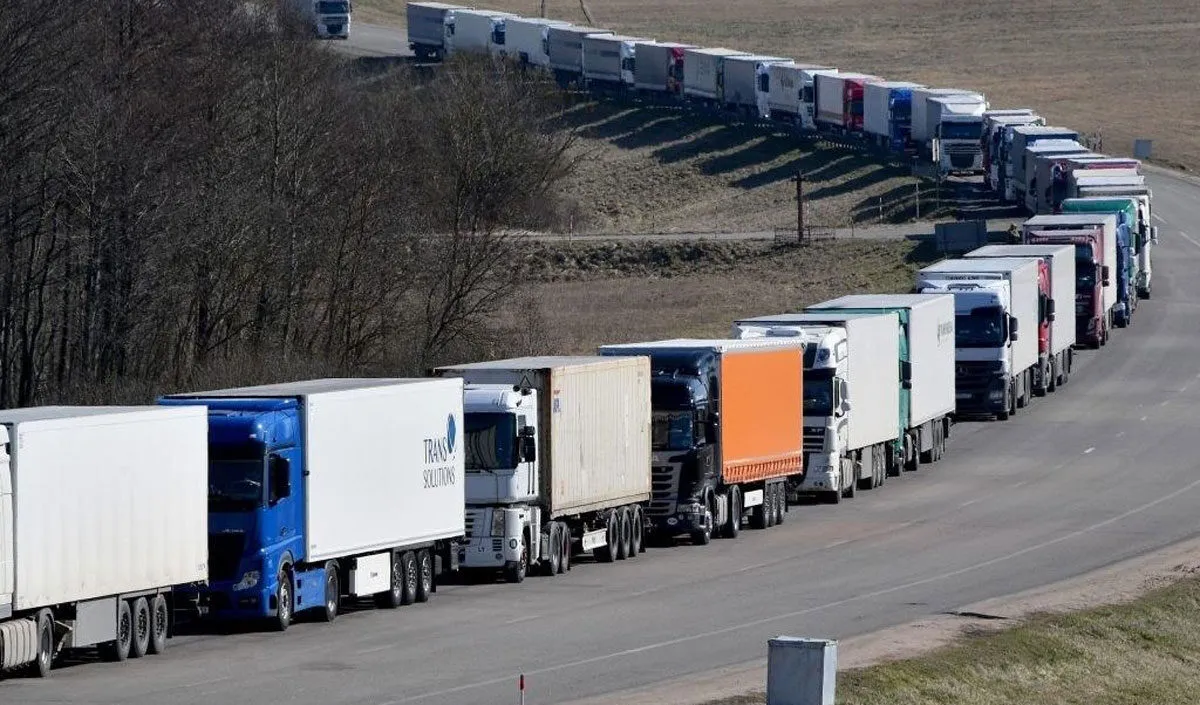
The Ministry justifies this decision on the grounds that ‘maintaining safety margins’ carries the risk of uncontrolled inflows of Ukrainian produce – similar to local produce but at dumping prices – into Romania’s domestic market. ‘Thanks to this measure, we are providing Romanian farmers and processors with predictability and protection against mass imports,’ Minister Florin-Ionuț Barbu is quoted as saying in the ministry’s press release. The draft lists these most ‘sensitive’ goods: wheat and wheat flour, maize, oilseeds, poultry meat and eggs, and sugar.
It is noteworthy that this list is virtually identical to the list of Ukrainian goods regarding which the Polish authorities ‘pushed through’ the European Commission’s position during negotiations on Ukraine’s accession to the EU. In the sense that the aforementioned segments of the European agri-food market will be protected from ‘Ukrainian intervention’ during the transition period. At the same time, following accession to the EU, Ukrainian farmers will not receive European subsidies immediately and in full, as ‘long-standing Europeans’ do.
It is also hard to overlook the fact that this proposal emerged in the Romanian public sphere at the very moment when the leader of the Polish Farmers’ Federation announced a farmers’ protest to ‘demonstrate their disagreement’ with the EU’s reduced budget for agriculture for the next long-term financial period.
It may be surmised that the Romanian authorities’ proposal is not only a gesture by statists and sovereigntists towards local (conservative by ‘birthplace’) farmers, but also an indirect sign of approval from COPA-COGECA, the pan-European union of national farmers’ organisations. Within the social architecture of the European Union, farmers remain a fundamental, deep-rooted force that everyone must reckon with.
But what is the situation in Moldova?
The Moldovan authorities prefer to ‘take things one step at a time’. Initially, following several waves of farmers’ protests, a licensing mechanism for the import of certain categories of Ukrainian goods (which, significantly, do not match the ‘European list’) was introduced for two months, then extended until the end of 2026. What will happen next remains unclear.
One gets the impression that farmers’ organisations have lost interest in this issue. All the more so as they now have more ‘pressing’ reasons for concern (the refusal to grant subsidies ‘per hectare, kilogramme and head’ this year, non-refundable excise duties on diesel fuel and a modest subsidy budget for 2027). However, as time goes on, the question of whether to end or extend the licensing period for Ukrainian imports is, one way or another, becoming increasingly relevant.
Well-informed sources claim that by the end of the week, the Moldovan association Forța Fermierilor will respond (as a pretext) to the Romanian Ministry of Agriculture and Rural Development’s (MADR) draft proposal on the licensing of Ukrainian imports. Given this organisation’s consistent stance on protecting the interests of agricultural producers and its pro-European orientation, it is not difficult to imagine that it will ask the authorities of the Republic of Moldova to adopt the Romanian model for regulating trade relations with Ukraine. All the more so because, as Logos Press previously reported, small and medium-sized farmers have already sold the bulk of their 2026 sunflower seed harvest.
In response to an enquiry from Logos Press, the management of Agrocereale, the association of agricultural and grain exporters, stated that it continues to support farmers in their call for the licensing of agricultural imports. Firstly, because this mechanism keeps local processors in check – they only dare to source raw materials from Ukraine to make up for shortfalls in their production capacity when there is a genuine and urgent need. Such cases are rare; consequently, importers do not encounter any problems obtaining licences. In other words, the system operates smoothly, without any glitches that might cause frustration for users on either side.
Secondly, given the licensing regime in Moldova’s agribusiness sector, a harmonious trio has emerged: farmers sell sunflower seeds to traders, who in turn supply them to processors on a toll-processing basis. The finished product – primarily oil – is exported by the traders. It would seem that everyone is satisfied.
In such a situation, the expiry (rather than the extension) of the import licensing scheme for agricultural raw materials is both a temptation and a provocation. And for the authorities, who are demonstrating their strictness by introducing all manner of ‘state of readiness’ measures (in the sense of vigilance), it makes sense to nip such temptations and provocations in the bud.
Follow our updates
Have information for the newsroom? Share it with Logos-Press












Comments
0No comments yet. You can start the conversation.
Comments are open to readers with a Logos Press account.
Sign in to comment