



The investigation, codenamed ‘Pecunia’, is being coordinated by the European Public Prosecutor’s Office (EPPO) in Munich. According to the investigation, the group’s members used shell companies and a complex value-added tax (VAT) fraud scheme.
According to the agency, the operation took place simultaneously in 12 countries. More than 3,000 officers from the police, tax authorities and customs services carried out over 300 searches. In Belgium, Germany and Estonia, 21 people were arrested on suspicion of involvement in the criminal network.
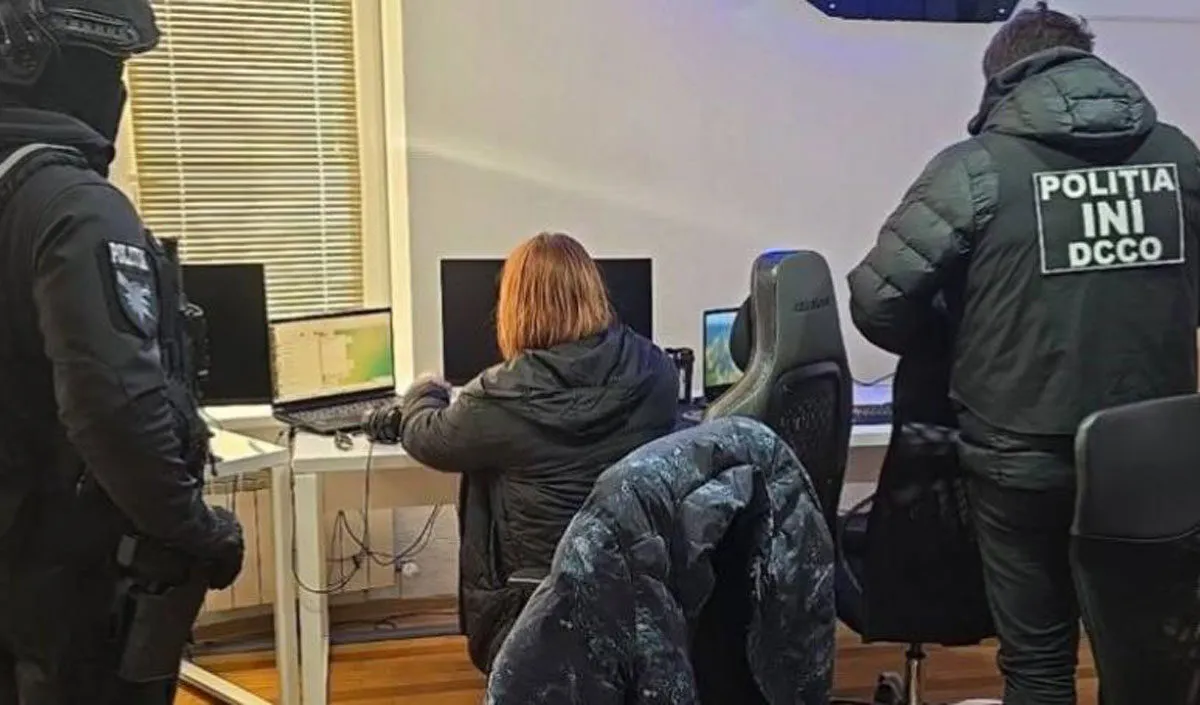
In Moldova, the investigation was carried out by prosecutors from the Anti-Corruption Prosecutor’s Office in collaboration with representatives of the European Public Prosecutor’s Office in Germany. The operation was based on a request for international legal assistance. Searches were carried out at the suspects’ homes and on the premises of companies that may be linked to illegal activities.
In addition, prosecutors questioned several people, including the suspects. During the searches, law enforcement officers seized documents and electronic data storage devices. All the evidence gathered will be handed over to the German authorities for further investigation.
How the scheme involving shell companies operated
According to the investigation, the criminal group controlled at least 22 shell companies registered in Germany. They issued invoices for services that were not actually provided and stated fictitious VAT amounts in the documents.
These invoices were then passed on to other companies and private individuals. The recipients used the documents to claim tax deductions for which they had no legal basis. Meanwhile, the firms issuing the fictitious invoices failed to declare the income received and did not pay the corresponding taxes to the state.
The preliminary loss to the German treasury resulting from this scheme amounts to at least €18.9 million.
The investigation also established that, once the money had been transferred to the accounts of front companies, it was presumably withdrawn as cash. Part of the funds was then returned to the companies and individuals who had purchased the fictitious invoices.
According to the law enforcement authorities, in one instance the cash was used to pay salaries to employees of security firms without the necessary paperwork and without registration with the social security system.
Law enforcement agencies from Germany, Belgium, Croatia, Estonia, France, Italy, Lithuania, Moldova, the Netherlands, Poland, Romania and Slovakia took part in the operation.
Follow our updates
Have information for the newsroom? Share it with Logos-Press


















Comments
0No comments yet. You can start the conversation.
Comments are open to readers with a Logos Press account.
Sign in to comment