


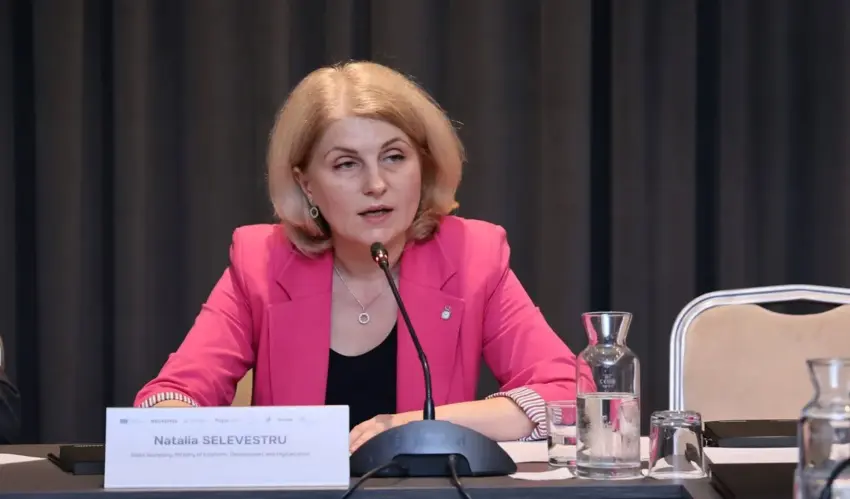
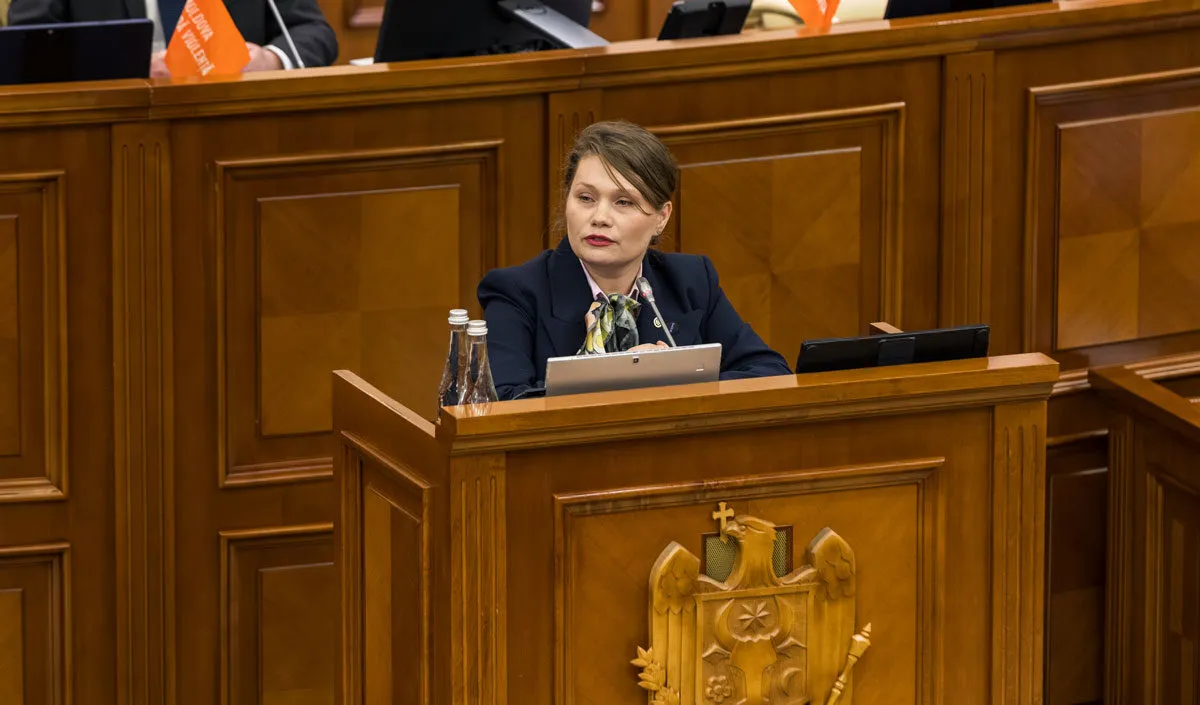
Natalia Selevestru
The draft was drawn up by the Ministry of Economic Development and Digitalisation to reduce bureaucracy and the administrative burden on the business environment.
The analysis underpinning the initiative covered over 300 legislative acts and was carried out in collaboration with other public authorities, representatives of the business community and the Economic Council attached to the Prime Minister.
“One of the most important findings of the analysis is the identification of 158 permissive acts which we consider to be ‘hidden’ – not because they do not exist, but because they are found in sector-specific laws but not in the Official Register of Permissive Acts,” said Natalia Selevestru, State Secretary at the Ministry of Economic Development and Digitalisation.
“We believe that the state should regulate only where there is a genuine need to protect the public interest and where administrative intervention is justified and proportionate to the existing risks,” emphasised Natalia Selevestru.
Hidden authorisations and bureaucracy
According to the explanatory memorandum accompanying the draft, the lack of a standardised and transparent system for managing authorisations affects the predictability of the business environment and discourages investment, particularly foreign investment, which requires clear and stable regulatory conditions.
The document provides for the elimination or simplification of over 70 authorisations, certificates and other permits, as well as the revision of over 150 acts and documents required of the private sector.
Construction, pharmacies and medicines
The drafters are therefore proposing amendments to the Law on Entrepreneurship and Enterprises, as some of its provisions contain outdated wording relating to articles of association, company registration procedures and liquidation.
The draft also contains a series of amendments to the Urban Planning and Construction Code. These include the abolition of the 0.5 per cent levy to fund the drafting of regulatory documents in the construction sector. The measure aims to reduce the parafiscal burden on private investment and increase the attractiveness of investment projects in the construction sector.
In the pharmaceutical sector, the drafters propose removing the requirement for a minimum distance from another pharmacy and the criterion stipulating one pharmacy for every 3,000–4,000 inhabitants.
For pharmaceutical manufacturers, it is proposed to abolish the authorisation issued by the Agency for Medicines and Medical Devices for the import of pharmaceutical raw materials. According to the authors’ estimates, these changes will facilitate economic activity and generate savings of approximately 10 million lei annually across the industry.
In the case of medical laboratories, the draft provides for the recognition of existing technical accreditations, so that assessments to verify the same requirements are no longer carried out repeatedly.
Other changes
Another change concerns guesthouses and other accommodation facilities provided for by law, which will be permitted to produce and serve traditional spirits, in limited quantities and in compliance with food safety requirements.
Furthermore, administrative costs for businesses are set to be reduced by establishing an unlimited period of validity for the veterinary health operating licence and the food safety registration certificate.
Simplifications are also envisaged for companies operating in free economic zones. They will no longer require an additional authorisation from the administration for each type of activity; the right to carry out the activity will stem from the contract concluded with the administration.
At the same time, the general obligation for importers of petroleum products to maintain storage facilities with a minimum capacity of 1,000 m³ will be removed, whilst the storage obligations set out in specific legislation will remain in place.
Other amendments relate to labour legislation, the transport sector and fire safety. The draft also provides for amendments to the Code of Administrative Offences. More specifically, the fixed fine, equal to the value of the product, will be replaced by a penalty ranging from 75,000 lei to the value of the product.
The draft law will be examined by Parliament at second reading. Once adopted, the legislative amendments will come into force on 31 December 2026.
Follow our updates
Have information for the newsroom? Share it with Logos-Press



















Comments
0No comments yet. You can start the conversation.
Comments are open to readers with a Logos Press account.
Sign in to comment