


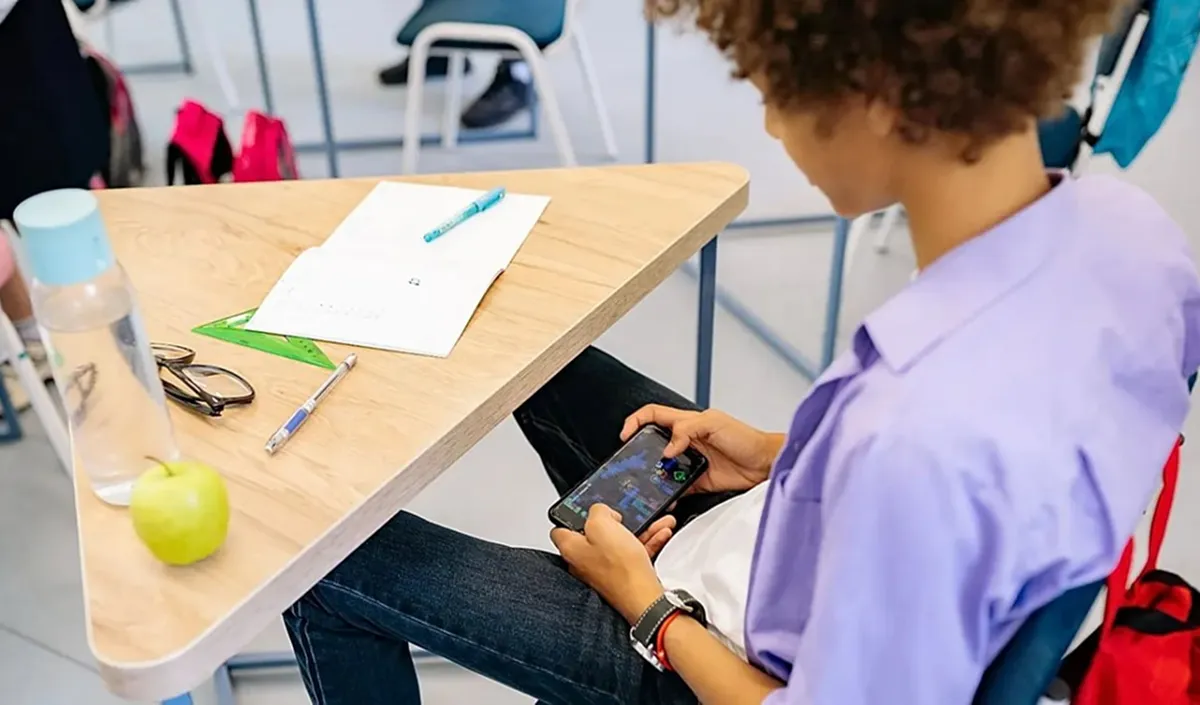
Norwegian Prime Minister Jonas Gar Støre has stated that this technology poses a risk that children will skip over the basic stages of learning to read, write and do simple maths.
Italy has opted for a more lenient regulatory approach. Its law requires parental consent for the use of AI by children under the age of 14, but does not impose a direct ban. This is the second approach to regulating AI in schools – distinct from the Norwegian one – that is already in force within the EU.
However, the EU’s Artificial Intelligence Act (AI Act) does not directly apply to generative AI tools used by pupils themselves, such as chatbots that help with homework.
One pan-European regulation is already in force. Article 4 of the AI Act, which comes into effect in February 2025, obliges companies deploying AI to ensure ‘a sufficient level of AI literacy’. This requirement is reminiscent of the digital literacy courses that New York is beginning to introduce.
New York is catching up
New York has become the largest school district in the US to follow the European example.
On Wednesday, Mayor Zohran Mamdani announced a one-year moratorium on the use of generative AI intended for children up to Year 8. The restrictions will affect nearly 600,000 schoolchildren. This represents approximately two-thirds of all pupils in the city’s state schools.
The city will also disable AI features in more than 38 previously approved educational programmes that do not meet the new safety standards, and will ban assistive chatbots in all classrooms.
Teachers will still be permitted to use AI for lesson planning, but not for setting marks or responding to crisis situations.
“The tech industry wants to convince us that the use of AI in early education is not only inevitable but also necessary,” said Mamdani. “We disagree.”
AI literacy
New York’s moratorium followed a similar, albeit less formalised, move by the Los Angeles Unified School District – the second-largest in the country – which is temporarily blocking access to generative AI tools on pupils’ devices across all year groups whilst a permanent policy is being developed.
In June, as part of a wider policy to limit screen time, Los Angeles banned the use of school-issued devices for its youngest pupils altogether.
At least 37 US states have already issued official guidelines on the use of AI in schools; however, there is as yet no single definition of ‘AI literacy’ nor any consensus on how it should be taught.
Follow our updates
Have information for the newsroom? Share it with Logos-Press


























Comments
0No comments yet. You can start the conversation.
Comments are open to readers with a Logos Press account.
Sign in to comment