
OpenAI, Google, Microsoft, Anthropic, and other players are investing billions of dollars in developing cutting-edge models, expanding computing power, and building infrastructure. Governments are investing the same billions in the digitization of AI-based services, in regulating the scope of application of such systems, in cybersecurity, and in the integration of AI into defense, security, and public administration.
This segment of the market requires resources that are available only to the largest economies and corporations. Creating any world-class generative model requires more than just skilled programmers. It involves a much broader set of requirements and conditions:
– thousands of specialized processors;
– massive amounts of data;
– expensive data center infrastructure;
– research teams;
– multi-billion investments.
However, today the AI economy is understood to encompass not only the creation of large language models, but also the entire ecosystem surrounding them: infrastructure, data, the development of applied solutions, and the implementation of technologies in business and government.
For a small country, a natural question arises: Does it stand a chance in this new technological race? And if so, what exactly is that chance? And how can it be leveraged?
The history of previous technological revolutions shows that small countries rarely win through economies of scale. They succeed when they find their niche.
Finding Its Place in the AI Economy
News of the development of an AI-based solution at the Technical University of Moldova has raised a broader question: what role can a small economy play in the new global AI race?
Experts believe the answer lies not in attempting to create a domestic counterpart to ChatGPT, but in the ability to integrate into the global AI value chain—through education, applied solutions, business digitization, and human capital development.
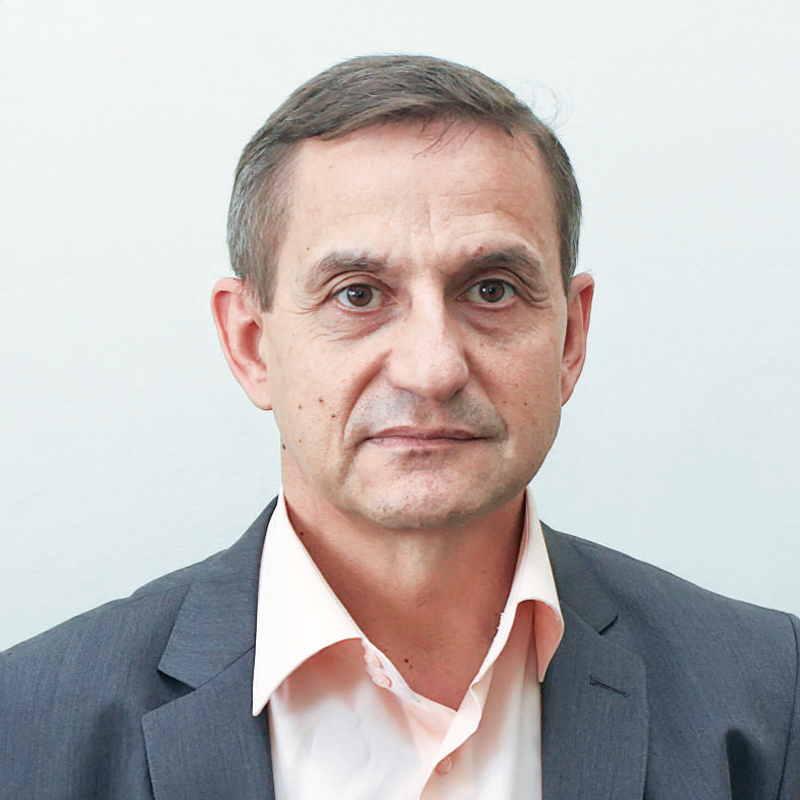
Here is the opinion on this matter from Veaceslav Cunev, CEO of Deeplace and one of the founders of the Association of Private IT Companies and Moldova IT-park. “In the global AI market, small countries essentially have no way to compete in the development of large language models—such as by creating a ChatGPT-like model.
However, small countries can certainly compete in the creation of specific data models and knowledge models that are necessary for large language models to function in specific fields of knowledge.
The fact is that solving highly specialized tasks with AI requires a data source that is as specific to that task as possible and of the highest possible quality.
There are currently very few, if any, such ready-made industry-specific datasets available. Yet it is precisely these datasets that ensure the necessary accuracy and quality of AI performance on highly specialized tasks.
Moldova, for example, could create such knowledge sets and corresponding AI models in winemaking and in a number of agricultural sectors.
It is important to note that this is a highly complex task, requiring not only the collection of the data itself but also the creation of appropriate data models for this field to ensure the ability to produce analytics of the necessary level and quality.
And this requires, among other things, scientific and academic work, for which Moldova still has the necessary scientific personnel.”
It’s Not Just About Resources and Money
The expert very accurately defined the place and role of small countries in the AI economy: not global competition, but integration into the data collection system with their own highly specialized expertise and accumulated practical experience.
The idea is simple: the AI economy is much broader than just a few companies building the largest models. An entire value chain is forming around AI, in which every country—and even individual companies—can become an important link in that chain.
At one level are fundamental research and the development of foundational models. At another is infrastructure: computing power, cloud platforms, hardware, and data storage systems.
But this is only the superstructure of the AI economy. At its core lies a vast market for the practical application of these technologies across a wide variety of sectors and fields:
– business automation;
– financial services;
– industry;
– agriculture;
– education;
– public administration;
– medicine.
And many other areas, including defense, security, scientific research, etc. It is precisely here that small countries have the opportunity to integrate into the chain and compete on equal footing.
The advantage goes not to those with the most resources, but to those who can most quickly turn technology into practical results or create a new cluster of useful data.
Estonia: An Export Model for Digitalization
Estonia’s experience is often cited as an example of how a small economy can become a significant player in the digital world. At the same time, this Baltic country did not attempt to create its own equivalent of the largest American technology corporations.
Its strategy was different: to turn the state into a digital platform. As part of this approach, the digital identification system for citizens became one of the key elements. It has proven so successful and practical that a significant portion of government and commercial services in Estonia have been transitioned to a digital format, which has been a key factor in shaping the country’s technology ecosystem.
Through their electronic identity, residents gain access to a wide range of services:
– tax reporting;
– business registration;
– financial and government services;
– electronic voting.
Another key element is the X-Road data exchange system. It allows government agencies and organizations to securely exchange information without creating a single centralized database.
As a result, digitalization has become not only a tool for citizens’ convenience but also an integral part of the country’s economic model. Building on Estonia’s technology ecosystem, companies have emerged that have entered international markets.
For example, Bolt, founded in Tallinn in 2013, has become one of the major players in the European mobility and delivery market.
The main lesson from this experience for Moldova is that it is not necessary to create a global technology giant to become part of the global digital economy. Sometimes it is enough to create an environment where companies capable of solving real-world problems can emerge.
Israel: Knowledge Transformed into Global Technologies
Another example is Israel. With a population of about 10 million, the country has become one of the world’s hubs for tech entrepreneurship.
The reason lies not only in funding or individual successful companies. A key factor has been a comprehensive and well-structured ecosystem encompassing the training of scientific personnel, research, and the commercialization of those findings. This ecosystem involves universities, research centers, engineers in the real business world, venture capital, and the government.
One of the most well-known examples on a global scale is Mobileye. It was founded on the basis of academic research in computer vision and developed technologies for driver-assistance systems and autonomous vehicles.
In 2017, the company was acquired by Intel for approximately $15.3 billion.
Another example is the navigation service Waze, created by Israeli entrepreneurs. In 2013, Google acquired it for approximately $1 billion.
These stories illustrate an important principle: a small country does not necessarily have to create a final product for billions of users, but rather a technological component that becomes part of the global market.
For Moldova, this experience is important because it shows that a small economy’s competitive advantage can be built around specialists, research, and technologies that are then integrated into global products.
Where Might Moldova Fit In?
Alongside these examples, Moldova may also find the experience of Finland—another relatively small country—interesting. Today, Finland is focusing on developing artificial intelligence through research centers and partnerships between academia and industry.
For example, the Finnish Center for Artificial Intelligence brings together universities and companies to develop applied AI solutions.
And this approach may be particularly relevant for Moldova: a small country’s main resource is not the number of data centers, but the number of people capable of creating and applying technology.
Therefore, the key issue for Moldova is not to create a one-size-fits-all, world-class model, but to identify areas where its own expertise can yield economic benefits.
But this does not mean there are no opportunities. The country has several potential advantages:
– a well-developed IT sector;
– a technical university with a strong foundation for training professionals;
– professionals focused on the international market;
– proximity to the European Union;
– experience in exporting digital services.
The story of the development of “Moldova’s own ChatGPT” at the Technical University of Moldova (as well as the previous launch of its own satellite) is significant precisely in this context.
Its significance lies not only in the product itself. The main question is whether such initiatives are fostering an ecosystem that includes training specialists in the relevant fields, systematic research, and collaboration with the business sector for the practical implementation of these developments.
And most importantly—does the government have the will and desire to support such endeavors?
The Goal: Creating Intelligent Solutions
Experts agree that the next stage in the development of the AI economy will be the creation of technological solutions for specific industries.
In this context, the areas that could become promising application points for both Moldova’s own AI developments and global ones are clear. Veaceslav Cunev also pointed this out.
For example, in agriculture, AI can help predict crop yields; analyze soil conditions; optimize resource use; and reduce production risks.
For a country with a strong agricultural sector, this is one of the most obvious areas of application.
In addition, companies can use artificial intelligence to analyze foreign markets; automate document management; improve customer service; and increase production efficiency.
The government, too, can become significantly more efficient if it begins using AI services to process documents and improve document management, streamline administrative processes, enhance the quality of public services, and so on.
And in all these areas, Moldova can be not only a consumer of foreign technologies but also a creator of its own solutions. With the right approach, these solutions could become a significant export niche.
In other words, in the age of AI, it won’t just be those who create the most powerful algorithms who come out on top. Those who better understand how to turn these algorithms into economic value will also benefit.


