

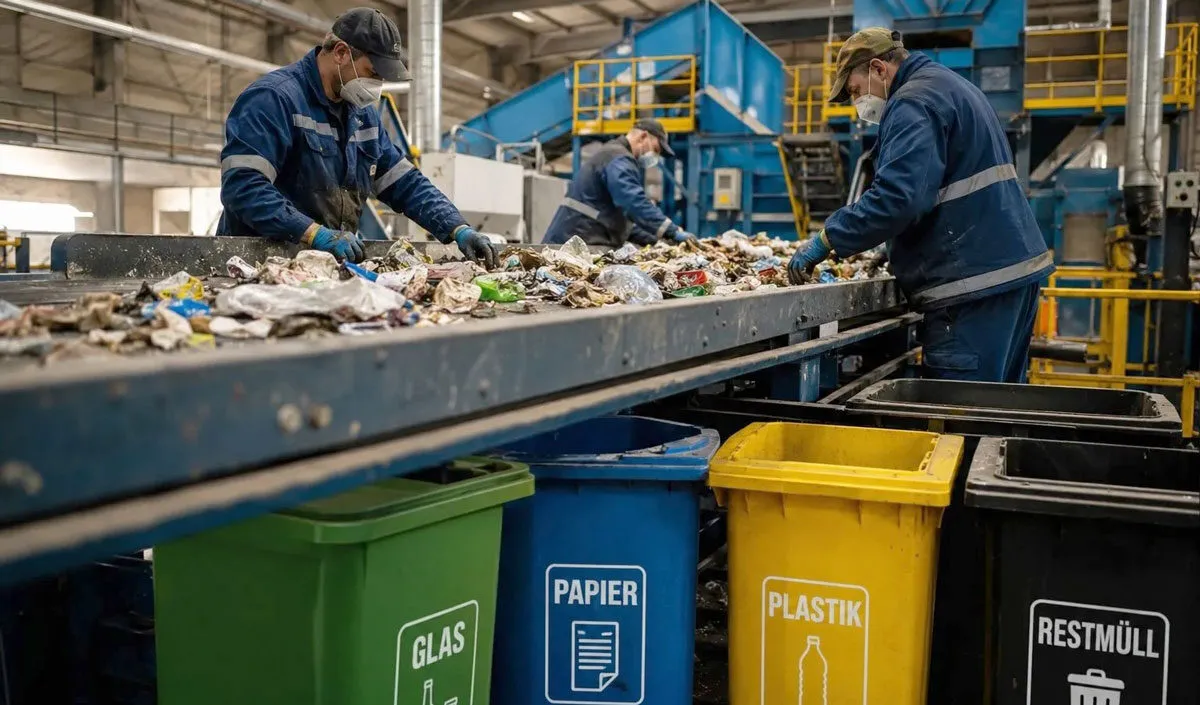
The contract value is not specified, and it covers only the development of plans to implement EU standards. Previously, experts had cited a figure of 250–300 million euros as the amount required to modernise the entire waste management system in Moldova.
What the procurement entails
The call for tenders and relevant links have been published by the Moldovan Ministry of the Environment. The procurement is being carried out as part of the project ‘Promoting an Inclusive Green Transition in the Republic of Moldova’. UNDP is inviting companies and consortia with relevant experience to submit proposals for the consultancy assignment.
The contractor must prepare five implementation plans relating to EU directives (DSIPs) and two plans covering European regulations (RSIPs). The Moldovan Ministry of the Environment will be the main beneficiary of the work’s outcomes.
The documents will cover seven areas of European legislation:
– the Waste Framework Directive;
– the end-of-life vehicles directive;
– landfill of waste;
– waste electrical and electronic equipment;
– minimising the environmental impact of certain plastic products;
– packaging and packaging waste;
– batteries and battery waste.
The aim, therefore, is to lay the practical groundwork for implementing European regulations across several key sectors of the industry – from the management of household waste to the recycling of electronics, batteries and packaging.
What challenges lie ahead
The successful tenderer must assess the extent to which Moldova’s current legislation and waste management system comply with EU requirements, identify gaps and determine measures to address them.
In particular, roadmaps for the implementation of European standards will need to be drawn up, setting out the necessary legislative changes, institutional and technical measures, the responsible authorities and implementation deadlines.
A separate component of the work will focus on investment. The contractor must assess capital and operational costs, identify infrastructure needs, draw up a priority list of investment projects and propose possible sources of funding. Sources under consideration include national and local budgets, EU assistance, international financial institutions, bilateral donors and private funding.
It is also important for Moldova to prepare justifications for the transition periods requested during EU accession negotiations. These must contain technical, legal, institutional and financial arguments confirming the necessity and feasibility of the proposed timeframes.
Under the terms of the procurement, the work will be carried out within 12 months of the contract being signed. The documentation provides for consultations with the Ministry of the Environment, national institutions and the European Commission, as well as training and knowledge transfer.
An important aspect of European integration
Chapter 27 of the EU accession negotiations covers the environment and climate change. Meeting its requirements involves not only aligning national legislation with European standards, but also creating the conditions for practical compliance with the new regulations.
In the waste sector, this means aligning legislative requirements with the country’s actual capabilities: collection and recycling infrastructure, administrative resources, monitoring systems, available funding and modernisation timelines.
The preparation of these seven plans should provide the authorities with a coordinated assessment of the necessary measures and costs, as well as help to identify investment priorities. These documents can serve as a tool for planning future expenditure and preparing projects eligible for national or international funding.
The work is being carried out as part of the UNDP project ‘Promoting an Inclusive Green Transition in the Republic of Moldova’, funded by the European Union. However, the value of the contract itself is not specified in the published materials available for verification.
This story was translated with the assistance of artificial intelligence.The translation was also reviewed by the Logos Press editorial team.
Follow our updates
Have information for the newsroom? Share it with Logos-Press








Comments
0No comments yet. You can start the conversation.
Comments are open to readers with a Logos Press account.
Sign in to comment