


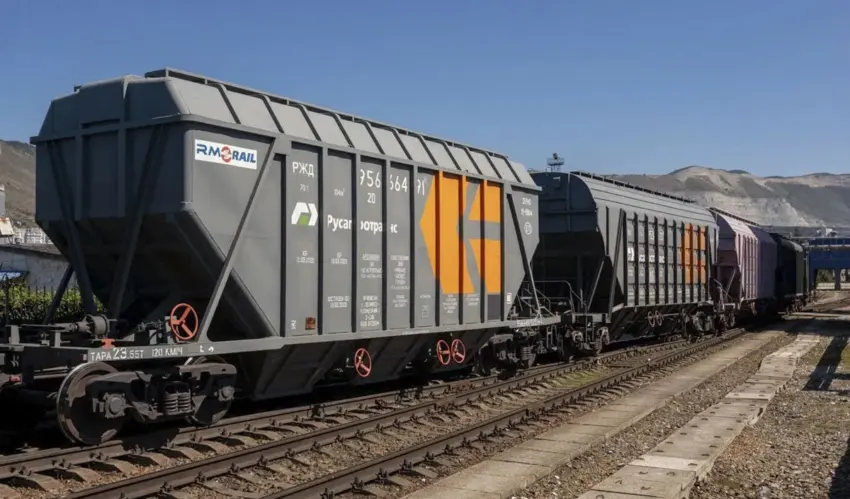
Grain transit from Russia via Latvia is on the rise
According to the Latvian website press.lv, the situation appears paradoxical: whilst the authorities are discussing halting the transport of Russian grain, its transit through Latvia is rising rapidly. In the first ten months of 2026, 1.115 million tonnes of grain from the Russian Federation were transported through the country – 3.1 times more than in the same period last year. Shipments from Belarus increased even more significantly: from 60.8 tonnes to 185,756 tonnes.
According to the State Revenue Service (VID), Russian grain transit totalled 357,645 tonnes in the first ten months of 2025. Thus, despite political debates and calls to halt shipments, the volume of Russian grain passing through Latvian territory has increased significantly.
The Ministry of Foreign Affairs presented the government with three possible scenarios for halting grain transit. One of these was the introduction of EU-wide sanctions. Latvia raised this issue during negotiations with EU institutions and other Member States, but did not receive the necessary support.
It is now proposed to act at national level, based on foreign policy and national security interests.
The ban carries risks
The ministry acknowledges that the ban carries certain legal and economic risks. In particular, there is a possibility of legal disputes arising from existing contracts, a reduction in revenue for transport and logistics companies, and losses to the state budget.
An additional problem could be the need to align national restrictions with EU legislation, as the transit of goods is also regulated by pan-European standards.
The decision may prove particularly sensitive for Latvian ports and the railways, which derive revenue from the transport and transhipment of transit cargo.
Earlier, the Latvian Saeima (parliament) called on the government to draw up regulations allowing for the immediate cessation and future prohibition of the import of Russian and Belarusian grain into Latvia, including in transit.
Last week, Prime Minister Andris Kulbergs also pledged to push for the restrictions. During the ‘No to blood-stained grain!’ protest, he spoke of the need to ban the conclusion of new contracts for the transit of Russian grain. He had previously warned of the possible financial consequences of such a decision and the need to take the interests of the transport sector into account.
The final decision is to be taken by the Cabinet of Ministers.
Follow our updates
Have information for the newsroom? Share it with Logos-Press





















Comments
0No comments yet. You can start the conversation.
Comments are open to readers with a Logos Press account.
Sign in to comment