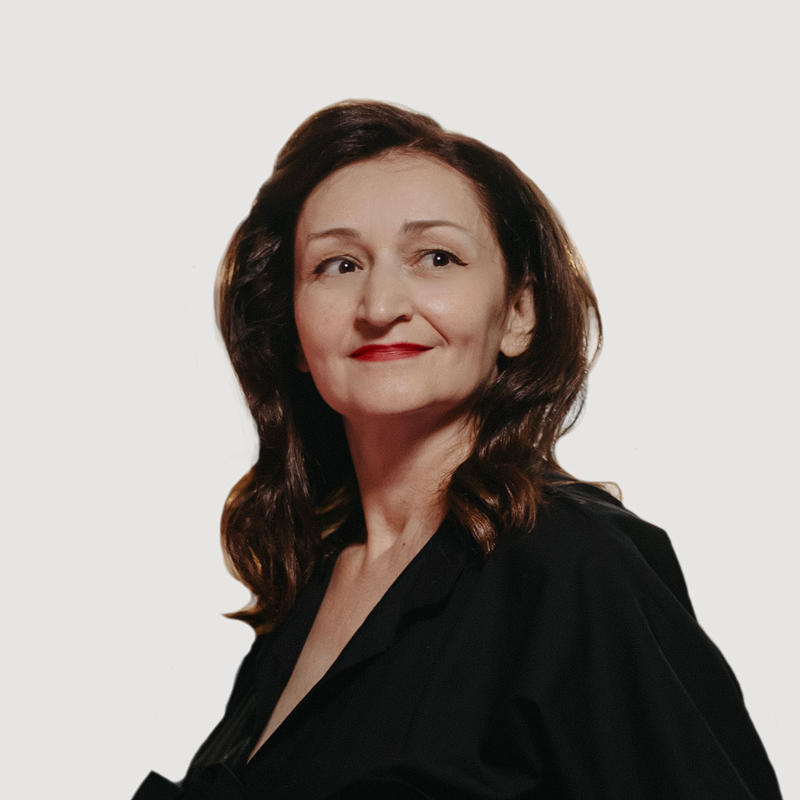

Ion Dodon
Professional Background: Ion Dodon holds a law degree and a master’s degree in the regulation of health insurance. Throughout his career, he has held leadership positions in the Ministries of Health, Labor and Social Protection (including as State Secretary), Justice, and the Office of the Government of the Republic of Moldova.
LP: – You recently presented a report to the parliamentary commission on the execution of the 2025 budget for the compulsory health insurance funds. But we would like to ask you to briefly describe the achievements and challenges of the past year.
– The funds’ execution for 2025 was exemplary. We achieved an execution rate of approximately 99% for both revenue and expenditures. More precisely, revenue stood at 99.4% and expenditures at 98.9%.
In essence, this means full execution for both categories. The budget was adopted without a deficit, and we stayed within our planned expenditure limits.
All programs and targets set by the government and the Ministry of Health were met. The audit opinion issued by the Court of Auditors is unqualified. We are pleased with this, as it confirms that the financial reports we submit to the government are accurate and based on actual figures.
Our rate of implementation of the Court of Auditors’ recommendations is one of the highest in the Republic of Moldova. We have implemented 80% of the recommendations, and the few that remain outstanding require more time simply because they are still in the process of being implemented.
Since we are an institution that manages the budget and enters into contracts with hundreds of healthcare providers across the country, it is important that our financial policy be planned in advance. It took us some time to implement changes to our methodology so that providers could plan their budgets without disrupting their workflow. We are continuing this process until all recommendations are implemented.
The Court of Auditors always has observations—in any institution, especially one that manages a budget as substantial as CNAM’s and faces such a wide range of challenges. However, these observations are minor compared to the scale of the tasks facing the organization.
LP: – Nevertheless, last year’s budget was subject to adjustments. Do you plan to adhere to EU requirements in the future by limiting yourselves to only one amendment per year?
– In 2025, we had only one adjustment, unlike other budgets. This was primarily due to the fact that we collected 70 million lei more in fixed mandatory health insurance contributions, which had to be reflected in the law on mandatory health insurance funds.
With this in mind, the Ministry of Health proposed improving the operations of emergency departments. Both large and small facilities received significantly increased budgets to stimulate their activities and reduce the rate of inpatient hospitalizations.
The goal is to ensure that cases where hospitalization can be avoided are resolved at the emergency department level, while maintaining a high quality of care. This was the focus of the 2025 adjustment.
LP: – How are demographic changes affecting the collection of funds for the compulsory health insurance (CHI) system, and what are the medium- and long-term prospects, given the declining population and migration?
– At the moment, the situation is under control; we do not see excessive pressure on the compulsory health insurance budget. But this concerns us in the medium term and, especially, in the long term.
Migration, although not on the same scale as in the late 1990s and early 2000s, still exists. However, there are also positive developments: people are returning to the Republic of Moldova, and the government is taking systematic and well-thought-out measures to reintegrate and bring our citizens from the diaspora back home.
I am pleased that many young people, students, and graduates of the Medical University are staying at home more than ever before.
Nevertheless, the phenomenon of migration exists, as does the phenomenon of an aging population. Hidden demographic changes are taking place.
In the future, this could create problems if we do not take proactive measures. Our institution is sensitive to such processes.
On the one hand, the formation of insurance funds depends directly on the economically active population. If working-age citizens leave the country and the birth rate falls, the taxpayer base will inevitably shrink. On the other hand, the population is aging, and the demand for medical services among the elderly is growing.
We are facing dual pressure on the system: those who leave stop contributing, while those who remain require ever-increasing healthcare costs. We must be prudent and anticipate these challenges, which is why we need to focus on finding additional sources of funding.
LP: – For example?
– For example, excise taxes on products harmful to health, such as tobacco products. In my view, a portion of these funds should be legally earmarked specifically for improving public health indicators.
However, at present, according to our fiscal policy, excise taxes are treated as general-purpose taxes: they flow into the state budget and are then allocated according to general principles.
However, that is not the only issue. Overall, increasing transfers from the state budget through consumption taxes—VAT, excise taxes, as well as income tax and corporate income tax—will help us ensure financial stability.
The most important thing we can do is to establish stricter tracking of active taxpayers. We are already working on this: while in 2021–2022 we had only 58,000–60,000 people paying a fixed insurance premium, that number has now reached 150,000. Thus, the pool of contributors has grown by nearly 100,000 people. This is a significant reserve that is already making a difference.
We also need to achieve greater fairness among the various categories of contributors. Currently, the main burden falls on employees and employers—they contribute 9% of their wages. Meanwhile, the burden on other categories, such as the self-employed (legal professionals, small business owners), is significantly lower.
The same applies to agricultural landowners: by law, they must pay an insurance premium of 2,527 lei by March 31.
But the reality has changed. This rule was relevant in 2004, when everyone received equal land shares and was in roughly the same situation. Today, we need to distinguish between the owner of a small plot—who may not even cultivate it—and the owner of hundreds or thousands of hectares. Right now, however, the law is the same for everyone.
What else can we do? We’re working on it, but the mechanisms need to be strengthened. The procurement of medical services must be more results-oriented.
When we procure a service, we are interested not only in the volume and not only in ensuring that hospitals receive sufficient funds for salaries. It is important for us to establish performance metrics—target indicators—that the facility must achieve in the territory it serves.
For example, the goal is to reduce the rate of hospitalizations. This means that primary health care and outpatient services must be more active and deliver better results. Currently, hospitals consume enormous resources—half of our budget goes to inpatient care. Over the next 5–7 years, the share of the budget allocated to hospitals should decrease from 50% to 40%. This will yield significant savings.
And, of course, this involves improving the mechanisms for procuring reimbursable medications and medical devices, as well as diagnostic services provided primarily by the private sector, to ensure sufficient resources to meet the population’s needs.
LP: – How do you see the prospects for the funds in terms of equitably covering both the rising cost of medical services and the expenses for reimbursable medications?
– For the CNAM, as a strategic purchaser—the largest buyer of medicines and medical devices in the Republic of Moldova—the situation is as follows: medicine prices have remained virtually unchanged over the past four years. Price increases have affected only a few specific drugs that are not among the most expensive or the most in-demand in terms of volume.
This was made possible by the fact that in 2022, the government approved new mechanisms for negotiating drug prices. We have implemented and are successfully applying this system: for the most expensive drugs (those in the top 20), we have effectively fixed prices, and companies provide us with price guarantees for a period of one to three years. We are now in the fourth year, and no price increases have been observed for any of these items.
LP: – Could you provide some figures regarding volumes and costs?
– Over the past four years, we have managed to save more than 300 million lei on reimbursable drugs and medical devices. I consider this a significant amount. This money was not withdrawn from the system but was instead used to expand the list of reimbursable medications. As a result, we now have a “healthier” and more comprehensive list of medications.
LP: – What stage is the implementation of the electronic patient medical record at, and how will it facilitate interaction between the insured person, the healthcare provider, and CNAM in the near future?
– Our company manages a whole range of information systems—14 in total. The most popular system, developed in-house, is “e-Rețeta” (electronic prescription), which we launched on April 1, 2024. We’ve achieved very good results over the past two years.
Even earlier, in November 2023, we put a new population registration information system into operation—“Compulsory Health Insurance” (SI-AOAM)—where we keep records of both insured and uninsured individuals. It is also yielding excellent results. Let me remind you that it is precisely thanks to this system that nearly 100,000 new premium payers have been enrolled in the compulsory health insurance system.
We also have other, earlier systems: one for primary health care, the DRG (Diagnosis-Related Groups) system for tracking inpatient care cases, and a system for tracking high-tech diagnostic services.
All of these systems must be integrated into the “Electronic Health Record” (Dosarul electronic de sănătate). Currently, the concept for this system is under development at the Ministry of Health. Drawing on our extensive experience, we are actively participating in the process by providing proposals and recommendations, given that we manage the most critical digital and financial aspects of the healthcare sector.
Once the concept has been developed and approved, the institution responsible for its implementation will need to be designated.
LP: – A draft law is currently going through the legislative process that provides for the mutual recognition of prescriptions issued in the EU within Moldova and vice versa. How and when might this initiative be implemented in practice?
– Our “e-Rețeta” system was tested in this regard as early as 2024, as we are actively preparing for EU accession, and the system is already capable of transmitting and receiving data from other member states.
I know there is a draft law that includes a number of provisions, including those concerning the ability to issue prescriptions. However, it is premature to discuss cross-border data transfer until we join the EU. I wouldn’t rush to implement this before official accession. As the saying goes, “Measure seven times, cut once.”
We must be 100 percent ready. Furthermore, mutual recognition is only possible if there are financial settlements between states. A unified information space must be created, including electronic patient medical records. There is no point in implementing these tools in isolation.
As far as I know, even EU member states are not yet very active in practicing shared access to data, preferring bilateral relations over the EU-wide level.
LP: – What specific steps is the CNAM taking, in collaboration with regulatory authorities, to simplify and expedite the procedures for registering medicines in Moldova?
– The government has submitted a package of legislative acts to parliament that, among other things, provides for the possibility of simplified authorization and recognition in Moldova of medicines already registered in the EU.
Our company is not directly involved in the authorization process, but we are extremely interested in ensuring that the widest possible range of medicines is available on the market. This ensures access to effective therapy and treatment, which is our primary objective. We are interested in access to medicines precisely from this perspective: as soon as a drug is authorized, we can include it on the list of reimbursable medicines.
By opening the door to price negotiations and ensuring greater transparency in the area of reimbursed medicines, I believe we are helping new manufacturers enter our market.
It is important for the range of medicines to grow—to 4,000–5,000 items, as in developed European countries. I understand that this is not easy, since we are a small market with a population of 2.4 million people, and manufacturers’ interest is not that great. But that’s not the only criterion. There must be transparency, minimal bureaucracy, a competitive environment, and clear “rules of the game”—then the population size factor can take a back seat.
The quality of medications is also critically important. In 2025, we allocated more than 1.2 billion lei to reimburse medications and medical devices—a record-high, “healthy” figure.
In 2025, approximately 730,000 citizens received reimbursed medications at least once each year. Most of them suffer from chronic conditions and receive medications on a regular basis.
On average, CNAM spent 1,755 lei on each of them. While we spent 600–700 lei in 2021, that amount has now increased by 1,000 lei. And, as I’ve already mentioned, prices haven’t gone up, which means that patients’ out-of-pocket costs have decreased, while government spending has increased.
This is a positive development, as it aligns with the goal of our work: providing financial protection for the population. We’re talking about the most vulnerable groups—people with chronic diseases and older adults.
Half of the expenses are related to cardiovascular diseases, and another 24% or so are related to endocrine diseases, including diabetes, particularly type 1.
And here’s another important development: starting in 2022, we launched a reimbursement program for medical supplies—test strips, lancets, and syringes—for people with diabetes. And now, following publication in the “Monitorul Oficial,” reimbursement will also be available for continuous glucose monitoring sensors—modern devices for measuring blood sugar levels.
The reimbursement program works as follows: the government covers the median cost, and the patient can choose either a free device or a more expensive model by paying the difference. In any case, this is incomparable to the full cost: a person pays not 2,000 lei, but only 300–400 lei.
LP: – This is very timely, as statistics on diabetes—including among children and young people—are, unfortunately, on the rise.
– In 2025, 111,000 patients used reimbursed devices, most of whom were people with diabetes. This is a record figure.
LP: – Is that because the number of people with the disease is rising?
– It’s because access for the public is increasing. Take test strips and lancets, for example: previously, government procurement involved waiting for the budget law to be passed, followed by a competitive bidding process, complaints, and litigation—and in the best-case scenario, the procedure was completed by March or April.
As a result, one product would win the bid—one that wasn’t always suitable for a specific patient, but the patient had no choice. They received these supplies for free through a medical facility—often a national or regional one. But there are pharmacies in villages and small towns where there may not even be hospitals. This is where the huge difference in access lies.
LP: – A draft tax policy is under discussion. What changes does this document bring for citizens in the area of health insurance?
– We have received this draft for review and intend to present a clear, official position on it. Judging by the text, it addresses certain aspects of the CNAM’s operations, particularly regarding the insurance premiums paid by salaried employees.
It is important that the healthcare sector not suffer. We must develop this sector to reach European standards. I am confident that no one intends to harm the system, but we must be mindful of the risks.
Of course, we must approach the issue of VAT on medications with great caution. Here, once again, we must strictly adhere to the principle: “Measure seven times, cut once.”
LP: – Do you think our healthcare system is currently moving in the right direction?
– We’re not talking about some kind of revolution; we’re talking about a steady progression that must be sustained. As a country, we must be well prepared for accession to the European Union.
I am pleased that the Ministry of Health has launched a reform of primary health care, which is being actively implemented throughout 2026. The gateway for any patient into the healthcare system is the family doctor and their team. The goal of the reform is to improve access to medical care for the population specifically through the family doctor.
LP: – What does this mean in practice? Will there be a consolidation of healthcare centers?
– In practice, this means that in small communities with few residents, where only one or two doctors work, it will be necessary to establish a unified administrative structure with another center to ensure the continuity of medical care.
Let’s imagine a situation: there’s a center where only one doctor works. What should a patient do if the doctor is on vacation? If a person falls ill, they’re left without reimbursable medications, their condition worsens, or they’re forced to spend their own money. As a result, they end up in the hospital—which is where the enormous costs arise.
LP: – Is this reform being carried out in parallel with the local public administration reform process?
– No. This reform began earlier, but it is still ongoing. We support the primary care sector, especially now, but we are also introducing performance indicators. We want to transition to a service procurement model that delivers tangible results.
Simply put: we need to buy fewer services and more health.
LP: – Thank you for the interview.


