


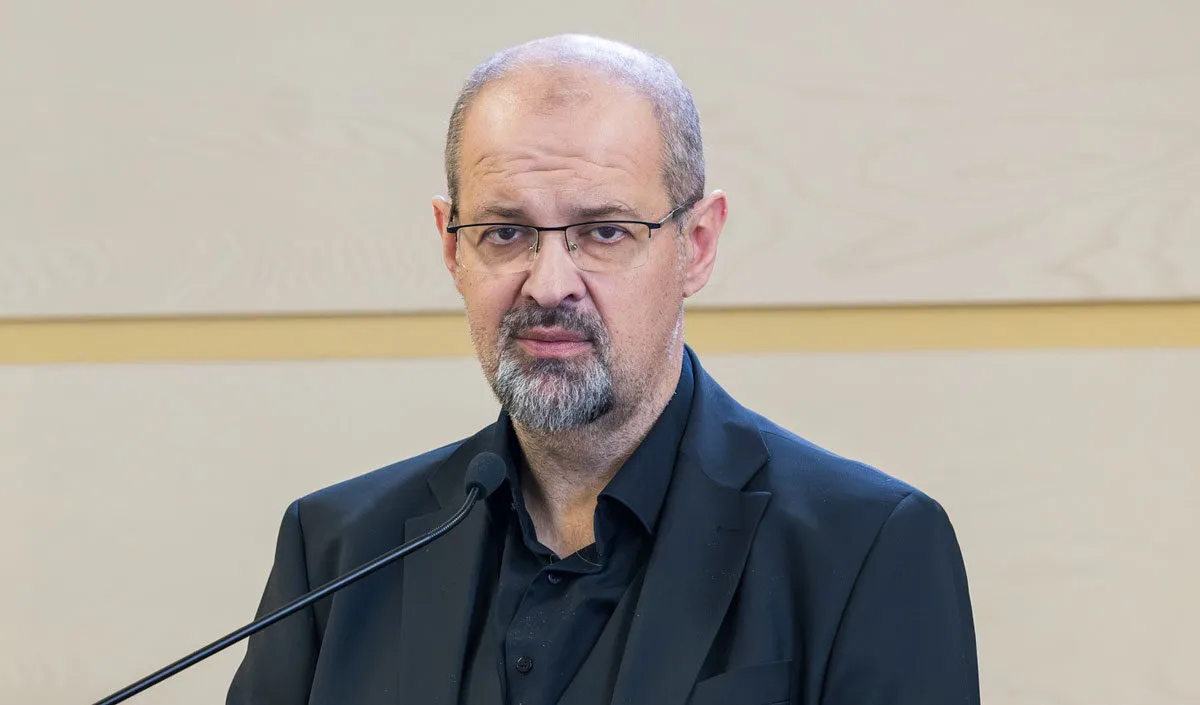
Inna Vrînceanu
Proposed structure
NORTH Region — 11 districts, 514,000 inhabitants.
CENTRAL Region — 13 districts, 670,000 inhabitants.
SOUTH Region — 7 districts, 280,000 inhabitants.
Bălți, Chișinău and Cahul — the largest settlements and the towns with the most developed economies — are proposed as regional centres. Furthermore, they are regarded as the historical centres of their respective regions.
Public institutions and services currently under the authority of district councils will be transferred to town halls or central authorities, without, however, being relocated from the towns in which they operate.
Organisations in sectors such as health, architecture, education, social protection, etc., will be placed under the authority of the relevant ministries and authorities.
Libraries, cultural centres, youth centres, arts schools, sports schools, children’s camps and museums will come under the authority of the local council in the area where they are situated.
The entire assets of the district councils will not be transferred to the regions, but will be distributed amongst the local councils in the areas where they are physically located.
Secretary-General of the Government, Alexei Buzu: “Services will remain as close to the people as possible. Citizens will not have to travel to the regional centre for services that they currently receive in their own locality. The institution managing the service may change, but not the place where people receive it.”
Strong local councils — developed communities
When asked by Logos Press to give her expert opinion on the advantages and disadvantages of the reform, Ina Vrînceanu, project coordinator at the “ADEPT” Association, said that the reform is necessary. In recent years, the current district level has lost a significant portion of its responsibilities: social assistance and healthcare have already been transferred to central authorities, and education will soon come under the direct control of the relevant ministry.
“Maintaining 32 district administrations for the remaining functions is no longer justified. The proposed direction, towards regions focused on development and support for local councils, is the right one and is in line with European practice,” says Vrînceanu.
The new regions will enable savings in budgetary resources and a reduction in administrative structures, whilst focusing on implementing joint projects and attracting European funds.
MP Larisa Voloh, vice-chair of the Committee on Public Administration and Regional Development, told TV8 that the new regions do not envisage the creation of a large number of posts for civil servants: “There will be between 20 and 40 — fewer responsibilities, fewer resources.”
Experts believe that the main advantages of the reform lie in the fact that decisions and funding will be closer to local communities.
“The main advantage is that decisions and funding are brought closer to the community. The services people use every day, such as the library, the arts centre or the community centre, remain in the same locality. However, they will be managed by the local council – that is, by the authority that citizens are familiar with and can hold directly to account. A second advantage is medium-term. Larger regions can prepare large-scale projects and attract European funding that a small district or a single local council would be unable to access on its own. For citizens, this means roads, water supply systems and investments that would otherwise not be realised,” says Ina Vrînceanu.
What stronger local councils can actually do
Political commentator Roman Mihăeș believes that genuine local autonomy is linked, first and foremost, to strengthening the tax base of local authorities:
“Strengthened local authorities must have: a larger share of revenue from income tax and VAT; genuine autonomy regarding local taxes; transparent mechanisms for inter-regional financial equalisation; a legal guarantee of accessible services — the list of services that must remain in the former district centres (or in inter-municipal centres) must be established by law and subject to oversight.”
There has already been a reform — “it left a bitter taste”
The Congress of Local Authorities in Moldova (CALM) welcomed the reform, describing it as a pleasant surprise. However, one of the main problems, according to CALM representatives, is the lack of a unified approach to the reform from the outset. Consequently, a great many questions remain unanswered. CALM refers to the 1999 attempt at decentralisation and administrative-territorial reform, when the Republic of Moldova was divided into 10 counties.
“We have already experienced a situation where someone rushed through a similar reform and failed to see it through to the end. And where did that ultimately lead us? To 20 years of total deadlock,” said CALM’s executive director, Viorel Furdui.
What will happen to the district councils’ headquarters remains to be seen. However, it is already known that the assets of the district councils will be transferred to the towns, that is, to the town councils. The previous reform shows that such a reorganisation can also give rise to very practical problems. In one of the district councils, a person returning after several years of working abroad was unable to find the documents confirming they had completed their national service: these had ‘gone missing’ following the district council’s relocation to the county. And a few chairs have gone missing as well.
A great many unknowns
Ina Vrînceanu also believes that the current draft requires improvements before it can become law:
“The draft in its current form, however, needs further elaboration before it becomes law. Concrete figures on budgets and staffing must be provided. And it must be clearly established what a regional council elected by the citizens actually decides. A reform that is sound in principle may fail if the details are rushed.”
The expert identifies three likely risks associated with the reform.
The first is funding. A town that takes over a library or a sports school also attended by children from neighbouring villages must receive funding for this. Otherwise, these institutions will be underfunded or will restrict access.
The second is representation. In a regional council elected on the basis of lists covering 7–13 districts, some areas may end up with no councillors at all. Guarantees of territorial representation are needed.
The third issue is the capacity of local councils. Many of them are undergoing amalgamation and will take over district institutions at the same time. Without technical support and a phased timetable, we risk deadlock.
Will constitutional amendments be necessary?
The transition from districts to regions also raises a legal issue: will it be necessary to amend the Constitution? Districts are provided for in the Constitution, and their abolition without amending the Constitution seems, at first glance, impossible. Currently, Article 110(1) of the Constitution of the Republic of Moldova stipulates that the country’s administrative-territorial organisation comprises villages, towns, districts and the Autonomous Territorial Unit of Gagauzia. The transition to regions logically entails amending the Constitution.
However, this question was addressed by former Deputy Prime Minister Alexandr Muravschi. According to him, the issue of whether changing the name of an administrative-territorial unit contravenes the Constitution was already examined by the Constitutional Court in 1999. The Court ruled that the terms ‘county’ and ‘district’ are identical in this context and that Parliament has the right to determine the organisation of the territory, including by using other names for administrative-territorial units. Consequently, the new renaming could also be considered in accordance with the Constitution.
But what about Transnistria?
Another aspect has puzzled several observers. Why have the districts on the left bank of the Dniester not been included in this proposal?
MP Olga Cebotari argues that the absence of the Transnistrian region raises a natural question: what role does the country’s reintegration play in this reform and in the ruling party’s plans?
“We cannot talk about reforming the country whilst ignoring part of it! As a Member of Parliament, I demand that the new administrative-territorial organisation clearly define the status of the districts on the left bank of the Dniester, even if at this stage this is merely a formality — until constitutional control is restored and the Republic of Moldova is fully reintegrated.”
In the view of former MP Igor Munteanu, “making the Transnistrian districts into a separate region means turning the demarcation line into an official border”: “The correct approach is the opposite: every part of the territory on the left bank must be linked to the region on the right bank with which it already shares markets, families and infrastructure”.
It is curious that, in the context of a reform that effectively abolishes the current district level, its main ‘protagonists’ — the district chairmen — have so far remained virtually invisible. Perhaps the most interesting revelations will come when it becomes clear exactly what they stand to lose — or… what they stand to gain in the future system. And why they are keeping quiet for the time being.
The final shape of the reform is not yet clear. The government intends to present the draft bill to Parliament by the end of October, put it out for public consultation in November and adopt it by the end of the year. It is to be hoped that the new reform, even if it does not take everyone’s interests into account, will at least draw on the experience of the previous reform. The experiment carried out almost 30 years ago proved to be short-lived. Now the country has the chance to demonstrate that ‘bad history’ does not necessarily have to repeat itself twice.
This story was translated with the assistance of artificial intelligence.The translation was also reviewed by the Logos Press editorial team.
Follow our updates
Have information for the newsroom? Share it with Logos-Press











Comments
0No comments yet. You can start the conversation.
Comments are open to readers with a Logos Press account.
Sign in to comment