

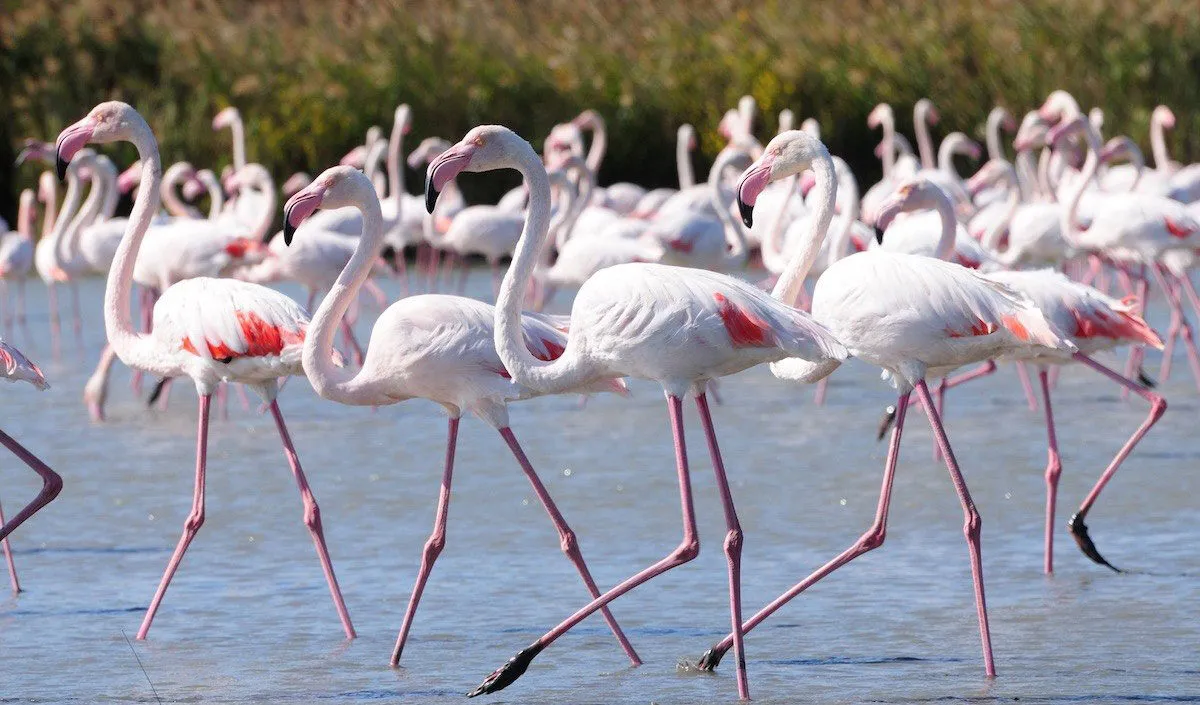
As reported by ZIUA de Constanta, the appearance of flamingos on the Romanian coast represents a radical change compared with the situation a decade ago, when these birds were considered an extreme rarity.
In 2016, four individuals were recorded on the country’s water bodies, marking the species’ first appearance in the last hundred years. Since then, the situation has changed radically, and experts regularly record large flocks numbering between 500 and 800 birds.
Analysis of ringing data reveals active migration and links between the local population and regions in Turkey, Greece and France, confirming that the birds move between different parts of Europe and the Mediterranean basin.
The likelihood of the species breeding in Romania
The high proportion of young birds in the flocks leads ornithologists to suggest the possibility that flamingos have begun to breed in Romania in areas hidden from human view.
“A great many of the birds are juveniles hatched this year. This suggests that we cannot rule out the possibility of flamingos breeding in Romania — somewhere in hard-to-reach places, hidden from human view,” notes ornithologist Attila Marton.
Although there is as yet no official confirmation of the species breeding within the country, the young birds may also be migrating from colonies in Bulgaria or Ukraine.
The importance of hydrological ecosystems
The Dobruja Lakes boast a unique ecosystem. Shallow waters, an abundance of microorganisms and crustaceans, and a relatively calm environment make these areas an ideal ‘dining room’ and resting place.
According to experts, the regular appearance of birds is no coincidence, but a sign of long-term changes. Ornithologists predict that the emergence of permanent breeding populations living in Dobruja all year round is only a matter of time.
This story was translated with the assistance of artificial intelligence.The translation was also reviewed by the Logos Press editorial team.
Follow our updates
Have information for the newsroom? Share it with Logos-Press





















Comments
0No comments yet. You can start the conversation.
Comments are open to readers with a Logos Press account.
Sign in to comment