

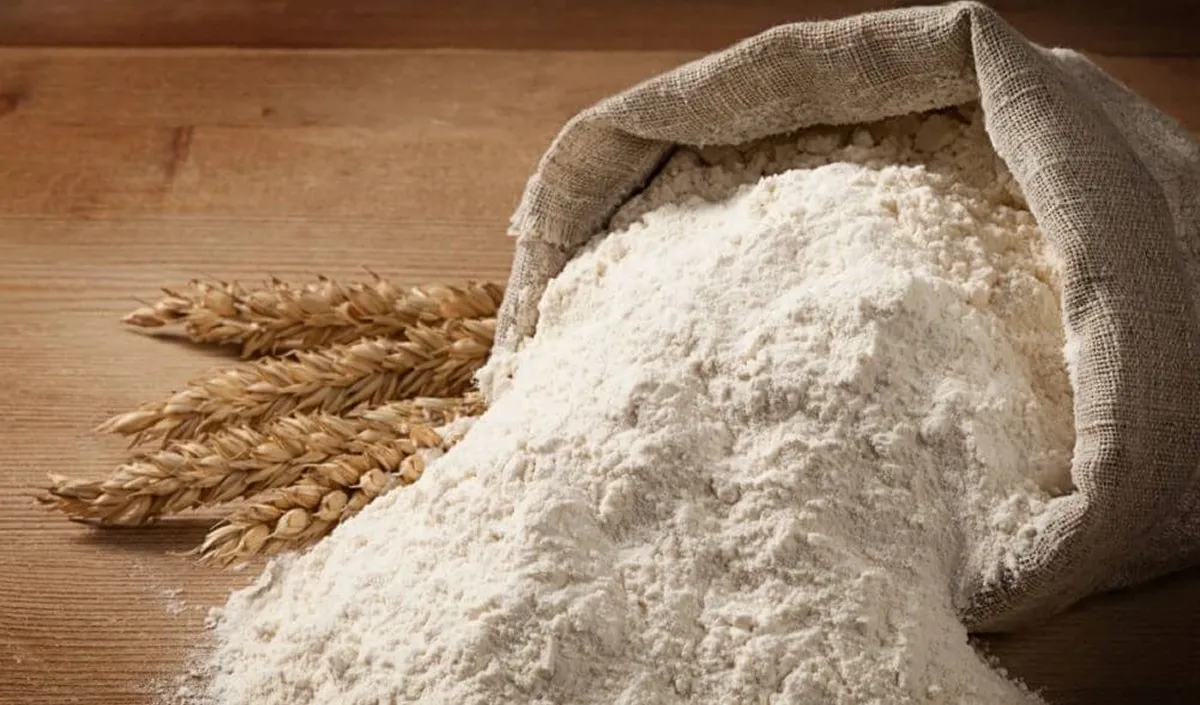
Flour exports from Moldova: volumes, geography, prices
Between January and August 2026, exports of wheat flour from Moldova totalled just over 16.4 thousand tonnes – 4% less (17.2 thousand tonnes) than in the same period of the previous year.
Romania and Israel account for virtually the entire volume of Moldovan wheat flour exports. During the period under review, shipments to Romania exceeded 10,000 tonnes (62 per cent of the total volume), whilst those to Israel amounted to 6,000 tonnes (almost 38 per cent). Together, these two markets accounted for over 99 per cent of exports. Over the whole of last year, Romania purchased around 14.2 thousand tonnes from Moldova, whilst Israel purchased 12.7 thousand tonnes.
In the first eight months of 2026, export revenue for Moldovan suppliers reached 87.1 million lei. The average export price stood at 5.30 lei/kg – a figure almost identical to last year’s (5.29 lei/kg) and 6 per cent higher than the average price (5.00 lei/kg) for 2024.
Nevertheless, the key trend of 2026 was a fall in the price of Moldovan flour. Over the first five months of this year, the price of flour fell by approximately 21 per cent. Moreover, the export price in August was the lowest for that month in the last two years.
Market operators believe that the fall in export prices was caused by large volumes of flour of Ukrainian origin being supplied to Moldova and other countries in the Black Sea region.
Imports and trade balance
Between January and August 2026, Moldova imported 15.7 thousand tonnes of wheat flour. Three-quarters (11,800 tonnes) entered the Moldovan market from Ukraine (18,400 tonnes for the whole of last year). During this period, Moldova imported flour worth 120.7 million lei, with an average price of 7.69 lei per kg.
Moldova imports between 25,000 and 30,000 tonnes of wheat flour annually. This year, Moldova’s flour trade balance has virtually evened out – imports are just 5 per cent lower than exports. In previous years, the export surplus was significantly higher. In particular, in 2025, exports totalled 27,3 thousand tonnes, whilst imports stood at 24,5 thousand tonnes.
Although during the period under review this year Moldova imported just 5 per cent less flour than it exported, the country paid 39 per cent more for this commodity than it earned from it.
In 2026, the difference between average import and export prices reached 45 per cent in favour of the former. Moreover, the price gap is widening: last year, imported flour was 41 per cent more expensive than exported flour; in 2024, the difference was 32 per cent; in 2023, 11 per cent; and in 2022, 14 per cent.
Reasons for the imbalance
The price difference is primarily due to the difference between the two business models. Moldovan exporters focus mainly on industrial customers, supplying flour in bulk (in railway wagons and flour lorries) or in 50-kg bags. Imported flour enters the country mostly in small retail packs – ranging from 0.5 to 3 kg.
In other words, the cost of the imported product includes the expenses for packaging, specialised transport and distribution.
Furthermore, Ukrainian suppliers offer flexible terms for supplying flour to Moldovan bakeries – both in bulk and in bags of various sizes. Moreover, they maintain a favourable price-quality ratio for buyers. Moldovan bakers use Ukrainian wheat for blending – to improve the quality of the main raw material for the production of export goods.
Moreover, given the significant difficulties in exporting agri-food goods by sea, some Ukrainian producers are agreeing to supply goods to customers on deferred payment terms. For them, this is more profitable than bearing ‘war risks’.
All these factors are clearly reflected in the value balance of flour trade flows in Moldova.
Domestic consumption
According to expert estimates, with an average consumption of around 98 kg per capita, the country’s demand for flour stands at between 220,000 and 230,000 tonnes per year (equivalent to 275,000–290,000 tonnes of grain).
In years with average yield figures, 25–30 per cent of the country’s total wheat production is processed, whilst the bulk of the harvest is exported as raw material. Flour imports cover only 11–13 per cent of domestic consumption of this product in Moldova.
However, as noted above, the country imports either pre-packaged flour or flour accompanied by the added benefit of flexible logistics and payment arrangements.
‘A paradoxical situation has arisen,’ says Yuriy Riza, an expert in agri-marketing. ‘The Republic of Moldova produces a sufficient quantity of wheat, yet processes and consumes domestically only 25–30 per cent of its food grain harvest, whilst the bulk of it is exported as raw material. At the same time, the country imports tens of thousands of tonnes of packaged flour every year — a product whose added value was generated outside the national economy.
Ukraine’s dominant position is no coincidence. For at least three consecutive trading seasons, Moldova has remained the main market for Ukrainian flour, accounting for 30–32 per cent of the total volume of exports of this product from Ukraine, ahead of such premium markets as the Czech Republic, Spain and Israel. Even against the backdrop of an overall decline in Ukrainian flour exports, the Moldovan market remains a stable buyer and an important pillar of support for the neighbouring country’s flour mills.
The advantage of Ukrainian flour can no longer be explained solely by the low price of wheat in the neighbouring country. In 2022–2023, the partial blockage of maritime export routes led to a sharp fall in wheat prices within Ukraine, ‘providing’ local enterprises with an exceptional competitive advantage.
The scale of Ukrainian producers’ operations is also significant – as costs are spread across very large volumes of output. Some Ukrainian flour mills process 20–30 times more grain than a typical mill in Moldova. According to expert estimates, the price of Ukrainian flour when supplied in bulk is $334–339/t, whilst the production cost of Moldovan flour is estimated at $370–400/t. The difference of $35–65/t at present is very significant.”
New challenges
It is worth noting that the licensing of grain imports into the Republic of Moldova (which many regard as a ‘filter’ slowing down wheat supplies from Ukraine to the Moldovan market) does not apply to imports of Ukrainian flour. In other words, it does not prevent Moldovan bakeries from purchasing raw materials from Ukraine if necessary.
As part of the ‘VAT reform’, the Moldovan authorities plan to levy VAT on wheat at a rate of 12 per cent, on flour at 20 per cent, on certain types (mainly those for export) of bakery products at 20 per cent, and on other types (consumed on the domestic market) of these products at 8 per cent.
In other words, under such a taxation system, it is more profitable for local millers to produce flour for export than for the domestic market. And in the current economic climate, investment in increasing the added value of goods – in particular, consumer packaging – appears to be an increasingly difficult task.
This story was translated with the assistance of artificial intelligence.The translation was also reviewed by the Logos Press editorial team.
Follow our updates
Have information for the newsroom? Share it with Logos-Press




















Comments
0No comments yet. You can start the conversation.
Comments are open to readers with a Logos Press account.
Sign in to comment