

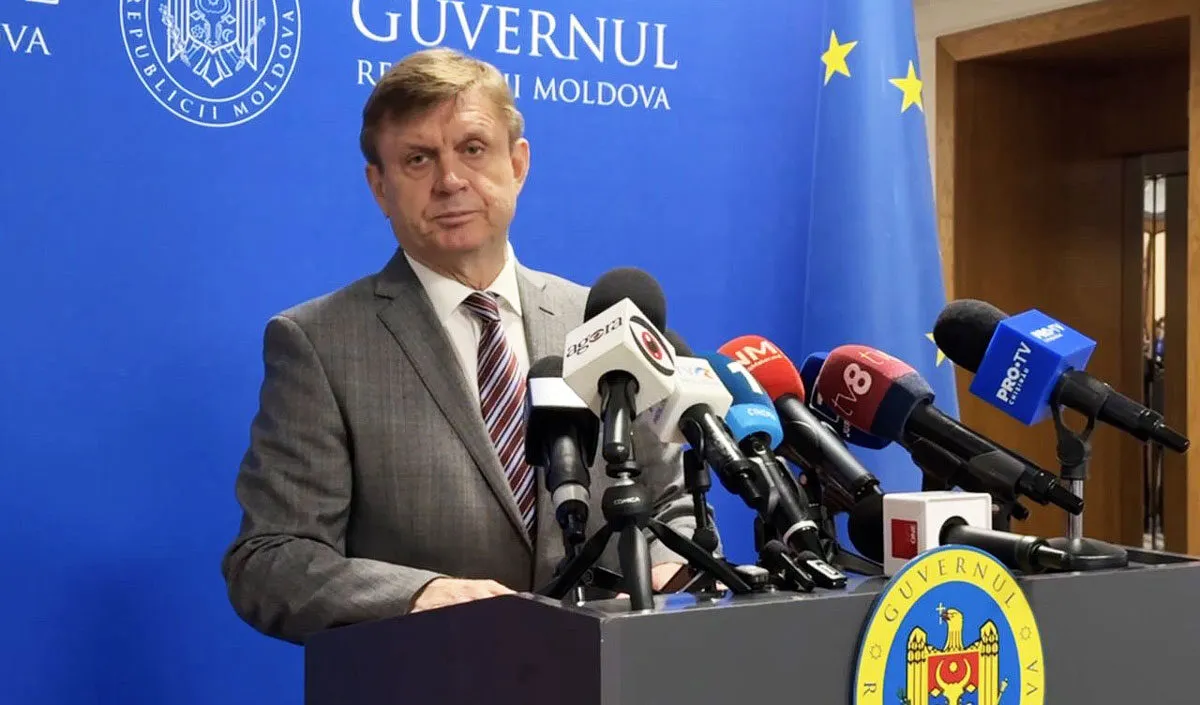
Valeriu Chiveri
This was discussed on 29 September at the presentation of the study ‘The Transnistrian Region in 2026: Structural Crisis, Economic Convergence and Prospects for Reintegration’, developed by the Institute for Development and Social Initiatives (IDIS) ‘Viitorul’ in partnership with the Friedrich Ebert Foundation Moldova (FES).
The study emphasises that the Convergence Fund, established in 2026, is intended to gradually harmonise VAT and excise duty regimes, phase out certain tax concessions, and use the resources raised for economic and social development projects on the left bank of the Dniester.
‘This mechanism reflects a shift towards an approach based on functional integration and the gradual extension of common rules, without immediately resolving the region’s political status,’ the document states. ‘However, convergence between the two banks is not starting from scratch. Businesses in the region are already using Moldovan certificates of origin, customs procedures and financial infrastructure to access foreign markets. The market on the right bank has become one of the main destinations for goods produced in the region, whilst the European Union is the main market for exports abroad. Labour mobility and the use of services on the right bank, in turn, contribute to economic and social convergence. Therefore, the aim of public policy is not to create integration from scratch, but to formalise and strengthen the existing process in a gradual, fair and predictable manner.”
Step by step
Valeriu Chiveri, Deputy Prime Minister for Reintegration, emphasised that the country’s authorities regard the resolution of social problems faced by citizens on the Left Bank, the harmonisation of customs and tax legislation, and ensuring access for all residents to essential services and rights as absolute priorities in the Transnistrian settlement process.
“Reintegration is a process that must be built step by step, bringing people, communities and systems closer together. Our aim is to ensure that citizens on both banks have access to the same services, opportunities and rights,” said the Deputy Prime Minister.
Valeriu Chiveri emphasised that measures to promote rapprochement must be implemented gradually and take into account the economic and social realities on both banks of the Dniester.
This story was translated with the assistance of artificial intelligence.The translation was also reviewed by the Logos Press editorial team.
Follow our updates
Have information for the newsroom? Share it with Logos-Press
















Comments
0No comments yet. You can start the conversation.
Comments are open to readers with a Logos Press account.
Sign in to comment