


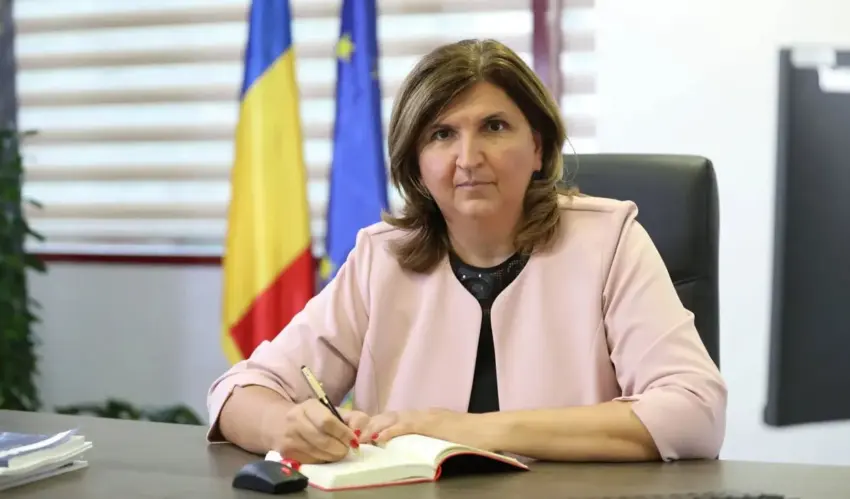
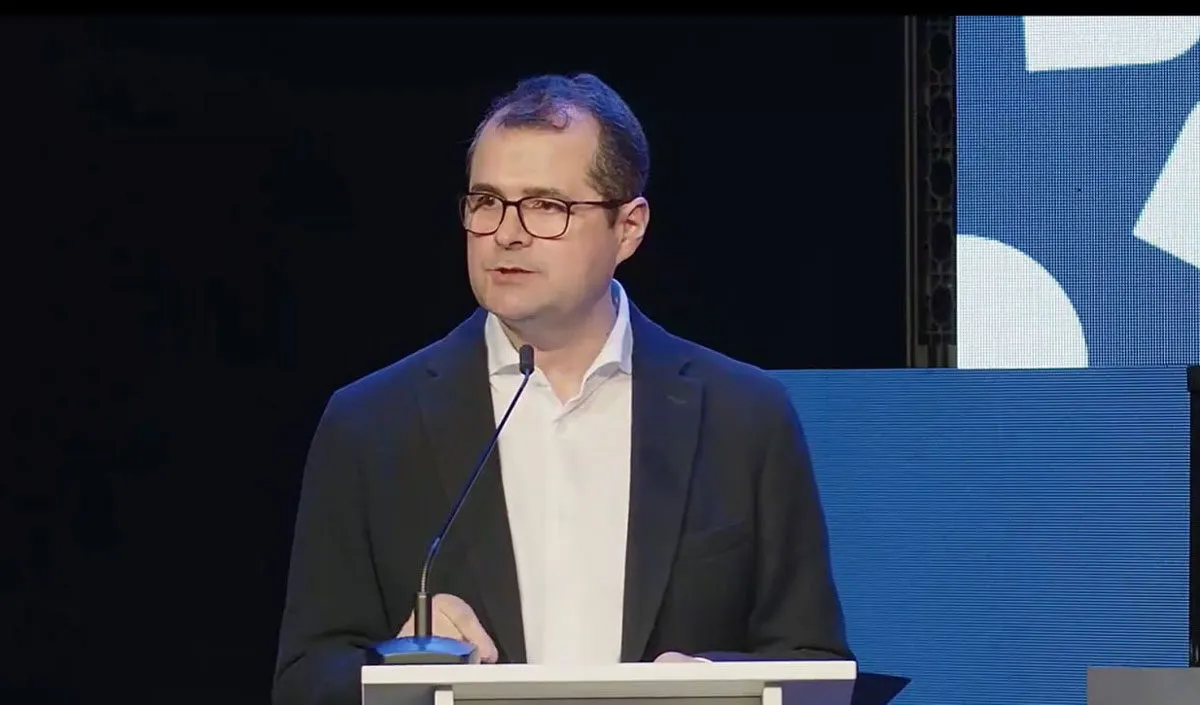
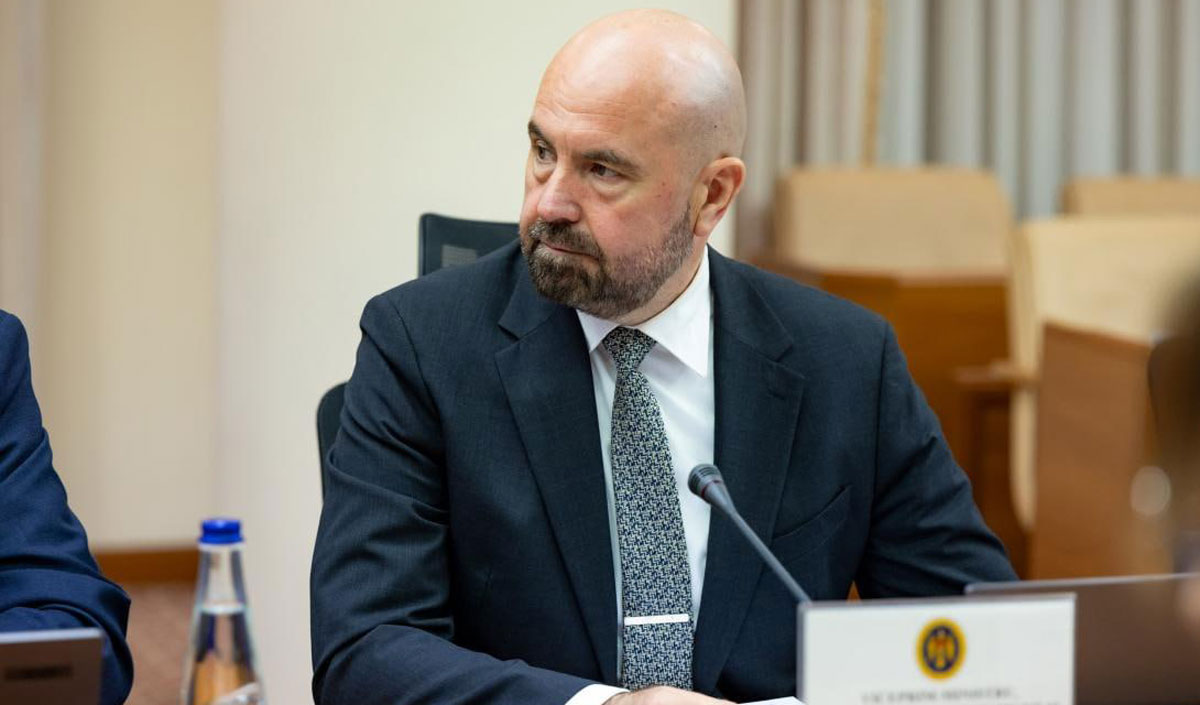
Corina Popescu. Photo: RTA
This follows from a speech by Corina Popescu, chair of the board of directors of Moldelectrica, during the ‘Energy for Romania’ event.
Popescu stated that ‘the completion of the Suceava–Bălți power line will be a key step towards strengthening the Republic of Moldova’s energy independence and resilience’.
Why Vulcănești–Chișinău is not a viable option
Discussing the strategic importance of the Vulcănești–Chișinău power line, Popescu explained that, although it does not constitute a new connection between Romania and Moldova, it provides an alternative route that bypasses the existing connection via the MGRES power station hub, located in the Transnistrian region.
“This line allows us to bypass the existing junction at the MGRES power station, which is situated in Transnistria. There has always been an element of uncertainty there. Fortunately, nothing has happened, but this uncertainty remains,” she noted.
She also mentioned the vulnerability of the transmission infrastructure of the line running through Ukrainian territory, pointing to the damage reported in February this year caused by drone attacks on power line pylons along that section.
Suceava–Bălți: a key project for energy independence
Corina Popescu described the Suceava–Bălți power grid interconnection project as a crucial piece of infrastructure for ensuring Moldova’s energy independence.
“I believe that true independence will be achieved once the construction of the Suceava–Bălți power line is completed. It is known as the ‘Resilience Line’, as the addition of another transmission channel makes the power system more resilient and stable,” she noted.
She also mentioned the planned project to interconnect the Strășeni–Gutinash power systems, emphasising that Moldova’s power grid infrastructure development programme is not limited solely to the construction of cross-border power lines.
According to Popescu, Moldelectrica has a ten-year development plan which, in addition to the three major projects mentioned for interconnecting the Moldovan and Romanian power systems, provides for the modernisation of around 100 electrical substations.
These investments are aimed at strengthening Moldova’s electricity grid infrastructure, diversifying electricity supply routes, and enhancing the stability and resilience of the regional power system, said Popescu.
Dependent independence
For many years, Moldova was connected to the integrated power system of Russia and Belarus, from which it disconnected in February 2022. It now appears that this dependence is being replaced by dependence on Romania in particular, and on the European Network of Transmission System Operators for Electricity (ENTSO-E) as a whole.
In Moldova itself, many experts and politicians argue that genuine independence can only be guaranteed by having domestic generation capacity that covers a significant proportion of the country’s needs.
Independence – a multifaceted concept
‘In my view, Ms Popescu is thinking along the right lines, but she is approaching the issue rather narrowly,’ says energy expert Eugen Mulevski.
In his opinion, energy independence is closely linked to energy security.
Let us take our neighbours as an example. Ukraine was entirely energy-independent until the war began. Since then, the Zaporizhzhia Nuclear Power Station has been completely decommissioned, and Russian strikes on energy infrastructure have deprived Ukraine as a whole of approximately 9 GW of generating capacity. The losses have affected up to 80 per cent of the country’s thermal generation and a third of its hydroelectric generation.
Consequently, Ukraine currently needs to import electricity from time to time; in October 2026, its imports exceeded its exports by a factor of 25.
This summer, Romania also faced a loss of generating capacity following the shutdown of the Cernavodă Nuclear Power Station due to low water levels in the Danube. Once again, the shortfall was made up through imports.
“Once all three power transmission lines with Romania – Vulcănești–Chișinău, Suceava–Bălți and Strășeni–Gutinăș – are brought into operation, Moldova will be safeguarded against electricity shortages,” asserts Eugen Murowski. – At the same time, we need to develop our own generation capacity, at least based on renewable energy sources. And we need to create energy storage systems. Then, taken together, we will be able to say that the country’s energy independence and energy security are guaranteed.”
Follow our updates
Have information for the newsroom? Share it with Logos-Press











Comments
0No comments yet. You can start the conversation.
Comments are open to readers with a Logos Press account.
Sign in to comment