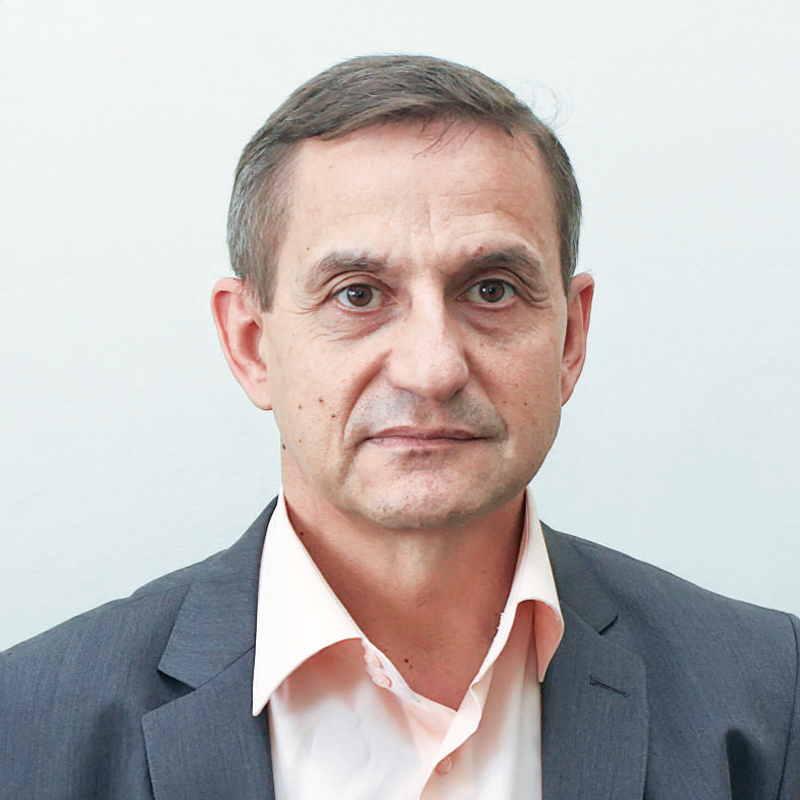

Sarkis Sahakyan
For businesses, this choice has not only political but also very practical implications. It affects trade routes, sales markets, logistics, investments, and the operating conditions for companies.
Logos Press spoke with Sarkis Saakyan, head of ArmRusExport, at the St. Petersburg International Economic Forum to discuss how entrepreneurs perceive these processes.
LP: – Tell us a little about your company.
– Our company, ArmRusExport, operates in several sectors—oil and gas raw materials, automotive oils—and in recent years we have been actively developing our jewelry division, working with precious and semi-precious stones.
We have a fairly wide network of partners in various countries. Some say these are too different fields. I see it more simply: if there’s an opportunity to build a viable business and make money, why not take it?
LP: – How did this diversification come about, and what is it based on?
– Thanks to people. Over the years, we’ve built connections in Russia, the Middle East, and Africa. Partners emerge, ideas emerge, and then new projects follow. After all, business is built not only on money, but also on trust between people.
Today, our main markets are Russia and Armenia. That’s where the company’s name comes from—ArmRusExport
LP: – Do you plan to expand?
– Of course. The world is becoming increasingly interconnected. Russia is a large country with enormous opportunities. Fortunately, government agencies here treat businesses very fairly and are always ready to help find the best solutions. And people in Russia are generally friendly; they treat everyone with brotherly warmth, including Armenians.
But whereas in the past a company could operate in just one country, now we need to look further afield. So no matter how good things are in Russia, we are negotiating with partners in Africa, the Gulf countries, and other regions to expand the geographic reach of our exports, establish joint ventures, and grow.
The EAEU has provided real benefits to business
LP: – You have been working in Russia since 2009. What has changed since the creation of the Eurasian Economic Union in 2015 and Armenia’s accession to it?
– A lot has changed. When entrepreneurs can move goods more quickly, and when people can work and study without unnecessary barriers, it always helps business development.
People often talk only about trade, but the EAEU is not just about trade. It’s about education, labor migration, recognition of diplomas, and professional mobility.
This is important for ordinary people, too.
LP: – Has the Armenian business community really felt apositive impact?
– Yes, it has. Russia remains the largest market for many Armenian companies. Vegetables, fruits, wine, and cognac are exported there. There is a significant amount of legal re-export—cars, equipment, and precious stones.
At the same time, supplies from Russia of oil and natural gas, wheat and vegetable oils, and various equipment are extremely important for the Armenian economy.
Trade turnover between Armenia and Russia reached nearly $12 billion in 2024. True, it declined significantly last year, but we need not only to restore these volumes but also to increase them.
We must honestly admit: many businesses in Armenia have grown precisely because of access to the Russian market. This applies to food producers, industry, and the jewelry sector.
LP: – Today, Armenia is actively discussing its European orientation. How does the business community view this process?
– I believe that Armenia should develop relations with everyone. The more markets and partners, the better.
But there is certainly some concern among businesses regarding Armenia’s rapprochement with the EU. The example of Moldova and other countries that have set a course toward closer ties with the EU but have effectively lost the Russian market compels us to treat these issues with the utmost care.
Yes, we’re told that even if gas prices rise, it’s not a big deal. Perhaps, after all, gas is a finite resource. It may run out eventually.
But Russia plays a key role in ensuring Armenia’s food security by supplying wheat, vegetable oils, and other food products.
It’s warm here; we can manage without gas. But people won’t put up with hunger. We must not underestimate Russia’s role in ensuring Armenia’s food security.
There are things that cannot be ignored. For Armenia, Russia is not just a market. It represents decades of economic ties, a massive volume of trade, joint projects, and human connections.
Many Armenian entrepreneurs studied in Russia, work with Russia, and have partners there.
In this context, rapprochement with the European Union must be viewed not only from a political perspective, but also from an economic and pragmatic one.
Will Armenia be able to supply Europe with the same volumes of wine and cognac as it does to Russia? The example of Moldova shows that it cannot. Will our country be able to import grain, wheat, and sunflower oil from EU countries at the same prices and under the same conditions as from Russia? Hardly.
These questions and concerns cannot be ignored. We need to develop ties with the EU, but we must clearly understand the interests of the Armenian people and businesses. And take that into account.
LP: – Are you concerned about a possible weakening of ties with the EAEU?
– Of course, I am concerned. I interact a lot with entrepreneurs and see that such fears exist.
Business reacts painfully to any sudden change in the rules of the game. People have invested money, built logistics networks, and established businesses under the existing conditions.
That is why business always wants predictability. If the country’s course changes, it is important to understand how this will affect companies and whether they will be able to maintain access to their traditional markets.
Business can operate under any conditions, but it needs clear rules and a clear future.
What Armenia Can Offer the World
LP: – Which industries do you consider the most promising for Armenia?
– We have a strong mining industry. There are minerals in high demand, and the jewelry sector is developing.
For example, Armenia ranks first in the world in terms of proven and projected reserves of perlite—a unique volcanic rock. Perlite is widely used in agriculture, construction, and industry. Today, global demand for this mineral is growing, which opens up new opportunities for cooperation for Armenia.
In addition, Armenia can play an important role as a transit hub between the north and the south. Geographically, we are situated at an interesting point between Russia, Iran, the Middle East, and other regions.
If this advantage is leveraged correctly, trade volumes can be significantly increased.
The peace agreement with Azerbaijan provides opportunities to develop logistics and increase exports of goods, including minerals, agricultural products, and so on. After all, Armenia is a mountainous country, and we lack many food products.
LP: – What brought you to the St. Petersburg International Economic Forum?
– First and foremost, the people and new contacts. In just a few days, you can hold dozens of meetings that would take months in everyday life.
We are currently in negotiations with partners from Ethiopia, Djibouti, Tanzania, and Saudi Arabia. We are discussing the supply of jewelry, the import of coffee and cocoa, and new logistics routes.
Such platforms are very important for business.
LP: – So participating in the forum is worth it?
– Absolutely. Every entrepreneur knows that new projects start with a conversation. And when representatives from dozens of countries gather in one place, it opens up enormous opportunities.
That’s why, for us, the forum isn’t just an event—it’s a practical tool for business development.
Business needs opportunities, not disputes
LP: – What is the main conclusion you would draw today for Armenian business?
– The world is changing very quickly. Armenia must seek out new markets, new directions, and new partners. But at the same time, we must not forget the connections that have been built over decades.
I am convinced that the economy benefits when bridges are built, not when they are destroyed.
That is precisely why business will always be interested in cooperation, dialogue, and expanding opportunities for trade.
LP: – Thank you for the interview, and best of luck in your business endeavors.
– Thank you. I am confident that our countries—Russia, Armenia, Moldova, and all the states of the former USSR—must live in peace and harmony. We should trade with one another and visit each other. Let’s strive for that.


