


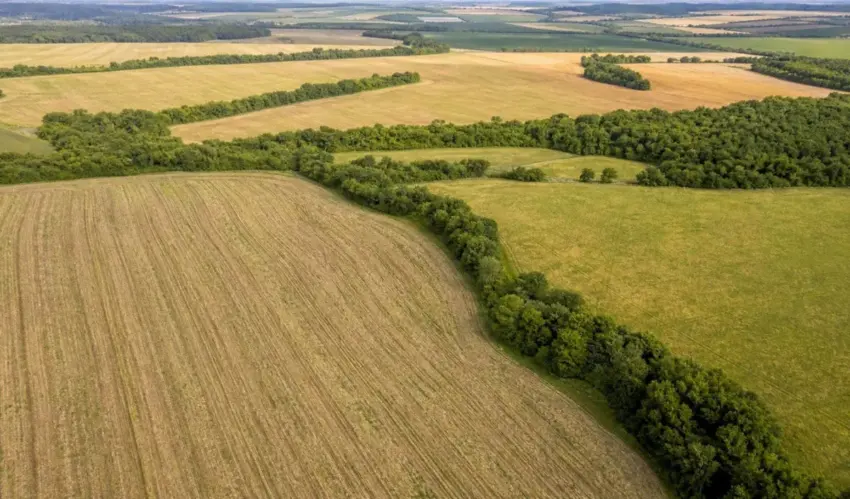
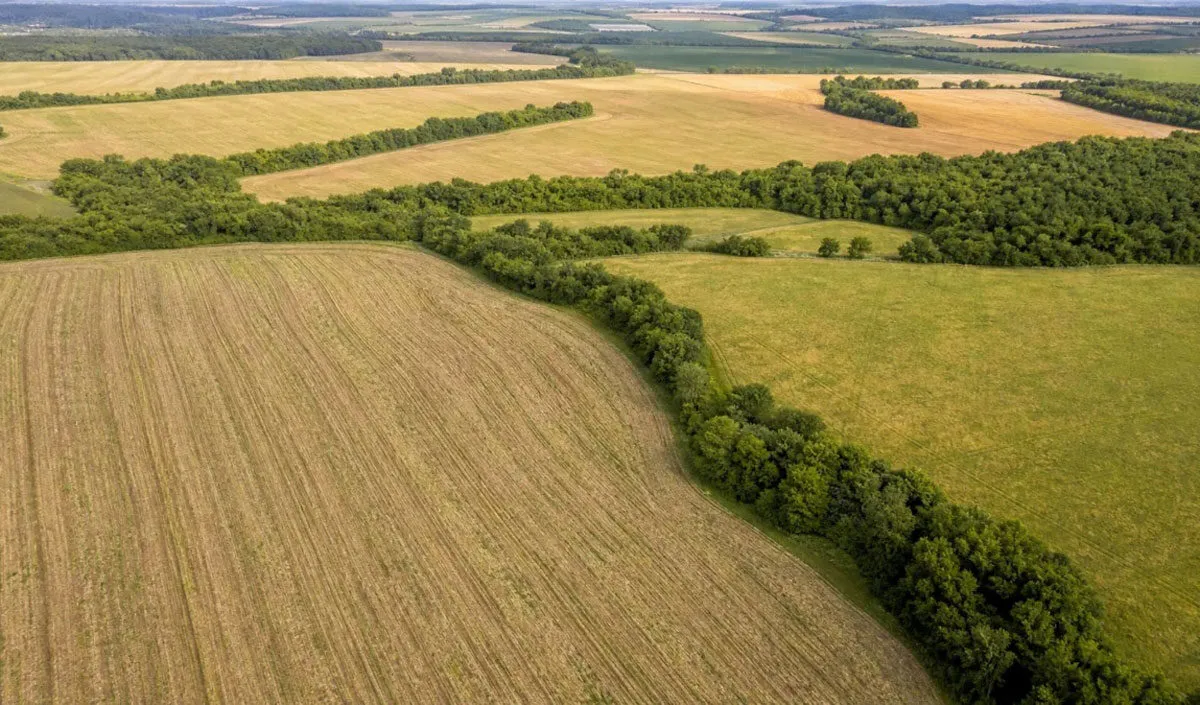
The work carried out involved the restoration and improvement of existing forest belts, as well as the afforestation of vacant areas between plantations of this type and purpose. The phase involving the clearing of the shelterbelts was completed last month. The timber obtained as a result of these operations was handed over to the local authorities. The total cost of the works is estimated at 2.7 million lei.
Subsequently, to fill the gaps in the existing forest strips, nearly 2,700 pyramid poplar saplings and 250 walnut saplings were planted.
The work was carried out as part of the project ‘Creating favourable conditions for the comprehensive management of natural resources and the implementation of an integrated approach to achieving a neutral balance in land degradation’. The project is funded by the Global Environment Facility (GEF) and implemented by the FAO in partnership with the Ministry of Agriculture and Food Industry and the Ministry of the Environment.
These activities were coordinated and implemented in partnership with the Institute of Forest Research and Management (ICAS). Specialists from the institute carried out a survey of each forest plot, after which the work was carried out in accordance with technical regulations and current legislation. Going forward, the local authorities of the aforementioned communes will monitor the condition of the protective forest strips and ensure they are properly maintained.
‘We are delighted that this work has been carried out, as our shelterbelts have long been in need of attention. For the residents of Suslen, this means that the harvest will be better protected from wind and drought. Furthermore, a small stream flows through our village, and the forest strips prevent soil, washed away by rain, from sliding down the slope, which prevents silting,” noted Vivian Cocu, mayor of the commune of Suslen.
Most of the protective forest strips in the Republic of Moldova were planted several decades ago. By now, they have aged, suffer from a lack of maintenance and are deteriorating. Nationwide, around 28,000 hectares of protective forest strips are in need of restoration or maintenance.
Follow our updates
Have information for the newsroom? Share it with Logos-Press

























Comments
0No comments yet. You can start the conversation.
Comments are open to readers with a Logos Press account.
Sign in to comment