


Getty images
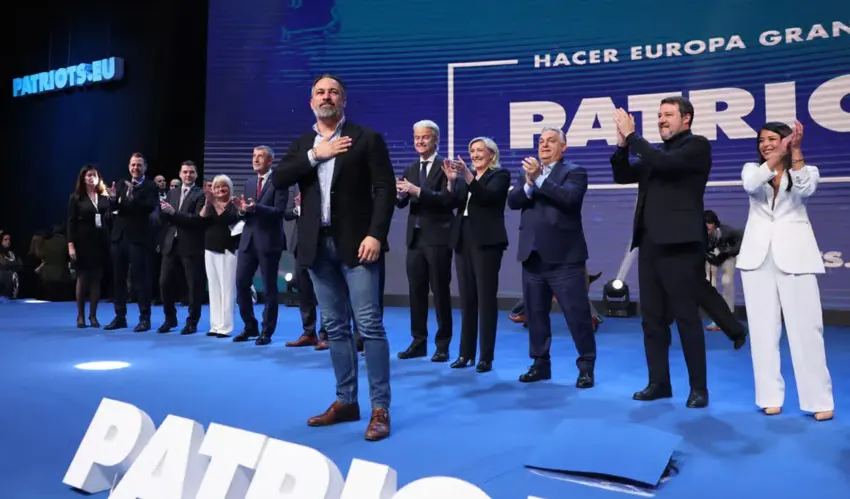
This was stated by the group’s co-chair, Kinga Gal, in an interview with POLITICO. According to her, victories in national elections will enable right-wing political forces to influence decisions at the level of the European Council, where the governments of EU member states are represented. Looking ahead, the group hopes to strengthen its position ahead of the 2029 European Parliament elections.
National elections as a means of influencing the EU
“The most important thing for the ‘Patriots’ group right now is to help our parties win elections at home and form governments, because then they will be able to bring about change at the level of the [European] Council,” said Gal.
She cited the elections in France, Italy and Poland as key political tests in 2027. In addition, the Spanish election is due to take place on 29 November 2026. Gal expressed the hope that the Spanish party Vox, a member of ‘Patriots for Europe’, would be able to join the government. According to the assessment cited in the publication, Spain’s centre-right People’s Party stands a chance of winning, but may need Vox’s support to form a cabinet.
Gal also expressed hope that Marine Le Pen would win the French presidential election in May 2027 and that the Polish Law and Justice party would return to power in the autumn of the same year. The latter, however, remains a member of a different parliamentary group – the European Conservatives and Reformists.
These statements reflect the strategy of ‘Patriots for Europe’: strengthening national positions is seen as a way of gaining additional leverage over pan-European policy.
Right-wing groups discuss closer ties
As the publication notes, another strand of the strategy is the potential deepening of cooperation between three right-wing political groupings in the European Parliament: ‘Patriots for Europe’, the European Conservatives and Reformists, and the ‘Europe of Sovereign Nations’ group, which includes ‘Alternative for Germany’.
Gal stated that these groups could, in time, form a major political bloc, although the specific forms of cooperation have yet to be determined. According to her, the convergence should take place gradually, taking into account the results of national elections.
The co-chair of the ‘Patriots’ also called on the European Parliament’s largest group – the European People’s Party – to take account of the growing support for right-wing forces. In her view, the previous barrier limiting cooperation between the centre-right and the far right has already weakened: The European People’s Party has secured the adoption of a number of legislative measures with the support of right-wing MEPs.
However, as POLITICO notes, formalised cooperation with these forces and the granting of key positions to them at the pan-European level remain limited for the time being, although coalition agreements involving far-right parties already exist in certain countries.
Restricting the powers of the European Commission
Among the priorities of ‘Patriots for Europe’, Gal cited the tightening of migration policy and border controls, support for the economy and a reduction in energy costs. The group’s broader aim is to curtail the powers of the European Commission and return some of its competences to the nation states.
In the interview, she also did not reject the proposal by ‘Alternative for Germany’ leader Alice Weidel to abandon direct elections to the European Parliament and replace elected MEPs with delegates appointed by national parliaments. Gal stated that such ideas should be discussed in the context of the future of the European political system.
The group also aims to coordinate the positions of its leaders ahead of European Council meetings. According to Gal, the Czech politician Andrej Babiš, whom she described as the sole representative of the ‘Patriots’ in the European Council, briefs his colleagues on the agenda and discussions at the level of heads of state and government.
On issues relating to the EU’s long-term budget, the group’s members are united in their desire to maintain funding for agriculture and the regions. At the same time, they oppose the introduction of new pan-European taxes and an increase in financial aid to Ukraine.
Gal also confirmed that, as the group’s influence within the European Council grows, the issue of removing European Commission President Ursula von der Leyen could once again become the subject of political action. She recalled two unsuccessful attempts over the past two years to pass a motion of no confidence in the Commission President in the European Parliament.
Thus, the ‘Patriots for Europe’ strategy envisages not only strengthening their position in the European Parliament, but also gaining influence through national governments. The actual extent of this influence will depend on the results of the upcoming elections and the ability of various right-wing groups to coordinate their positions, notes POLITICO.
Follow our updates
Have information for the newsroom? Share it with Logos-Press

















Comments
0No comments yet. You can start the conversation.
Comments are open to readers with a Logos Press account.
Sign in to comment