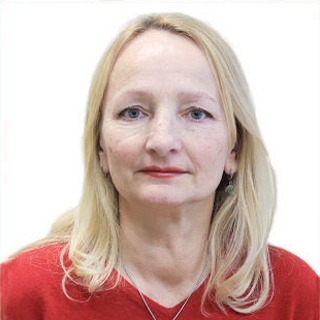

“We need new antibiotics,” said Estelle Früchet, CEO of Shionogi Europe for France.
And while that doesn’t sound particularly groundbreaking, the statistics behind that call should alert us all.
In this edition of The Big Question, Estelle joined Angela Barnes in the studio to explain why antimicrobial resistance could turn into the next economic crisis.
Deaths, sick leave and falling productivity
Antimicrobial resistance (AMR) is the scientific term for when bacteria mutate and become resistant to being killed by antibiotics. This is why we are constantly told not to handle such drugs too freely.
“When I started 25 years ago, antibiotics were very commonly prescribed for even a simple cough. And the more you use them, the more resistant the bacteria become,” Estelle explained.
When there are fewer treatment options for resistant bacteria, the number of unnecessary deaths increases.
According to the European Center for Disease Prevention and Control (ECDC), AMR-related infections cause more than 35,000 deaths in the EU each year.
Globally, the figure is about 1.3 million people a year – that’s about the population of Prague, Dublin or Helsinki.
How does AMR affect the economy?
Increased morbidity and longer hospital stays mean higher medical costs for already overburdened health systems, lost revenue for patients, and reduced productivity for their employers.
This is already costing Europe around €12 billion a year, and this amount is only likely to rise.
If not intervened, according to a 2024 publication in The Lancet, a total of 39 million people worldwide could die from AMR infections between now and 2050. This is projected to cost the world $412 billion (€352 billion) per year in additional health care costs and $443 billion (€379 billion) per year in lost productivity.
Some projections are even bleaker: they speak of an additional $1 trillion in health care costs and a 3.8% drop in global annual GDP.
And rising costs tend to lead to a deterioration in the quality of life.
Much of the pharmaceutical industry has long since effectively abandoned the development of new antibiotics. Shionogi is one of the few companies that continue on this path.
Developing any new drug costs around €1 billion and takes 10-15 years, with 95% of projects failing. But the peculiarity of antibiotics is that their market prices are quite low and their use is limited, so the return on investment in creating an antibiotic does not look very attractive from a business point of view.
“It’s what we call a failing market,” Estelle told The Big Question program.
“We need a new economic model. We need governments to think through and come up with new funding schemes that will make antibiotic development more attractive to the industry.”
The UK recently launched a subscription model, informally referred to as the “Netflix model”: the National Health Service pays pharmaceutical companies a fixed annual sum for access to life-saving antibiotics, regardless of the volume of use, to encourage innovation.
“This scheme has been tested in the UK, it works, and I think it can be implemented in other countries, such as France,” Estelle said.
However, Estelle emphasized that success in the fight against AMR requires doctors, policy makers, government agencies and the entire industry to work together.
Despite the goal of reducing antibiotic use by 20% by 2030, antibiotic use in the EU has increased in 2024.
Reducing antibiotic use – not only in humans, but also in animals and agriculture – is as important as creating incentives to invest in the development of new drugs, both at the research stage and through demand guarantees.
“International cooperation is also needed, because bacteria are everywhere,” Estelle summarized.


