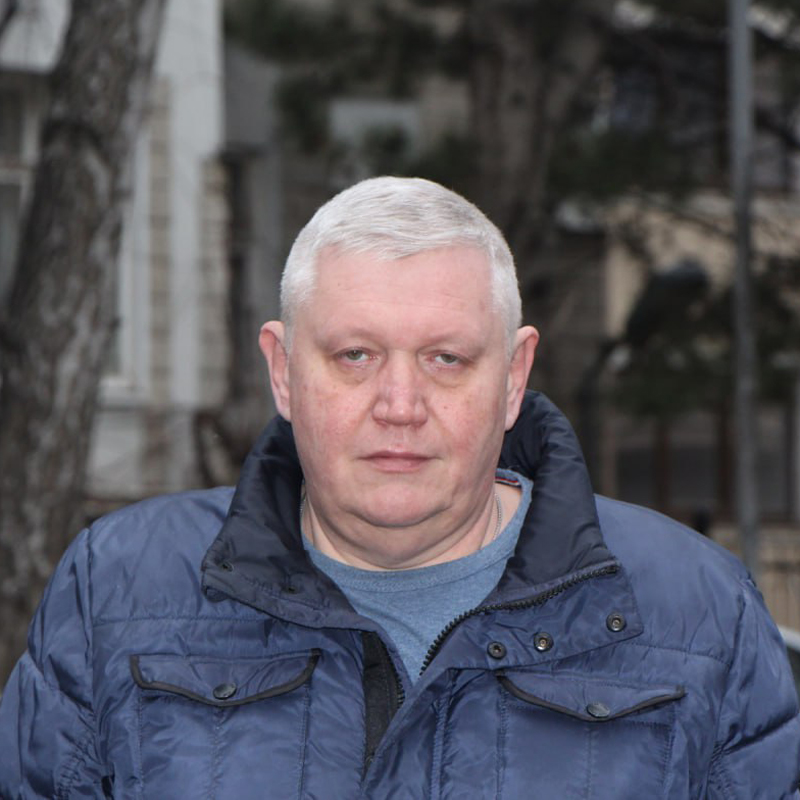

Andrei Myrza
We are referring to the Sorintex Mobile Textile Export cluster (hereinafter “Sorintex”), which has existed in its current form since 2024. However, it decided to present itself to the public for the first time at the Produs Autohton exhibition, held at Moldexpo on August 28–30, 2026.
History of the Cluster
The cluster’s chairman and CEO of the company that manages it, Andrei Myrza, told Logos Press that it all began in 2018 with the establishment of the Sorintex cluster, which brought together 15 garment and related enterprises as part of the TAIEX project—the European Commission’s technical assistance and information exchange tool in Moldova. It was the first cluster in our country.
The member enterprises quickly realized the benefits of such a partnership. For example, when fulfilling large orders, especially complex ones. Thus, when manufacturing uniforms for the Ministry of Defense, several factories take on the task of sewing individual components—some handle embroidery, others headwear, belts, footwear, and so on. In other words, the customer deals with a single contractor rather than a dozen different ones. Moreover, this contractor is a cluster that already has both a solid reputation and all the necessary certifications.
Then, in 2023, UNDP began large-scale funding for the creation of clusters, and 12 such associations emerged within a year.
And two years ago, Sorintex merged with the Mobile Textile Export cluster, resulting, according to Andrei Myrza, in a “megacluster” operating across an area of nearly 200 square kilometers. That’s quite substantial even by European and global standards.
What is a “cluster”?
The remaining 19 existing clusters cover areas of 30–40 square kilometers each. This is insufficient, according to British economist Michael Porter, who developed the theory of clusters. The standard is 150 square kilometers.
According to Porter’s definition, clusters are geographic concentrations of interconnected enterprises, companies specializing in the supply of a specific type of product, service organizations, companies operating in related industries, and associated institutions (such as universities, standard-setting agencies, and trade associations) within specific industrial sectors that compete with but also cooperate with one another.
Sorintex is currently a professional association established by an unconditional agreement among 33 founding companies—manufacturers with a long tradition in the apparel, textile, and knitwear industries in northern Moldova, which have thus found a way to formalize their existing partnerships. In addition, the cluster’s members include 4 universities, 4 vocational schools, 3 district councils, and 2 catalyst organizations, for a total of 46 cluster members.
More specifically, the cluster operates in three districts of Moldova: Soroca, Sholdanesti, and Rezina. It also includes three enterprises from the Transnistrian region, including a major player such as the “Intercenter Lux” sewing and knitwear complex.
The founders include SA Ionel, Artizana SRL, Universcom, and other well-known and lesser-known enterprises. Universities such as UTM, ASM, ASEM, and “Alecu Russo” in Bălți collaborate with the cluster. Vocational schools train personnel for the cluster’s enterprises through a dual education system.
And—an important detail. The cluster includes the Chisinau-based company ABS, which has been involved for many years in the collection and recycling of various types of waste, including textile waste. This is important for fulfilling obligations under extended producer responsibility, which is only now beginning to be effectively implemented in Moldova.
In total, the cluster’s companies employ 4,000 people. Exports last year totaled 30 million euros, in addition to domestic sales—which each company tracks independently—and which are growing year after year.
By sharing their accumulated experience, cluster members have already obtained all the necessary certifications to fulfill orders from the world’s largest brands.
The cluster’s main achievement is that it received a bronze ESCO label in 2024 and a silver one this year. ESCO is Europe’s most authoritative certification body.
“It’s not all smooth sailing for everyone,” notes Andrei Myrza. Some factories operate continuously, while others are busy for, say, 10 months a year. Two months of downtime wipe out all the profits they’ve made. But the battle for customers is constant.
With joint booths, cluster members have participated in major exhibitions in Paris (Fashion Week), Istanbul, and Milan in both the past and present years. Florence and Łódź are next on the list.
The Serious Problems of the Light Industry
Andrei Myrza identifies three of the most complex problems facing all Moldovan garment manufacturers: migration, labor, and energy resources.
The first two are interrelated.
Vocational schools train specialists, but immediately after graduation—and with practical work experience under their belts (thanks to the dual education system)—most graduates emigrate from the country right away.
To replace them, workers have to be brought in from Bangladesh, India, and Uzbekistan. “Local workers complain that foreigners are paid more,” says Andrei Myrza. “But we pay our own workers the same 600 euros, provided they work like Indians—without lifting a finger.”
As for what to do about energy resources, the cluster director isn’t sure.
“Just the other day, we had a potential investor. He liked everything. Then he asked for data on how much electricity, gas, water, and so on cost. He did the math—and left.”
This is a global business where every penny of production costs is fiercely contested. Since it’s expensive in Moldova, orders are placed in Montenegro and now even in Albania (lower transportation costs). And they’re actively eyeing Africa. Which, admittedly, is already almost entirely controlled by China, which doesn’t let anyone else in. That’s what leaves opportunities for Moldovan, Romanian, and Ukrainian garment manufacturers.
Follow our updates