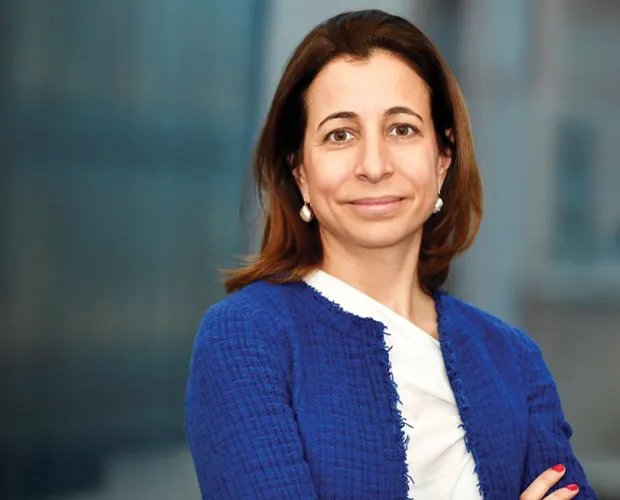
Ecaterina Cechina
Ms. Cechina, you run a legendary company. How is the production process organized there today?
I should note that the Bucuria factory produces 205 product lines, comprising more than 400 SKUs. Our customers generally fall into two categories: one prefers to buy candies from established brands, while the other buys exclusively new products—with new fillings and new flavors.
To meet the demand of the second category, factory management tasks the process engineers with developing new recipes. Once a new product is created, it is submitted for review to the central tasting committee, consisting of 14 specialists. It is this committee that decides whether to launch the product into production and, if necessary, provides feedback and suggestions.
Once the recipe is approved, the marketing team gets involved to develop the packaging design. At the same time, the procurement and logistics departments begin their work.
I want to emphasize that we use only high-quality, certified raw materials from reliable suppliers with a good reputation in the international market. All ingredients arriving at the factory undergo mandatory testing in our central accredited laboratory.
If the raw materials are accompanied by all the necessary documentation, why is a repeat laboratory inspection necessary?
This is our internal requirement. We conduct an additional incoming inspection to verify the quality and safety of the raw materials used.
In addition, such tests are required by the ISO 22000 international food safety standard, which has been implemented at the factory. The laboratory’s main task is to ensure the reliability of the tests and the products’ compliance with established requirements.
Only after the laboratory issues a positive report are raw materials approved for production.
Can your laboratory’s report be considered a definitive guarantee of quality?
You could say that, but our control system is not limited to internal inspections alone.
The factory’s central laboratory performs analyses of raw materials and finished products within the scope of its accreditation. For tests that fall outside its scope of expertise, we turn to other accredited laboratories.
In addition, our products are regularly inspected by the National Food Safety Agency (ANSA). The Agency’s specialists also send samples to internationally accredited laboratories to confirm quality and safety. Our products are tested by national and international accredited laboratories that are not structural divisions of the Bucuria factory.
Thus, the quality of Bucuria products is assessed by both in-house specialists and independent experts.
There is a common misconception that, for a fee, laboratories can issue any “convenient” conclusion…
This is not the case. Internationally accredited companies (both in our country and abroad) value their reputation and would never allow themselves to include false test results in their reports. Especially since such actions could lead to the loss of their accreditation.
Tell us how the candy is actually produced. For example, how are Moldovacandies —one of Bucuria’s most famous products—made?
This is a classic process. Raw materials delivered from the warehouse to the production floor undergo preliminary preparation. Dry ingredients are sifted, and liquid ingredients are filtered. Sugar is always passed through a special magnetic unit to remove any possible ferrous impurities.
Then, in special mixers, a confectionery mixture is prepared from cocoa, sugar, and peanuts. Once the production steps are complete, the mixture moves to the conveyor line, where it is shaped into candies, coated with glaze, sprinkled with wafer crumbs, and packaged.
Why are peanuts usedin this type of candy instead of walnuts?
I’m often asked this question. Walnuts can have a slightly bitter taste due to their high content of tannins, as well as their high amount of polyunsaturated fats, which oxidize more quickly during storage.
Peanuts do not have this characteristic. We use walnuts in Vatra Moldovei products and Gloria candies, which is why their shelf life is limited.
In one of your interviews, you mentioned that the factory’s production capacity was operating at 40% in 2024. At the same time, in 2025, you commissioned a new wafer production line. Why spend millions of euros if the factory’s products are already in high demand?
The installation of the new wafer production line was a necessary replacement, primarily due to the wear and tear of the old equipment. It frequently broke down and was less productive.
Another aspect of the modernization is the consolidation of three production lines into one. The new equipment will allow us to maintain the production volumes of several lines while organizing the process more efficiently.
Not only that, but the new line will make it possible to increase productivity while simultaneously reducing the number of workers needed to operate it. This is not, however, a deliberate effort to cut staff. Today, 950 people work at the factory, and the primary reason for automation is the labor shortage in the country.
We are currently looking for a supplier capable of manufacturing equipment that meets our production requirements.
Such investments usually require taking out loans. Loan repayments ultimately increase the cost of production and can lead tohigher production costs. Is that correct?
As an economist, I can say that, in general, this is indeed the case. But Bucuria takes a different approach to financing capital investments. For many years now, shareholders have been allocating 50% of the profits retained by the company to production development. Therefore, we do not take out bank loans for these purposes.
Despite the significant rise in energy costs, we have not raised prices on our finished products since March 2025.
Now I’ll answer the question: why do we need such large-scale investments? They are necessary because Bucuria remains the leader of Moldova’s confectionery industry. Expanding our product range is part of our strategy. When new products appear on the market—including imported ones—we must respond to changes in demand.
In business, especially in manufacturing, you can’t just live for today. You have to grow and strive to stay one step ahead of the competition.
Bucuria’s main product line falls into the mid-range and above-mid-range price segments, even though Moldova remains one of the poorest countries in Europe. And the paradox is that this isn’t a financial whim on your company’s part: Moldovan consumers accept this product line. At the same time, however, you continue to produce cheaper candies, such as caramel. Are they in demand?
Yes, caramel is still in demand. Today, it accounts for about 10% of total production, whereas ten years ago that figure was approximately 25%.
There’s a perception that caramel is bought mainly by people in rural areas. That’s not true. It sells well in Chisinau, too.
There are various types of caramel: these include Barbaris-style lollipops, Frutic candies with a sugar coating and fruit filling, and Răcușori (Rachki) layered caramel.
In addition to the large volume of cocoa products and nuts purchased abroad, you also source raw materials from the domestic market, thereby supporting local producers. What kinds of raw materialsare these ?
In Moldova, we purchase sugar, natural honey, plums, flour, apple puree, skim milk powder, walnuts, jam, butter, halva, cognac, as well as alcohol-infused cherries and grapes. Last year, we spent 100 million lei on purchasing these raw materials.
The factory consumes a significant amount of water. Is it supplied by the Chișinău-based company Apă-Canal Chișinău?
Drinking water from the municipal water utility is used for production purposes. For technical purposes, we extract water from an artesian well located on the factory premises.
Is soy used in the production process?
No. We do not use soy as a standalone raw material or as a main ingredient in candy production. However, some recipes use soy lecithin as an emulsifier—it improves the product’s texture and processing properties.
What about palm oil?
I’d like to clarify this issue. Palm oil itself is not a harmful product. It’s important to distinguish between regular (non-hydrogenated) and hydrogenated fats. It is the process of hydrogenating oils that can lead to the formation of trans fats. Regular palm oil contains virtually no trans fats, which is why it is used by many major food manufacturers around the world.
We do not use palm oil directly in the production of our confectionery products. However, we do use vegetable fats that may contain palm oil. These fats help maintain the product’s desired texture and extend its shelf life.
What matters most is not the name of the oil itself, but its composition and compliance with safety requirements. European regulations do not prohibit the use of palm oil, but they require that its presence be listed in the product’s ingredients and that established standards be followed.
According to our laws, the trans fat content must not exceed 2 grams per 100 grams of fat. In our case, it’s not even one gram.
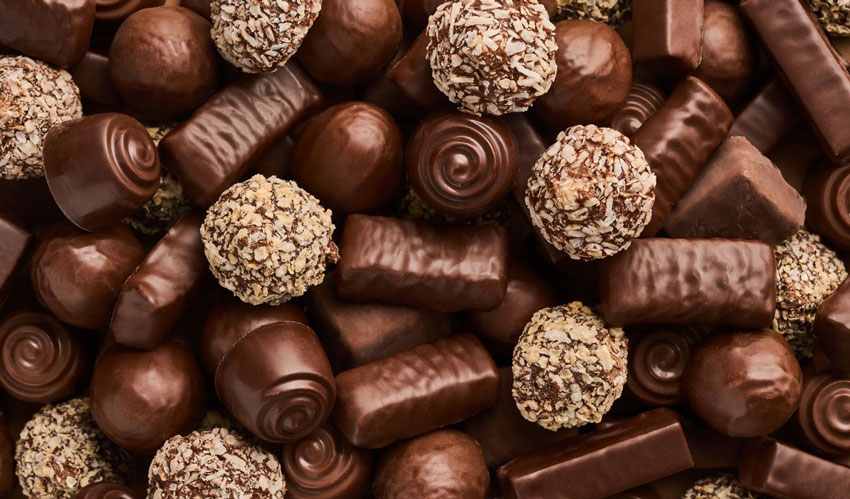
You use cocoa to make confectionery products—how much of this raw material do you use, for example, in a year?
Cocoa is the main raw material for making candy. It is divided into three types: cocoa mass, cocoa powder, and cocoa butter. We purchase this raw material on the international exchange. In 2025, the factory used about 780 metric tons of cocoa.
Why doesn’t Bucuria produce candy under the names of well-known Soviet brands—Mishka na Severe, Belochka, and Gulliver?
Under copyright law, we cannot use the product names of other manufacturers. Trademarks are protected, and each manufacturer has its own rights to registered brands.
To what extent doesthe recipe for the current Scufița Roșiecandy match the recipe for the Soviet-era “Little Red Riding Hood” candy?
It’s practically identical, with the exception of one flavoring. Our recipe uses “cocoa” flavoring, while the classic Soviet recipe uses “rum” flavoring.
A question about taxation. Why is a customs duty paid when sugar is imported into Moldova, but not when confectionery products are imported?
The Customs Code provides for a duty, but it is not levied ifcertificates of origin are provided. That’s the legislative paradox. However, by and large, no duties will help Moldovan confectionery manufacturers. What’s needed is for local sweet lovers to stop buying imported candy. This isn’t just about candy, but also dairy products, juices, and so on. My opinion is this: when a consumer chooses a local product, it means more tax revenue for the budget, more opportunities to raise wages, and, consequently, more resources for social benefits.
Readers often ask: Why aren’t Bucuria JSC shares traded on the stock exchange?
This question should be directed to the shareholders. The company’s securities are owned by individuals and legal entities. Bucuria JSC does not hold these shares on its balance sheet.
Evidently, the owners do not consider it necessary to offer them for sale through the stock exchange.
What were the factory’s key production indicators for 2025?
In 2025, the factory produced more than 7,800 metric tons of finished products, which is 200 metric tons more than the previous year. Profit amounted to approximately 50 million lei. For a manufacturing enterprise, this is a modest amount.
How much in taxes and mandatory payments did Bucuria remit to the budget in 2025?
About 107 million lei. This amount includes, in particular, 18.4 million lei in income tax, 138,000 lei in fees for the use of local symbols, and 36.8 million lei in contributions to the state social insurance budget.
The total amount of taxes and contributions amounted to 15.5% of the company’s annual revenue. I would like to note that payments to the budgets were twice the amount of the profit earned.
Please list the new candy varieties released by the factory in 2025.
We released Migdale dragees in two varieties—coffee-flavored and strawberry-flavored. We also introduced several types of Jazz and Jets caramels, as well as Azart milk-flavored candies and Rodeo cocoa-flavored candies.
This year, the factory is celebrating its 80th anniversary. Are you preparing a special new product for this occasion?
Yes, we’re developing a recipe for a new chocolate assortment. What it will be like remains our confectionery secret for now.
And finally,the traditional question: which Bucuria candies do you personally prefer?
Of course, my favorites are Chișinău. But I also like Moldova, Do-Re-Mi, and all the other sweets we produce.