


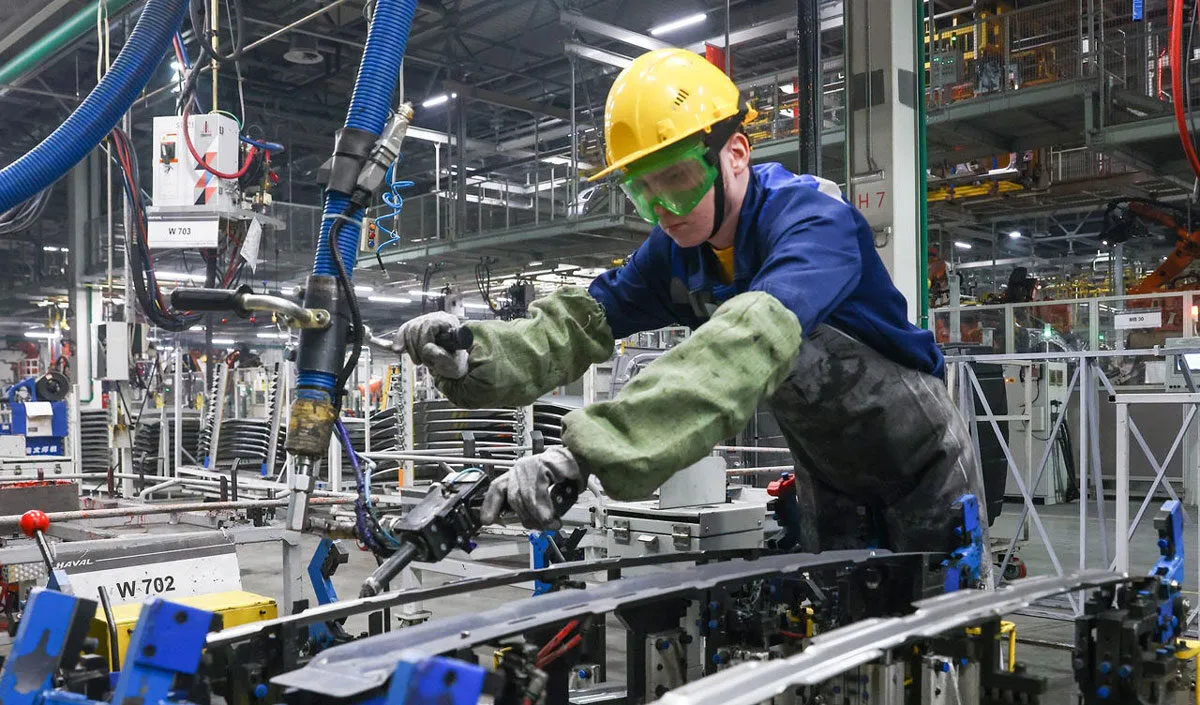
In the global ranking, the leading positions are held by the developed economies of Europe and Asia: Denmark has secured first place (70.9 points) thanks to strong public institutions and a high level of education among the population.
Australia, the Netherlands and the UK also occupy high positions. By way of comparison, the production potential of neighbouring Ukraine is critically dependent on the pace of infrastructure recovery, whilst Romania’s potential is sustained by EU integration funds. Large emerging markets such as China (62.5 points) benefit from export diversification but lag behind in terms of the quality of their institutions.
UNCTAD experts emphasise that GDP is no longer the sole measure of success. For Moldova, whose GDP is forecast by international organisations to show moderate growth of between 2.2 per cent and 2.9 per cent in the coming years, the PCI index serves as a roadmap: the country needs to shift its focus from raw material exports and remittances towards high-tech manufacturing and the development of its domestic transport and logistics network.
Moldova’s overall score places it in the group of countries with an average level of diversification, where the key drivers are the services sector and human capital, whilst the main constraints are energy vulnerability and transport infrastructure.
Key indicators for Moldova’s assessment
This comprehensive indicator assesses the ability of global economies to use available resources efficiently, produce goods and services, and ensure long-term sustainability without excessive cost increases.
For Moldova, which is on the path to institutional reform and alignment with EU standards, this report has become an important indicator of structural changes in the economy.
UN analysts compile the index based on 43 indicators across 8 key categories. Experts highlight the following strengths and weaknesses of the Moldovan economic model:
- Human capital and digitalisation. As is traditional for the region, UNCTAD notes the high significance of the population’s level of education in determining the overall index. An additional driver is the information and communication technology (ICT) sector, which has become one of the driving forces behind the country’s service exports.
Moldova shows the strongest performance in this category thanks to its well-developed broadband internet infrastructure, the high share of IT services exports, and the favourable conditions offered to residents of the Moldova Innovation Technology Park (MITP).
Human capital remains a traditionally strong asset for the republic. Analysts view the overall literacy rate, access to basic higher and specialised education, and the high indicators of social progress among young people in a positive light.
- The private sector and investment. Moldova is showing positive momentum thanks to government support measures, such as the extension of the zero tax rate on reinvested profits for small and medium-sized enterprises and the launch of large-scale investment schemes.
The score here is sustained by the high proportion of micro, small and medium-sized enterprises. However, the overall assessment is held back by small businesses’ limited access to long-term loans and insufficient levels of foreign direct investment.
The economy is gradually moving away from a purely agrarian model, with the share of the services sector in GDP increasing; however, the share of high-tech industrial production remains low.
The assessment of natural capital remains stable – largely due to soil fertility and agricultural potential – but is constrained by a shortage of domestic mineral resources.
- Infrastructure challenges (transport and energy). As is the case for many developing countries, logistics and the energy sector remain areas of risk. High dependence on energy imports continues to put pressure on the country’s current account balance.
One of the weakest components in Moldova’s index score is the energy sector. The country is critically dependent on energy imports, which makes its economy vulnerable to external price shocks. Projects aimed at integration into the European ENTSO-E grid and the development of renewable energy sources are currently in the implementation phase.
Transport infrastructure: this category received a low score due to the deterioration of road surfaces, the inefficient use of railway lines and the lack of a well-developed direct maritime transport network, the importance of which UNCTAD has significantly emphasised in this year’s methodology.
This story was translated with the assistance of artificial intelligence.The translation was also reviewed by the Logos Press editorial team.
Follow our updates
Have information for the newsroom? Share it with Logos-Press




















Comments
0No comments yet. You can start the conversation.
Comments are open to readers with a Logos Press account.
Sign in to comment