

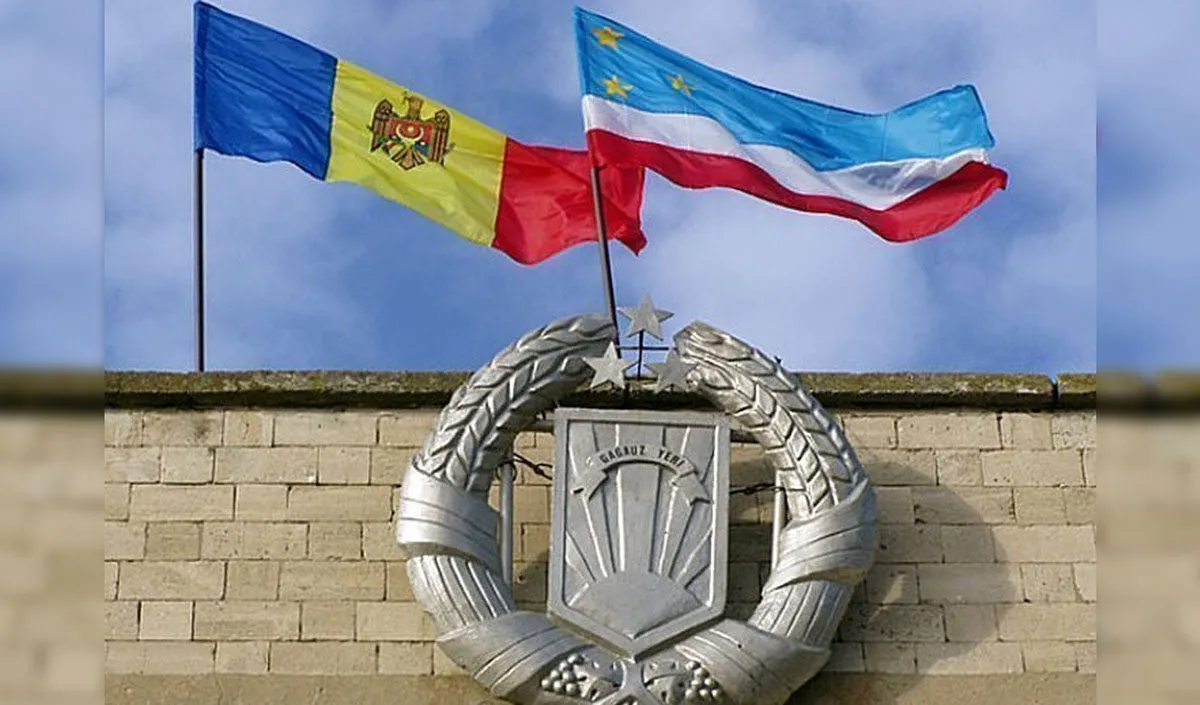
As reported by Moldova’s Central Electoral Commission (CEC) a couple of hours before the deadline, the electoral councils of the Comrat, Ceadîr-Lunga and Vulcănești districts had received applications from 133 people wishing to stand for election as deputies to the People’s Assembly of Gagauzia. Of these, 40 have been nominated by political parties. Meanwhile, of the 93 people who received forms to collect signatures from supporters, 15 are in the process of collecting signatures and have not yet submitted their registration documents.
At the time of publication of the CEC’s press release, 26 candidates had been registered for the position of deputy in the Gagauz People’s Assembly, of whom 20 were nominated by political parties and 6 are standing as independents.
Focus on the Bashkan election
As regards the election for the post of Bashkan of Gagauzia, three candidates had been registered at the time of the announcement. One of them was nominated by a political party, whilst the other two are independent candidates. The documents submitted by two further candidates for the post of head of the autonomous region are currently under review, whilst three individuals who have been issued with lists for collecting signatures from supporters are continuing this process and have not yet submitted their registration documents, the commission noted.
The CEC clarified that applications and documents are reviewed by the relevant electoral commissions within a maximum of seven days from the date of submission. Only after all candidates have been registered simultaneously will the election campaign begin for all of them – on 16 October 2026.
The CEC’s statement does not provide a list by name of candidates who have already been registered or those awaiting the commission’s decision. However, one fact stands out. According to the CEC, a total of eight candidates have expressed a desire to stand in the Bashkan election – three have already been registered, the documents of two are under review, and a further three are collecting signatures. Meanwhile, public reports have suggested that nine people wish to stand for the post of head of the autonomous region.
As Logos Press previously reported, by 26 September, six people had announced their intentions:
– Fiodor Gagauz – a former member of the Moldovan Parliament, nominated by the Party of Socialists (PSRM);
– Alexandru Stoianoglo – current member of the Moldovan Parliament, former Prosecutor General (independent candidate);
– Corneliu Dudnic – a former MP from the Democratic Party (independent candidate);
– Serghei Anastasov – Mayor of Comrat (independent candidate);
– Petru Vlah – lawyer and businessman (independent candidate);
– Roman Tiutin – former member of the People’s Assembly of Gagauzia, representing the ‘Alliance of Moldovans’ party.
After this date, the Gagauz People’s Party also announced its bid to lead the executive branch in Gagauzia, putting forward Ivan Cîlcic, mayor of the village of Copceac, as its candidate, along with Oleg Garizan, a former member of the Moldovan Parliament, and another former member of the Moldovan Parliament, Ivanna Koksal.
So which of these nine were ‘missing’ from the CEC’s announcement? From publicly available data, it is not difficult to establish that the three registered candidates are Fedor Gagauz, Alexander Stoianoglo and Corneliu Dudnik. The two who had submitted their documents and were awaiting the CEC’s decision were the mayor of Comrat, Sergei Anastasov, and the mayor of Copceac, Oleg Garizan.
Shortly after the CEC’s press release, it was reported that Ivanna Koksal had also submitted her documents to the electoral body.
That leaves Petru Vlah, Ivan Cîlcic and Roman Tiutin. The first of these withdrew from the idea of standing as an independent candidate due to ‘planned provocations against him’, returned his signature sheets and submitted documents for registration on behalf of the ‘New Historical Choice’ (NOI) party. The Gagauz People’s Party also submitted documents for the registration of Ivan Cîlcic.
As for Roman Tiutin, no information was available at the time of writing this commentary. This does not rule out the possibility that the ‘Alliance of Moldovans’ party also submitted his registration documents within the stipulated deadline.
The elections will be a matter of survival
The field of candidates vying to lead the autonomous region for the next four years has thus been defined. The election campaign and meetings with the electorate will begin, as a reminder, on 16 October.
But already, a serious debate is flaring up in the public sphere – who is most deserving of leading Gagauzia, and what are the pros and cons of each candidate. What is interesting and important is that these discussions are taking place not only within the autonomy, but throughout Moldova as a whole. And even far beyond its borders – the diaspora is also involved.
And these discussions are not so much about the individuals themselves as about the Gagauz choice in an existential, meaningful sense.
Most analysts and commentators agree that whoever leads Gagauzia will face a complex dilemma: to build a constructive and urgently needed dialogue with Chișinău, whilst safeguarding the autonomy’s status and powers. And, in some respects, to reclaim and restore them.
This is an extremely complex and difficult task. It is no secret that the ruling of the Constitutional Court of Moldova on 9 July 2026 significantly exacerbated the conflict between Chișinău and Comrat, as reported by Logos Press. Gagauzia’s powers were significantly curtailed by this ruling, which one of the current candidates for Bashkan, MP Alexander Stoianoglo, described as a ‘political mistake’.
But the issue is not even about the powers themselves – whether or not they were taken away from the autonomous region (as claimed in Chisinau). The issue is how this was done. Article 111 of the country’s Constitution explicitly states that Law No. 344 of 23 December 1994 on the special legal status of the Gagauz-Yeri Autonomous Territorial Unit (ATO) may only be amended by a three-fifths majority of the members of the Moldovan Parliament (61 votes).
However, in its ruling of 9 July, the Constitutional Court disregarded this requirement of the country’s fundamental law. The President, Maia Sandu, as the guarantor of the Constitution, did not deem it necessary to exercise her powers to uphold the principles of a democratic state governed by the rule of law.
This could not fail to have an impact on the background to the current elections in Gagauzia. Firstly, calls to boycott the elections on the grounds of their ‘illegality’ are still being heard. Incidentally, the Party of Communists of Moldova, which is quite popular in the south, has also refused to take part for this reason; its leader, Vladimir Voronin, sent an open letter to the judges of the Constitutional Court in July, in which he declared the court’s decision to be ‘an unconstitutional act and the first step towards the destruction of autonomy’.
Secondly, amongst those who recognise that a boycott is a dead end, quite a few believe that their vote in the 15 November election should go to the candidate ‘who can stand up to Chisinau and restore Gagauzia’s powers’. And this will be a serious test for all candidates when they meet with voters.
And thirdly, and most importantly, a normal, constructive dialogue is just as necessary and important for Chisinau and the Moldovan authorities as it is for Comrat and the future leadership of Gagauzia.
Therefore, 15 November will not simply be another election for the Bashkan and deputies of the Gagauz People’s Assembly. It will be an existential choice for the Gagauz people – both for the residents of the autonomous region and for the whole of Moldova.
This story was translated with the assistance of artificial intelligence.The translation was also reviewed by the Logos Press editorial team.
Follow our updates
Have information for the newsroom? Share it with Logos-Press









Comments
0No comments yet. You can start the conversation.
Comments are open to readers with a Logos Press account.
Sign in to comment