

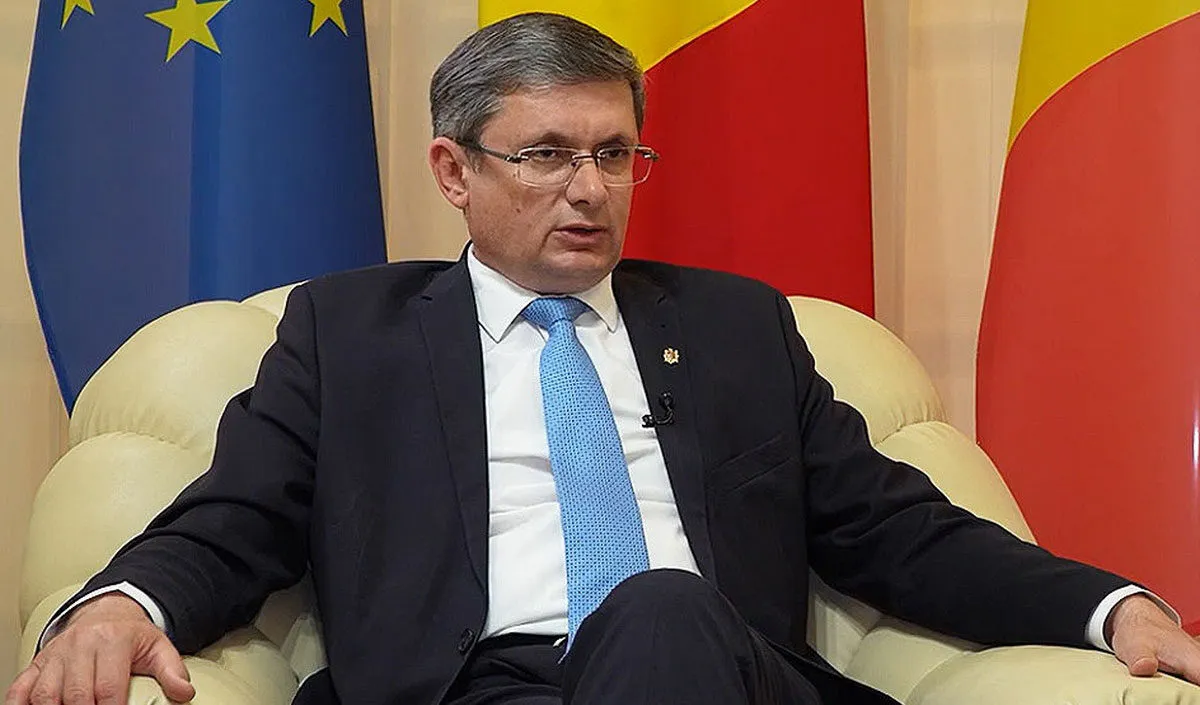
Igor Grosu
According to the Speaker, there will be fewer second-level administrative-territorial units to replace them. At the same time, Chișinău, Bălți, the Autonomous Territorial Unit (ATU) of Gagauzia and the administrative-territorial unit of Taraclia will be granted special status.
“Generally speaking, there will be no districts; they will be replaced by a different form of administrative-territorial unit, of which there will be fewer. In addition to the larger new units, Chișinău, Bălți, the Autonomous Territorial Unit of Gagauzia and Taraclia will have special status. They will remain, whilst the rest will be put forward for consideration,” said Igor Grosu.
He suggested that the districts might be renamed ‘counties’. “County sounds better than district, but that’s a matter of taste,” he remarked.
The reform will affect not only the second tier of public administration. The characteristics of the first tier – the mayoralties – will also change, taking into account their territories, size and powers, as well as their interaction with the central government.”
It should be recalled that the reform has entered the stage of statutory amalgamation following the completion of the voluntary process. The authorities are currently preparing the regulatory framework for this. It will affect 254 local councils that have not reached agreement on voluntary amalgamation. A package of draft legislation will be submitted to parliament in the autumn. The number of local authorities is set to be reduced to 292 by 2027.
This story was translated with the assistance of artificial intelligence.The translation was also reviewed by the Logos Press editorial team.
Follow our updates
Have information for the newsroom? Share it with Logos-Press




















Comments
0No comments yet. You can start the conversation.
Comments are open to readers with a Logos Press account.
Sign in to comment